
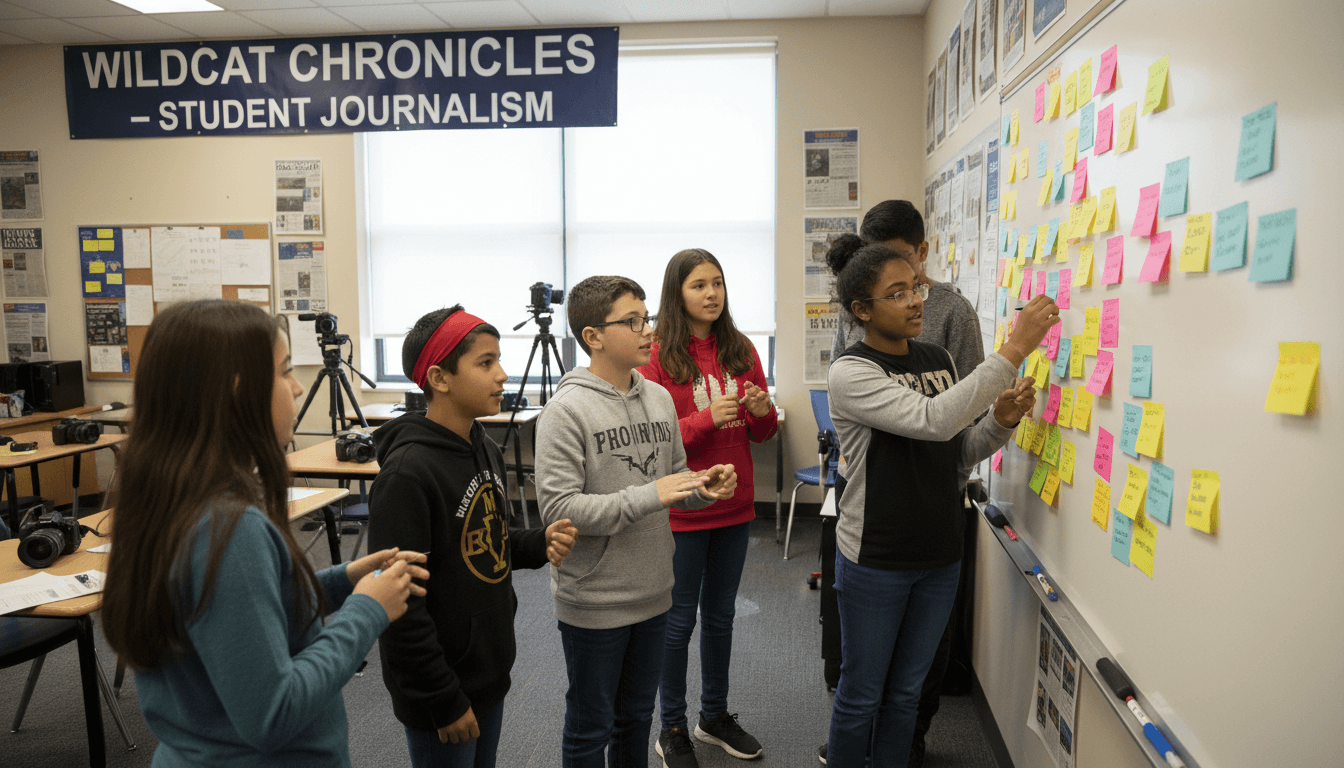
Student Newsletter Headline Writing Guide: How Student Journalists Write Headlines That Get Read

Most readers decide whether to read a story in the time it takes to read the headline. For print publications, the headline is what stops or passes the eye on the page. For digital newsletters, the subject line determines whether the email gets opened at all. Headlines are not packaging for content. They are the first editorial decision the reader makes.
Specificity is the core principle
A headline that tells a reader what happened is more useful than one that tells them what category of thing happened. "School Board Approves $2.4 Million for New Library Wing" is specific. "School Board Makes Budget Decision" is a category label. The specific headline tells readers something. The category label asks them to do work to find out if the content is worth their time.
Training student journalists to write specific headlines requires teaching them to identify the most important and concrete element of a story and lead with it. What did the school board approve, reject, or decide? What did the team win, lose, or accomplish? What did the study find?
Accuracy above all
A headline that attracts readers by misrepresenting the story loses their trust when they read the story. Headlines must accurately represent the content. The temptation to make a story sound more dramatic or definitive than it is produces headlines that undermine the publication's credibility.
Check every headline against the story's lead paragraph. If the headline claims something the story only suggests, or overreaches beyond what the reporting established, revise it.
Digital subject lines
Email subject lines have additional constraints. Most email clients show 40 to 60 characters before truncating. The most important information should come first. "New Cafeteria Hours Take Effect Monday" leads with the news. "Important Update About Changes to the School Lunch Schedule" buries it.
Avoid subject line conventions that signal low-quality email: exclamation points, all-caps words, and phrases like "IMPORTANT" or "You need to see this." Readers who receive this kind of subject line develop a pattern of skipping it.
The multiple options practice
Require writers and editors to generate three headline options for every story. The first is usually the obvious one. The second requires more thought. The third often surfaces the angle that makes the story worth reading. Choosing among options forces a more deliberate decision than approving the first headline that comes to mind.
Learning from examples
Keep a running collection of headlines, from the student publication, from local papers, and from national journalism, that the editorial board uses for workshop exercises. Rewriting weak headlines as a team builds the skill in a way that individual feedback on individual stories cannot.
Get one newsletter idea every week.
Free. For teachers. No spam.
Frequently asked questions
What makes a student newsletter headline effective?
Effective headlines are specific, accurate, and give readers enough information to decide whether they want to read the story. 'Student Council Votes to Extend Lunch Period to 45 Minutes Starting in January' is a headline. 'Student Council Makes Decision About Lunch' is not. Specificity tells readers what happened. Vagueness asks them to decide whether to care without giving them enough to decide.
How do print headlines differ from digital newsletter subject lines?
Print headlines need to work within a defined visual space and draw readers who are already holding the publication. Digital subject lines need to stand out in an inbox alongside dozens of other emails and must give enough information to earn an open. Digital subject lines can be slightly longer and should put the most important information in the first few words, since email clients truncate long subject lines.
What are the most common student headline mistakes?
Vague headlines that describe category rather than content ('New Program Announced'), headlines that give away the story's conclusion without earning it, headlines that are technically accurate but dull, headlines that use insider jargon the audience may not know, and headlines that misrepresent the story's actual content. Each of these either fails to attract readers or loses their trust.
How do student editors improve their team's headline writing?
Headline writing workshops where the team rewrites weak headlines together build the skill faster than individual feedback. Keeping a collection of strong and weak examples from both student and professional publications gives students a reference point. Requiring multiple headline options per story gives editors choices and improves the average quality.
How does Daystage help student publications optimize their newsletter subject lines for open rates?
Daystage gives student publications a newsletter platform with open rate tracking, so student editors can see which subject lines perform better and use that data to improve their headline writing over time.

Adi Ackerman
Author
Adi Ackerman is a former classroom teacher and curriculum writer with 8 years in K-8 schools. She writes about school communication, parent engagement, and what actually works in real classrooms.
More for Student-Led
Starting a Student Newsletter Club: A Guide for Teachers and Advisors
Student-Led · 8 min read
Student News Broadcast as a School Newsletter: How to Turn Video Into Community Communication
Student-Led · 7 min read
How Students Can Cover Mental Health Topics in the School Newsletter
Student-Led · 5 min read
Ready to send your first newsletter?
3 newsletters free. No credit card. First one ready in under 5 minutes.
Get started free