
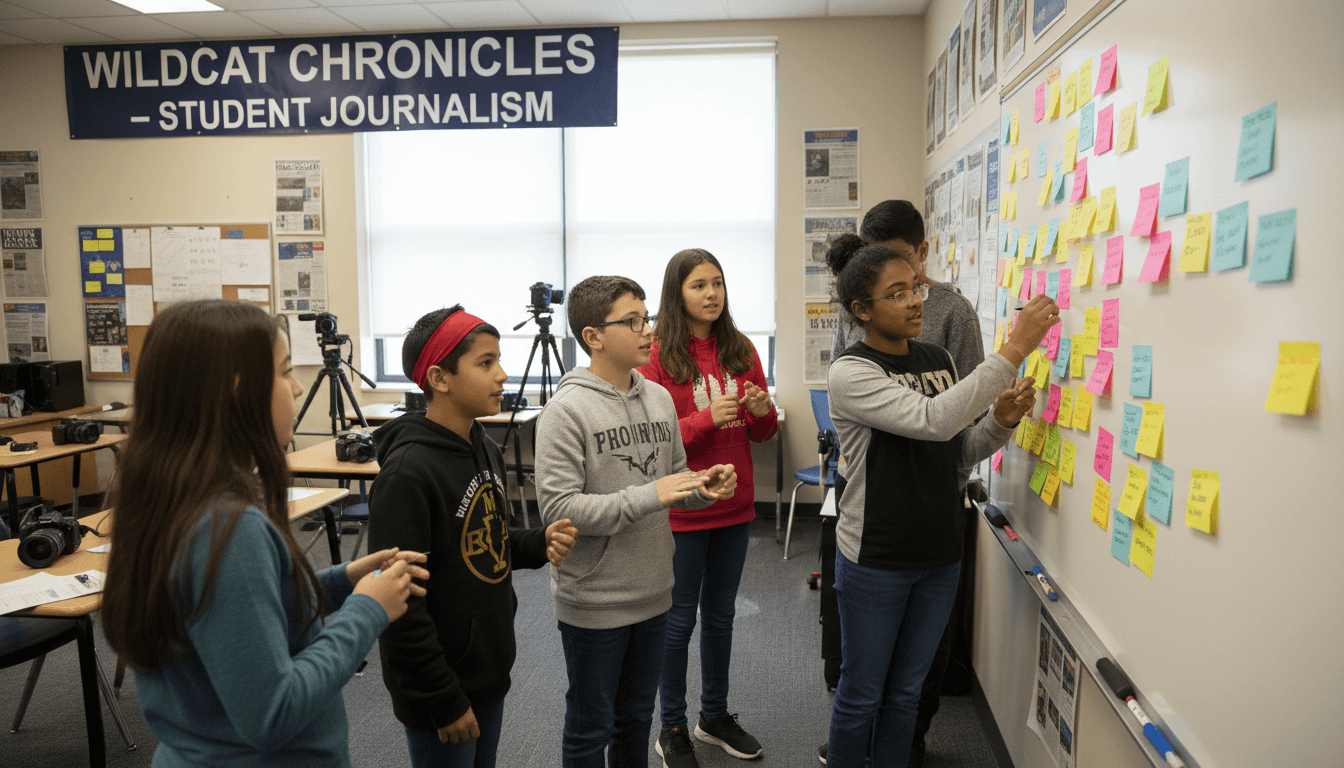
Student-Led End-of-Year Reflection Newsletter: How Student Journalists Close the School Year

The final issue of a student publication is the year's last word. It is a record of what the team covered, what the school year contained, and what the publication meant to the students who produced it. A final issue produced with care becomes something readers keep. One produced by deadline pressure and fatigue becomes something nobody remembers.
The year-in-review approach
Look back at the year's coverage with editorial judgment about what mattered most. Not a recap of every story, but a selection of the year's most significant journalism: the investigations that produced real outcomes, the features that generated community conversation, the moments the publication covered that no other school communication would have.
A year-in-review that makes specific editorial judgments about which stories mattered is more valuable than a comprehensive list. Curation is an editorial act.
What was hard about the year
The honest final issue includes what was difficult. An investigation that did not produce the hoped-for results. A story that generated significant community pushback. A coverage gap the team recognizes in retrospect. Including these moments alongside the highlights makes the final issue an honest document rather than a curated success story.
This honesty also models something important for incoming staff: publications that are honest about their own shortcomings have more credibility than those that only celebrate their successes.
Senior staff farewells
Senior staff farewell essays are the most personal content many student journalists will ever publish. Encourage writers to be specific: not "this publication changed me" but "I am a different reader and writer than I was before I spent three years in this newsroom." Specific farewell essays are worth reading. General ones are not.
Introducing incoming staff
The final issue is the incoming editorial board's introduction to the readership. Brief profiles of incoming editors, their beat assignments, and what they plan to focus on in the coming year give readers a reason to return in September and give incoming editors public accountability for the commitments they are making.
Closing the year's communication
The final family-facing newsletter of the school year should reach every family who received communication from the publication during the year. A final issue that thanks the school community for reading, summarizes what the publication covered, and looks ahead to the next year closes the communication year on a note that the publication controls.
Get one newsletter idea every week.
Free. For teachers. No spam.
Frequently asked questions
What should a student publication's end-of-year issue include?
A review of the year's most significant coverage, editorial reflections on the year's most important stories, senior staff farewell messages, a forward-looking note from incoming editors, recognition of staff contributions, any notable publication milestones from the year, and a personal reflection from the editor-in-chief are all appropriate content for a final issue.
How do student journalists cover the school year without making the final issue a highlight reel?
Include coverage of what was difficult, what did not go as planned, and what the school community is still working through. An honest final issue that acknowledges complexity is more credible and more memorable than one that only celebrates. The year had a full range of experiences; the final issue should too.
How do senior staff farewells serve the publication?
Senior staff farewell essays do two things: they acknowledge the contributions of the departing team members and they communicate the publication's culture to incoming staff and the broader school community. Farewell essays that are specific, honest, and personal about what the publication meant are documents that outlast the school year they describe.
How do student publications transition coverage and institutional knowledge to incoming staff?
The end-of-year issue is an opportunity to introduce incoming editors to the readership, document ongoing stories that need to be continued, and summarize the publication's priorities and standards in a form that the new team can reference. Some publications produce a transition document alongside the final issue.
How does Daystage help student publications close the year with a final newsletter to families?
Daystage gives student publications a newsletter platform to send a final end-of-year issue to families with a year-in-review format, recognition of the student team, and a look ahead to the following year, closing the year's communication on a strong note.

Adi Ackerman
Author
Adi Ackerman is a former classroom teacher and curriculum writer with 8 years in K-8 schools. She writes about school communication, parent engagement, and what actually works in real classrooms.
More for Student-Led
Student-Led Budget Transparency Newsletter: How Student Journalists Cover School Finances
Student-Led · 5 min read
Student-Led School Pride Newsletter: How Student Journalists Build Community Identity
Student-Led · 5 min read
Why Editorial Independence Matters in Student Publications
Student-Led · 6 min read
Ready to send your first newsletter?
3 newsletters free. No credit card. First one ready in under 5 minutes.
Get started free