
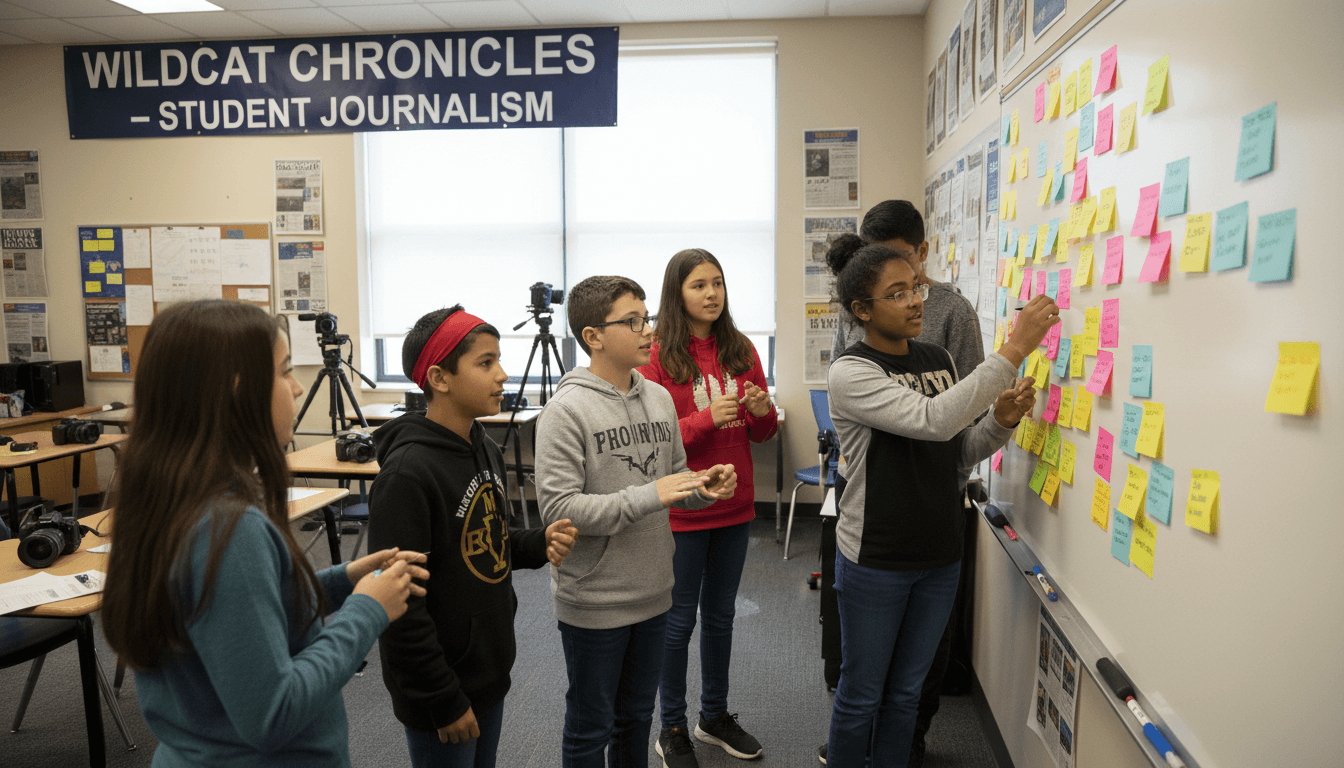
Student-Led Community Service Reporting Newsletter: How Student Journalists Cover Service and Volunteering

Community service programs produce real outcomes in real communities. Student journalists who cover this work are documenting something that matters to the organizations the school serves, the students doing the serving, and the families who want to understand how the school connects to the world outside its walls. This is a beat with real journalism potential that most student publications undercover.
Finding the stories on the service beat
The service beat offers several kinds of stories. The program overview: what does the school's service infrastructure look like, which organizations are involved, how many students participate, and what have they accomplished? The individual story: a student who made a specific commitment to a specific cause and what that has meant for them and for the organization. The impact story: what did the school's service actually produce for the community partner?
All three story types require different sources and different approaches. The program overview requires talking to administrators and program coordinators. The individual story requires finding the right student and building trust for an honest conversation. The impact story requires talking to the community partner.
Talking to community partners
The most underused source in student service coverage is the community organization receiving the service. A food bank director, a community garden coordinator, or a library program manager who has worked with the school for years has a perspective on the school's service contribution that no one inside the school can provide. These sources are usually willing to talk to student journalists, often grateful for the attention, and reliably produce quotes that are both honest and compelling.
Service learning and the classroom connection
Service learning is distinct from volunteer service: it is structured to produce academic learning alongside community impact. Student journalists covering service learning should ask about both dimensions. What is the community learning the students are contributing to? What is the academic learning the students are taking away? The stories that capture both dimensions are more compelling than stories that treat service learning as simply good citizenship.
Honest coverage of service challenges
Service programs that require school credit can create equity issues when some students have more time for volunteering than others. Programs that run on volunteer hours sometimes have participation that is uneven across demographics. Coverage that surfaces these challenges serves the community better than coverage that celebrates the program without examining how it works.
Connecting service to school values
Coverage that connects the school's service work to its stated values gives the journalism a layer of accountability. When a school says it values community engagement and student journalists document what that looks like in practice, both the value and the practice become more real to the school community.
Get one newsletter idea every week.
Free. For teachers. No spam.
Frequently asked questions
What community service topics should student journalists cover?
School-organized service programs and what they accomplish, individual student volunteer commitments and what motivated them, service learning projects and their academic connections, partnerships between the school and local nonprofits or community organizations, hours logged by the student body and how that compares to previous years, and any obstacles or equity issues in service participation are all story angles with depth.
How do student journalists cover community service without turning coverage into promotion?
The distinction is specificity and honesty. 'Our school is full of generous students' is promotion. 'Here is what 47 volunteers accomplished in six weeks at the community garden, what they learned, and what the garden director said about the school's impact' is reporting. Promotion celebrates. Journalism documents and interrogates.
How do student journalists approach coverage of service learning in academic classes?
Service learning connects classroom work to community application. Student journalists who cover this beat can ask: what is the project, what community need does it address, what are students learning that they could not learn in a classroom, and what does the community partner think about the school's involvement? These questions produce stories that illuminate the academic and community dimensions of the work.
How do schools use student-written community service coverage in family communication?
Student-written coverage of community service programs informs families about how the school connects to the broader community, recognizes students doing work outside school requirements, and often generates family interest in participating or supporting the service programs their students are involved in.
How does Daystage help student publications share community service coverage with families?
Daystage gives student publications a newsletter platform to distribute community service stories to families and the broader community, extending the impact of student journalism about service programs beyond the school building.

Adi Ackerman
Author
Adi Ackerman is a former classroom teacher and curriculum writer with 8 years in K-8 schools. She writes about school communication, parent engagement, and what actually works in real classrooms.
More for Student-Led
Student Press Freedom Newsletter: How Advisors and Principals Communicate Press Protections
Student-Led · 5 min read
Student Journalist Orientation Newsletter: How Advisors Prepare New Student Reporters
Student-Led · 5 min read
Student-Led School Policy Reporting Newsletter: How Student Journalists Cover Rules and Decisions
Student-Led · 5 min read
Ready to send your first newsletter?
3 newsletters free. No credit card. First one ready in under 5 minutes.
Get started free