
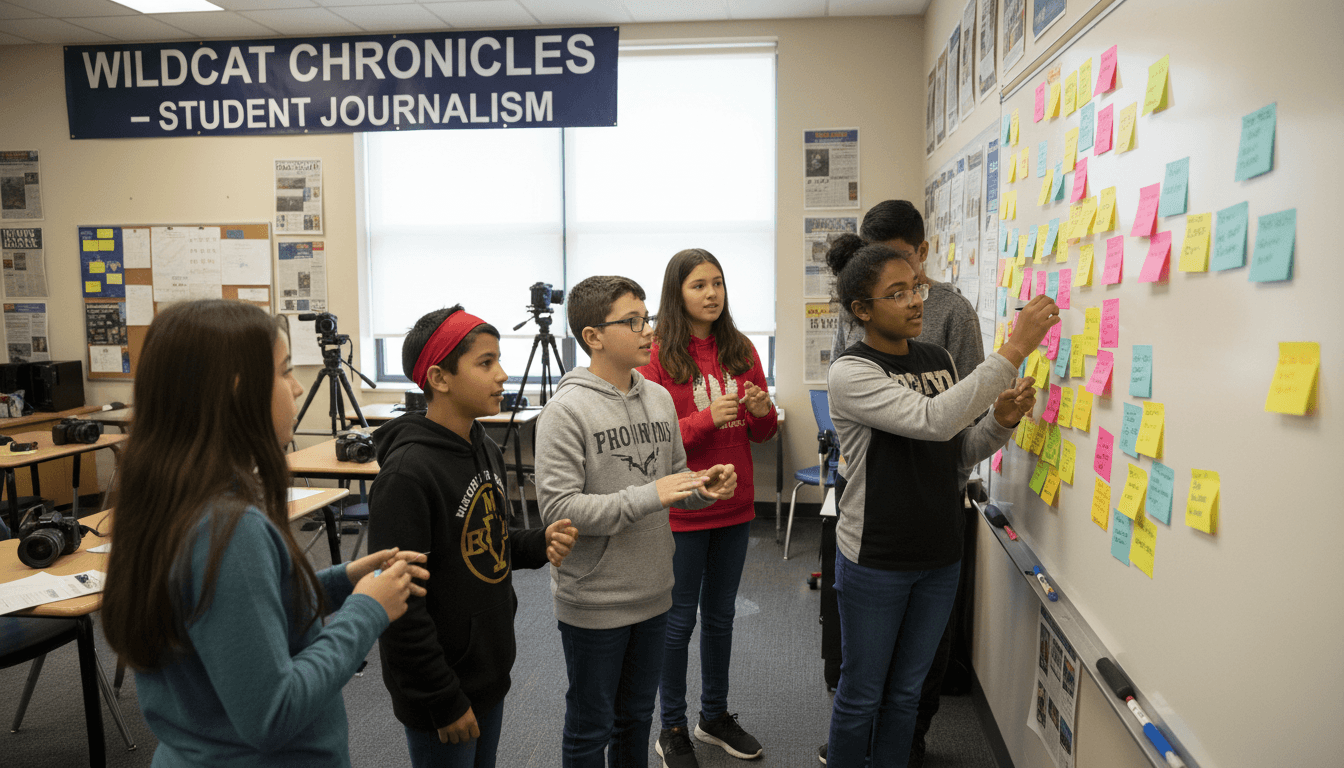
How Student Reporters Can Cover School Events for the Newsletter

School event coverage in the student newsletter is most compelling when it is not a summary of what happened but a story about why it mattered and what it felt like to be there. A student reporter who knows how to find the story inside the event, capture it with specific detail, and tell it with a focus produces coverage that readers engage with. A student who produces chronological summaries produces content readers skim.
Prepare Before the Event
Student event reporters should arrive knowing who the key participants are, what the event is designed to accomplish, and which two or three people they want to interview after the event. This preparation means the reporter is looking for a specific story rather than hoping one presents itself.
Identify the most interesting angle before the event begins. "I want to find out whether the team is nervous" is a focus. "I will describe everything that happens in order" is not. A focus produces an article. A sequence produces a timeline.
Lead with the Most Compelling Moment
Event coverage should not begin with "On Friday, the school held its annual science fair." It should begin with the most compelling specific moment from the event. "When twelve-year-old [name] showed his water filtration prototype to the judges, he explained that he built it because his grandmother's neighborhood lost clean water access for three days last year." That lead gives the reader a person, a project, and a why before the article has described the event at all.
Capture Specifics During the Event
Student reporters should take notes on specific details, not only general impressions. Not "the concert was impressive" but "the soprano section held the final note for eight counts while the auditorium went completely quiet." Not "there were many projects" but "47 projects from grades 6 through 8 covered three tables across the cafeteria." Specific details make event coverage feel real. General impressions make it feel like a press release.
Interview After the Event
The best event quotes come from participants immediately after the event, when the experience is fresh. A student who just completed their first public performance, or just placed in a competition, will give a more genuine and specific answer to "what was that like?" than anyone who is asked two days later. Build post-event interviews into the coverage assignment.
Write to a Word Limit
Requiring student reporters to write event coverage within a specific word count, typically 300 to 500 words, teaches them to prioritize. Students who must choose which details to include and which to cut are learning editorial judgment. Students who write until they run out of things to say, with no word limit, learn to pad rather than to focus.
Get one newsletter idea every week.
Free. For teachers. No spam.
Frequently asked questions
What makes school event coverage compelling in the student newsletter?
A specific moment or person that makes the larger event concrete and human. The best school event coverage leads with a detail: the first-place contestant who studied for three months and nearly backed out the night before the competition, or the moment during the spring concert when the entire auditorium went silent before the piano solo began. General summaries of events are forgettable. Specific moments and people make readers feel they were there or wish they had been.
How do students prepare for school event coverage before the event?
Know who is participating and in what role. Know what the event is designed to achieve. Know what the event history is and whether this year is unusual in any way. Identify two or three people to interview after the event based on their role. Arrive early enough to observe the setup and find the best observation position. Students who prepare for coverage find the story faster than students who arrive hoping a story will present itself.
How do student reporters handle event coverage that reveals something negative?
Report it the same way they would report anything else: with accuracy, fairness, and appropriate context. A science fair where only 10 of the 40 expected projects were completed is a story worth covering honestly. A school play where technical problems affected the performance is worth noting in a way that is fair to the students who worked hard. Event coverage that only reports the positive is not journalism. It is promotion.
What is the right length for school event coverage in the newsletter?
300 to 500 words for most events, with one or two photographs if available. Long event recaps that describe every moment in sequence are rarely read completely. A focused article that covers the most significant or representative moment in depth, with supporting context, serves the reader better than a comprehensive chronological account. Students who write to a word limit learn to prioritize what matters.
How does Daystage support student event coverage?
Daystage helps schools integrate student event coverage into newsletters with the editorial structure, deadline management, and publication standards that transform event attendance into journalism. Schools use it to build student event coverage into a reliable part of the newsletter that families look forward to, rather than an occasional addition when a student happens to write about something.

Adi Ackerman
Author
Adi Ackerman is a former classroom teacher and curriculum writer with 8 years in K-8 schools. She writes about school communication, parent engagement, and what actually works in real classrooms.
More for Student-Led
How Student Journalists Can Do Investigative Reporting in the School Newsletter
Student-Led · 6 min read
Student Yearbook Newsletter: How Yearbook Staff Communicate with the School Community
Student-Led · 5 min read
Student-Led End-of-Year Reflection Newsletter: How Student Journalists Close the School Year
Student-Led · 5 min read
Ready to send your first newsletter?
3 newsletters free. No credit card. First one ready in under 5 minutes.
Get started free