
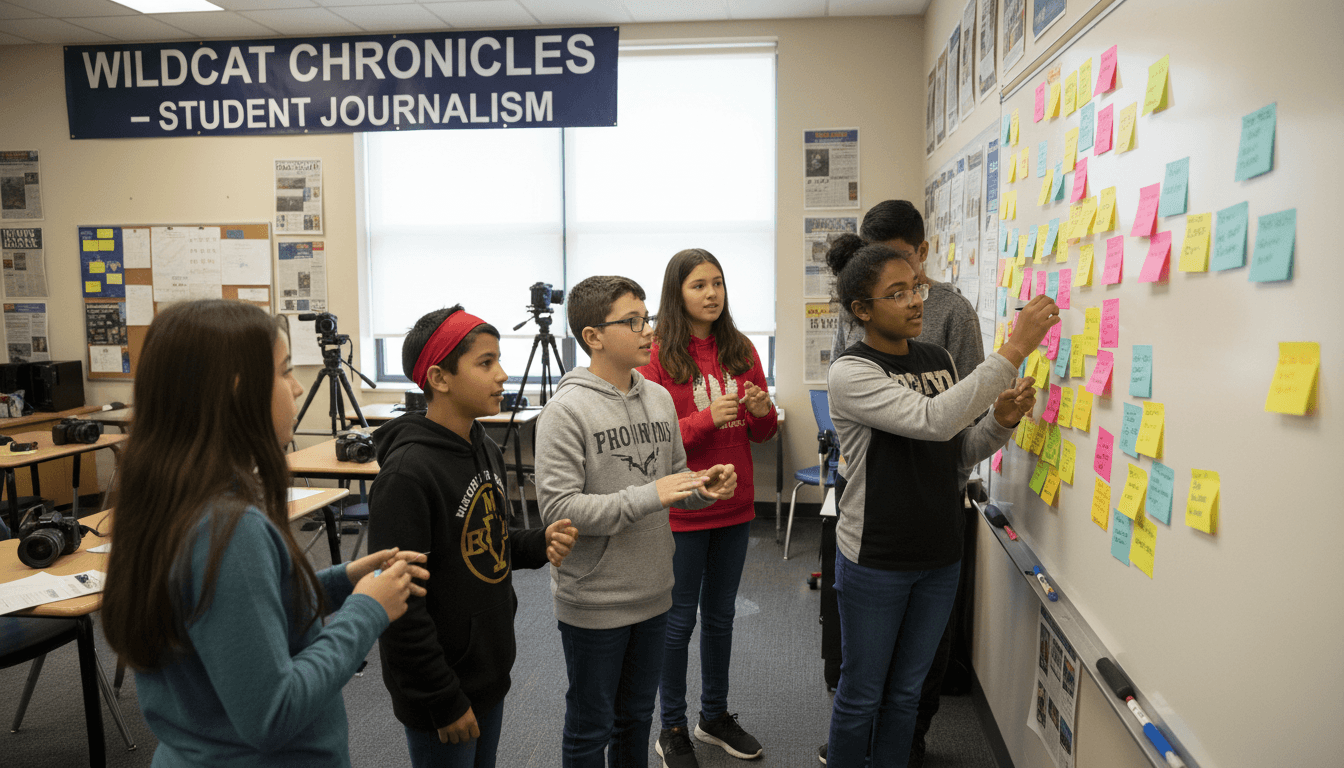
How Student Journalists Can Do Investigative Reporting in the School Newsletter

Investigative journalism is not a special kind of reporting reserved for professional newsrooms. It is the application of the same verification, fairness, and public interest standards that apply to all journalism, directed at questions that require more than one source and more than one conversation to answer. Student journalists who learn investigative methods learn how journalism actually works.
Find the Story in the Gap
Most investigative school stories begin with a gap between what an official document says and what students or families actually experience. The discipline policy says consequences are applied consistently. Do they? The school reports that all students have equal access to advanced coursework. Is the enrollment data consistent with that? The cafeteria program says it meets nutritional standards. What do the menus show?
Teach students to read the school's public documents before they start reporting: the student handbook, the annual report, the board meeting minutes, the budget summary. The story is often already there, waiting for someone to compare what the document says against what the data shows.
Build the Pattern Before You Report It
One person's experience is an anecdote. A pattern across multiple sources is a story. Before a student reporter approaches a subject with an investigative question, they should have already gathered enough evidence to know they are reporting a pattern, not a single incident.
This means starting with sources who can confirm the pattern before approaching sources who are central to the story. It means gathering documents, data, and observations before conducting the main interviews. The investigation should shape the questions, not the other way around.
Give Every Subject the Right to Respond
Before publishing any investigative story, give every person or institution whose conduct is at issue a clear, documented opportunity to respond. Send the request in writing. State the specific claims the story will make. Give a reasonable deadline for response. Document that the request was sent and either received a response or did not.
This is not a courtesy. It is an ethical requirement of fair reporting, and it is the most important protection the student journalist has against claims of unfairness after publication. A story published without giving the subject the opportunity to respond is vulnerable to credible challenges regardless of how accurate the facts are.
Verify Everything Twice
Investigative stories require a higher standard of verification than routine coverage because their subjects are often people who will scrutinize every fact. Verify every factual claim against at least two independent sources before publication. If a claim can only be verified by one source, label it accordingly or hold it until it can be confirmed.
The advisor should review the verification record before the story publishes: what is the source for each factual claim, and is it sufficient? This review process is what professional fact-checkers do, and it is what makes the difference between a story that holds up and one that does not.
Publish Clearly and Stand Behind the Work
An investigative story should be written with the same clarity and structure as any news story. The lead should state the finding, not the process. The body should present the evidence clearly and with attribution. The response from the subject should appear in the story, whether that response is a denial, a clarification, a correction, or a decision not to respond.
After publication, the student journalist and the advisor should be prepared to explain the reporting process and stand behind every factual claim. A well-reported story is defensible. Knowing that it is defensible is part of what gives the journalist the confidence to publish it.
Get one newsletter idea every week.
Free. For teachers. No spam.
Frequently asked questions
What kinds of investigative stories are appropriate for a student school newsletter?
Stories that examine whether the school's stated commitments are reflected in actual practice: whether the discipline policy is applied consistently across different student groups, whether the school budget allocates resources as described in public documents, whether the school's safety procedures match what the written policy says, whether the cafeteria food quality matches what parents are told they are paying for. These stories serve genuine public interest, can be reported through public records and interviews, and fall clearly within the editorial scope of a school publication.
How do you teach students to find a story rather than wait for one?
Teach pattern recognition. One student's complaint about inconsistent discipline is an anecdote. When ten students describe the same pattern, that is a story. Teach students to ask: 'Is this an isolated incident or a pattern?' Train them to compare what official documents say against what people experience. The gap between policy and practice is where most school investigative stories live. Train students to read the school board minutes, the annual report, and the budget summary. Most story leads are in documents that nobody reads.
How do you protect student journalists who report on powerful people in the school?
The advisor is the first line of protection. Before a student contacts a subject of investigation, review the story with the advisor. Confirm the story is factually grounded, serves public interest, and follows journalistic standards. Give the subject a clear opportunity to respond before publication. Document that the opportunity was given. A well-reported story that follows ethical standards is the best protection the journalist has. A story that can be challenged on factual or ethical grounds puts the student in a difficult position.
What is the right way to handle a school subject who refuses to respond to a student reporter?
Document the request for comment, the date it was made, and the non-response. Publish the story with a clear note: 'Principal [name] did not respond to a request for comment made on [date].' A non-response is information. It does not prevent publication of a factually accurate, fairly reported story. Advisors sometimes discourage students from publishing when subjects decline to comment, which mistakes courtesy for a legal requirement. The right to publish a factually accurate story does not depend on the subject's willingness to respond.
How does Daystage support investigative journalism in student publications?
Daystage helps schools develop student newsletter programs with the structure, standards, and editorial independence that make investigative reporting possible. Schools use it to build student journalists who know how to find a story, verify it, report it fairly, and publish it with the confidence that comes from following the process correctly.

Adi Ackerman
Author
Adi Ackerman is a former classroom teacher and curriculum writer with 8 years in K-8 schools. She writes about school communication, parent engagement, and what actually works in real classrooms.
More for Student-Led
Student-Led Teacher Appreciation Newsletter: How Student Journalists Cover the People Who Teach Them
Student-Led · 5 min read
Teaching Student Newsletter Writers to Fact-Check Their Work
Student-Led · 5 min read
Student Publication Print vs. Digital Newsletter: How Student Journalists Choose Their Format
Student-Led · 5 min read
Ready to send your first newsletter?
3 newsletters free. No credit card. First one ready in under 5 minutes.
Get started free