

Student Environmental Club Newsletter: Green School Actions
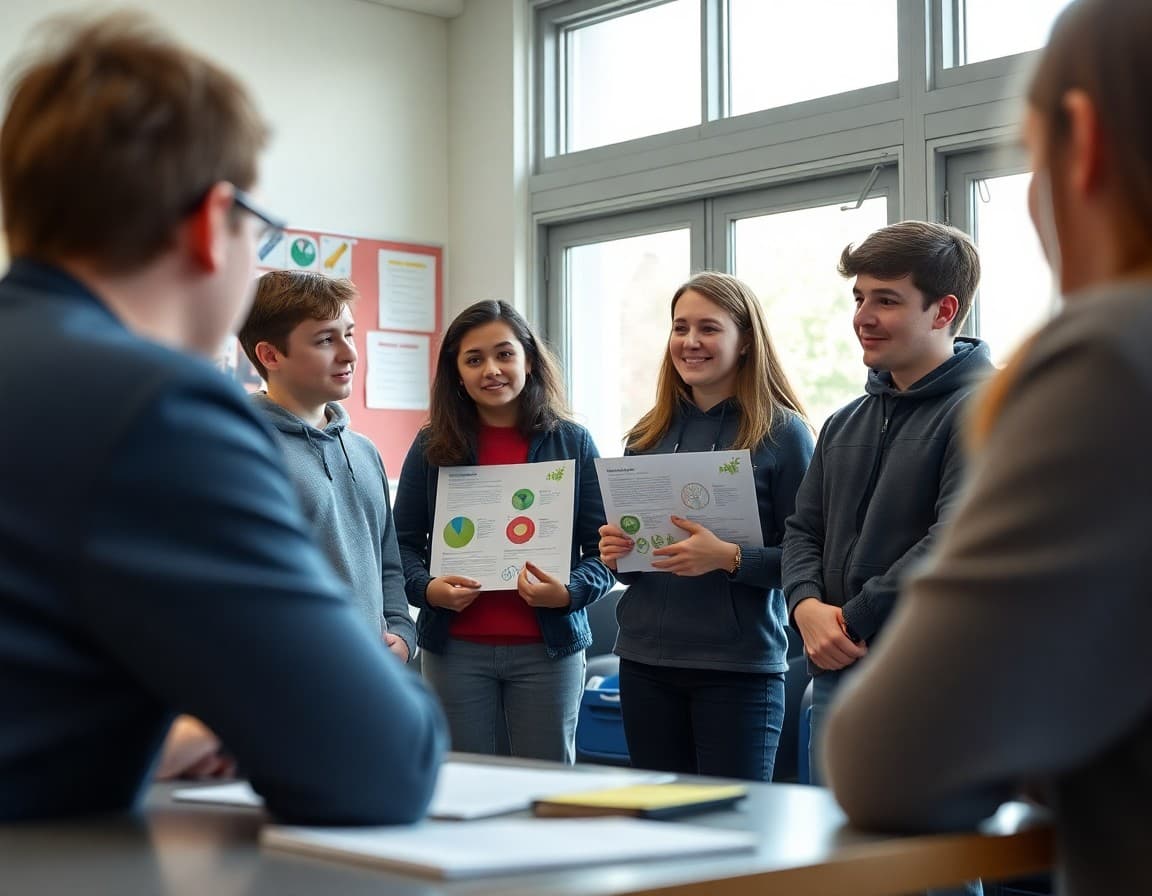
An environmental club newsletter that just announces meetings attracts only students who are already committed to the cause. A newsletter that reports on specific projects, shares data on impact, and gives the entire school community something actionable to do converts interested bystanders into participants. The difference is specificity and urgency in every issue.
Choosing Projects That Actually Produce Change
The most common environmental club failure is choosing projects that feel significant but produce minimal measurable impact. Selling reusable bags in the lobby is a low-impact project that takes significant organizational energy. Auditing the school's single-use plastic purchasing and presenting a report to administration with specific substitution recommendations is a high-impact project that takes similar energy but produces results that last beyond the project itself.
Before choosing a project, the club should ask: what is the measurable outcome, who has the authority to make the change we are proposing, and how will we communicate our impact when the project is done? Projects that pass all three filters produce lasting change and compelling content for the newsletter. Projects that do not pass the third filter in particular often produce activity without progress.
Recycling Program Audits: A Case Study
A recycling program audit is one of the highest-impact, most newsletter-worthy projects a student environmental club can run. The process: collect a sample of the school's recycling bins across one week, sort the contents into recycling, compost (if applicable), and landfill categories, record the percentages of each, identify the most common contamination items, and design a targeted education campaign addressing those specific items. Run the audit again after the campaign and compare the results.
This process produces: real data about the school's recycling effectiveness, a targeted intervention that is likely to produce measurable improvement, a before-and-after comparison that is compelling in the newsletter and in presentations to administration, and a replicable template that future club members can use annually to track progress over multiple years.
Writing an Effective Environmental Newsletter
Environmental newsletters lose readers when they focus on broad global issues rather than specific local actions. "Climate change threatens our future" is not as engaging as "our school used 47,000 kilowatt-hours of electricity last October. Here is what that costs in dollars and what it means in carbon, and here is what our club is doing to reduce it this year." Local, specific, data-grounded content produces more action than abstract environmental messaging.
Each issue should include: a project update with specific data (not just "we are making progress"), one specific action the school community can take this month (not just "be more sustainable"), and one recognition of a specific community member or class that has taken environmental action. These three sections produce a newsletter that is informative, actionable, and celebratory, which is the combination that keeps readers returning.
A Template for the Monthly Environmental Club Newsletter
This template can be adapted for any month and any current project focus:
"[Environmental Club Name] Update: [Month]. This month's data: [specific project metric, e.g., 'Our cafeteria waste audit showed 23% contamination in the recycling stream, down from 38% in September.']. What that means: [equivalent in everyday terms]. What we are doing next: [specific next project step]. Action you can take this month: [one specific, concrete action, e.g., 'Check the recycling guide posted above every recycling bin in the cafeteria before you sort your lunch waste. The most commonly misplaced item is this: [item].']. Upcoming event: [date, event name, what community members can do to participate]. Join the club: [meeting day and time, no experience required]."
Securing Administrative and Community Support
Student environmental clubs that present their work to school administrators using financial arguments alongside environmental ones secure significantly more support than those that lead with environmental values alone. Calculate the cost of recyclables currently going to landfill, the energy cost of behaviors the club is targeting, or the waste pickup cost reductions achievable through composting. These numbers are often available from the district facilities office when students ask for them. A 10-minute presentation to the principal or school board that includes specific dollar amounts alongside environmental data is far more likely to produce institutional support than a passionate appeal to environmental responsibility.
Building Sustainability into School Culture
The long-term goal of a student environmental club is not to run individual projects but to change the default behaviors and norms of the school community around environmental responsibility. This culture change happens through consistent communication over multiple years, specific recognition of positive environmental behavior, and integration of environmental considerations into school decisions (purchasing, construction, event planning) rather than treatment of environmental action as a special project. A newsletter that is published consistently across a full school year, then another, and another, builds the cumulative cultural impact that a single project week cannot achieve.
Get one newsletter idea every week.
Free. For teachers. No spam.
Frequently asked questions
What are the most impactful sustainability projects a student environmental club can lead at school?
The highest-impact student environmental projects combine measurable outcomes with school community engagement. Recycling program audits that actually change school behavior (measuring contamination rates before and after an education campaign, for example) produce real environmental benefit and compelling data for reports. Energy-use campaigns tied to classroom competitions reduce school energy costs with documented financial impact. Cafeteria waste reduction projects that involve the food services staff in composting or tray-less dining have both environmental and cost-saving benefits. School gardens that supply produce to the cafeteria or community members connect environmental education to food systems in a way that pure recycling campaigns cannot.
How do student environmental clubs secure school support for projects?
The most effective approach to securing administrative support for environmental projects is to lead with financial and operational benefits rather than environmental values. An energy-saving campaign that reduces utility bills by $3,000 per year is more likely to receive administrative support than one framed purely as a moral obligation. A composting program that reduces cafeteria waste pickup costs by $2,000 per year is more compelling than one framed around landfill impact alone. Most environmental actions have economic benefits that can be calculated and presented to administrators as concrete arguments.
How can environmental clubs connect to the broader community outside school?
Student environmental clubs that connect to community organizations amplify their impact beyond the school campus. Partnerships with local environmental nonprofits provide access to resources, expertise, and community credibility. Collaborations with city or municipal sustainability offices connect students to real policy processes. Partnerships with local businesses on specific campaigns (restaurant composting, business energy audits) give students real-world project management experience. Community clean-up events that bring families and community members onto the school campus build the environmental club's community profile and often produce coverage in local media.
How should environmental clubs measure and communicate their impact?
Environmental impact communication is most effective when it is specific and visual. 'We diverted 340 pounds of plastic from the landfill this semester' is more compelling than 'we helped the environment.' 'Our energy campaign reduced the school's electricity bill by $1,200 in October' makes the financial case alongside the environmental one. Converting environmental impact to everyday equivalents helps: '340 pounds of plastic equals approximately 5,000 plastic water bottles' is a visualization that most students can relate to. Annual impact reports that compile these numbers build credibility for the program and create a foundation for requesting resources and support for the following year.
How can the student environmental club newsletter build a culture of sustainability in the school community?
A monthly environmental club newsletter that reports on current projects, shares one actionable sustainability tip families can try at home, and celebrates specific student and community sustainability actions builds the cultural environment that makes individual behavior change more likely. Daystage lets student environmental clubs send newsletters to the entire school community with photos, infographics, and links to data that make the environmental case compellingly without requiring advanced design skills. Consistent, engaging communication over a full school year produces measurable shifts in school community environmental attitudes.

Adi Ackerman
Author
Adi Ackerman is a former classroom teacher and curriculum writer with 8 years in K-8 schools. She writes about school communication, parent engagement, and what actually works in real classrooms.
More for Student-Led
Ready to send your first newsletter?
3 newsletters free. No credit card. First one ready in under 5 minutes.
Get started free