

Student Ambassador Newsletter: School Ambassadors in Action
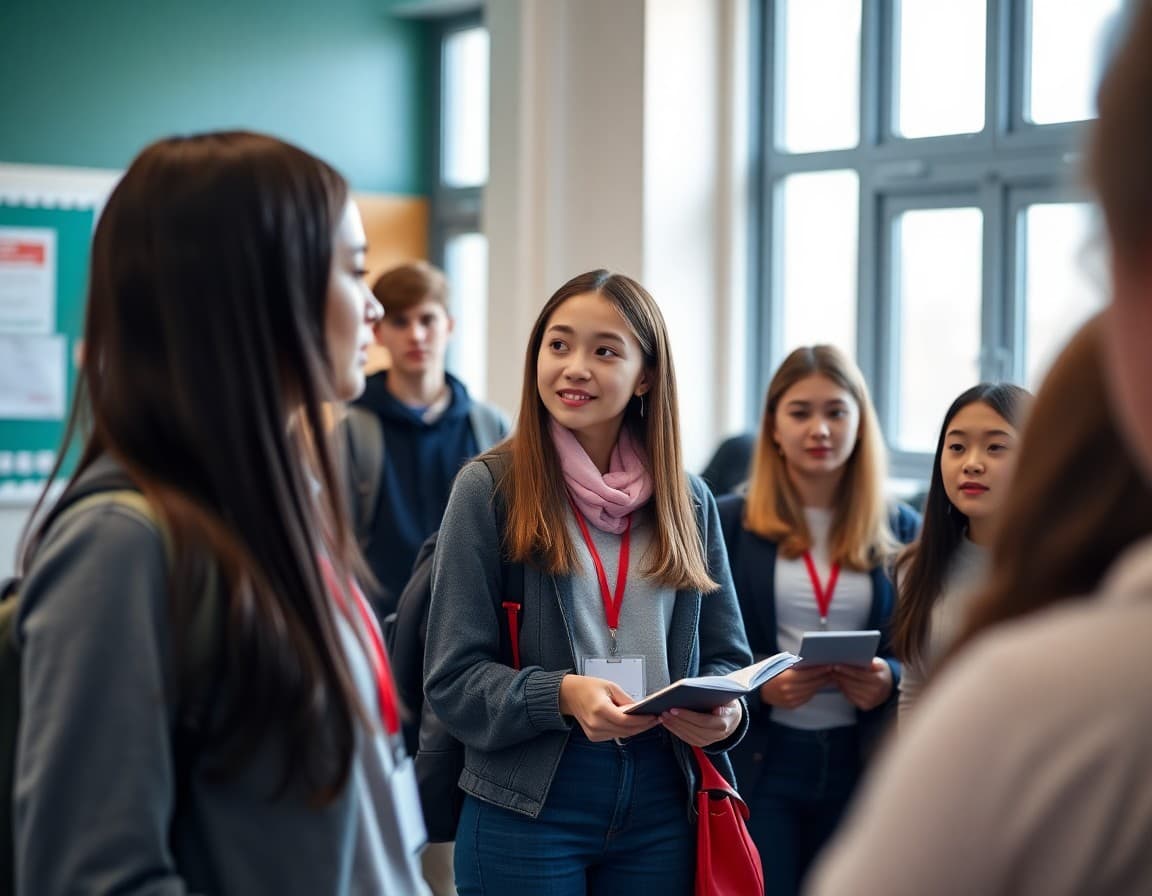
A student ambassador program with a companion newsletter does something valuable for the whole school: it puts the school's best communication asset, the authentic student voice, in front of the audiences that matter most to the school's reputation. Prospective families trust what current students say about their school far more than anything an administrator or marketing brochure communicates.
What Makes Student Ambassadors Effective
The most effective student ambassadors are not necessarily the students with the highest GPAs or the most extracurricular activities. They are students who can speak honestly and positively about their experience, who represent a range of school communities (different grade levels, different activity groups, different neighborhoods), and who have the genuine enthusiasm for the school that comes across naturally in conversation. An ambassador who has been coached to say only positive things in a scripted way is far less convincing to a prospective family than one who can say "the cafeteria food is honestly not great, but the community here is something I have not found anywhere else."
Authenticity, not polish, is the quality prospective families are trying to assess. Program advisors who select and train for authentic representation over performance produce the more compelling ambassador team.
Ambassador Training: Covering the Hard Questions
The training mistake most ambassador programs make is teaching students how to give the tour without teaching them how to answer the questions that come after. Prospective families almost always ask versions of these questions: What do you actually like about this school? What are the downsides? How is the social environment? Is there bullying? What would you change if you could? Ambassadors who have never thought about how to answer these honestly but constructively will either freeze, deflect, or give answers that feel rehearsed and therefore unconvincing.
Training should include at least 30 minutes of practice with difficult questions. Ambassadors should know that they can acknowledge something that is imperfect while contextualizing it: "Parking is a genuine problem here, but it is also a small-town problem and most students either walk or take the bus, so it has not really affected me." That kind of honest, grounded response builds far more trust than a defensive or evasive one.
The New Student Welcome System
A student who transfers to a new school mid-year faces one of the most socially challenging situations a teenager can encounter. They know no one, the social landscape is invisible to them, and asking for help feels exposing. A structured ambassador welcome system addresses this in a way that administrative orientation does not. The welcome system: an ambassador is assigned to the new student before their first day, contacts them by email or phone to introduce themselves, walks with them to their first class on day one, checks in by text or in person at the end of day one and day two, invites them to sit at lunch for the first week, and makes a formal check-in at two weeks and one month to confirm they are finding their footing.
This is not as intensive as it sounds. Each check-in takes five to ten minutes. The cumulative effect is a new student who feels like they have at least one person in the building who knows their name and cares about their transition. That is frequently the difference between a student who integrates successfully and one who never quite finds their place.
A Template for the Monthly Ambassador Newsletter
This section can be sent to the school community each month:
"Student Ambassador Update: [Month]. This month our ambassador team welcomed [number] new students to [School Name]. We hosted [event description]. Upcoming: [next event, date, and what the school community can do to help or attend]. Interested in becoming an ambassador? Applications are open through [date]. We are looking for students who love this school and want to help others feel welcome here. Apply at [link] or speak to [advisor name]. Contact us: [email]."
Ambassador Feedback as a School Improvement Tool
Student ambassadors are in a unique position to collect candid feedback from prospective families and new students about how the school is perceived from the outside. This feedback is often more honest than anything that comes through official surveys because it is collected in casual conversation rather than a formal instrument. Ambassador advisors should build a simple feedback collection habit into the program: after every tour or welcome event, ambassadors debrief briefly on what questions came up, what concerns prospective families expressed, and what aspects of school life new students found unexpectedly challenging or unexpectedly good.
That aggregate feedback, shared with administration, becomes actionable school improvement data. A program that positions student ambassadors as feedback collectors rather than just representatives serves the school community in a more complete way.
Building Ambassador Program Visibility
A student ambassador program that is invisible to the school community has limited impact. Monthly newsletter updates, visible ambassador activity at school events, and recognition at school meetings build the program's profile in a way that converts the general student body from passive observers to active supporters. Students who know the ambassador program exists and what it does are more likely to recommend it to a friend who might benefit from a welcome connection, and more likely to apply themselves when they are eligible.
Get one newsletter idea every week.
Free. For teachers. No spam.
Frequently asked questions
What are the primary responsibilities of student ambassadors in a school program?
Student ambassador responsibilities typically include: serving as tour guides for prospective students and families, welcoming and mentoring new students who transfer mid-year or begin at the start of the year, representing the school at community events and speaking to external audiences, providing student perspective to administrators and school board members, assisting with open house and orientation events, and creating welcoming materials and communications that reflect the authentic student experience. Effective ambassador programs give students genuine responsibility rather than using them as props for adult-designed events.
How should faculty advisors select students for the ambassador program?
The strongest ambassador programs select students who authentically represent the school's diversity rather than selecting only the students who already appear 'polished' by adult standards. Selection criteria should include genuine enthusiasm for the school, the ability to speak honestly and positively about school experience, reliability and responsibility in other school commitments, and willingness to take on the ambassador role across a full school year. Applications with a brief written response and a short interview produce better ambassadors than selections based entirely on GPA or teacher recommendation.
How do student ambassadors learn to give effective tours and presentations?
Ambassador training should include: a guided practice tour where ambassadors take the tour as a visitor, explicit training on the key talking points for each stop on the tour, practice with common visitor questions including challenging ones ('How is the social scene?' 'What do you actually think of the school?'), and coaching on how to be honest without being negative. Role-playing difficult questions before ambassadors face them in front of families produces significantly better outcomes than sending unprepared students to represent the school to prospective families.
How can student ambassadors support new students throughout the school year?
Beyond initial orientation, ambassadors can support new students through: a buddy assignment for the first two weeks that guarantees the new student has someone to sit with at lunch and walk with between classes, regular check-ins at two weeks, one month, and two months after arrival, an invitation to ambassador-hosted social events designed specifically for students who are still getting connected, and a direct communication channel ('text me if you have a question or need help finding something') that lower-stakes than approaching a student they do not know yet.
How does a student ambassador newsletter communicate the program's work to the school community?
A monthly ambassador newsletter that shares upcoming events, highlights new student welcome stories (with permission), and invites the school community to engage with ambassador activities builds visibility for the program and reinforces a welcoming school culture. Daystage allows student ambassadors to send professional-looking newsletters to the entire school community without faculty assistance, which builds the student ownership of the program that makes it genuinely student-led rather than faculty-managed.

Adi Ackerman
Author
Adi Ackerman is a former classroom teacher and curriculum writer with 8 years in K-8 schools. She writes about school communication, parent engagement, and what actually works in real classrooms.
More for Student-Led
Ready to send your first newsletter?
3 newsletters free. No credit card. First one ready in under 5 minutes.
Get started free