
Engineering Design Challenge Newsletter: Solve Real Problems

Engineering design challenges put students in the role of problem solvers, not answer finders. The process matters more than the product. A team whose bridge collapses learns more from analyzing why it collapsed than a team whose bridge holds because they copied a design from the internet. Communicating that distinction to families is one of the most important things an engineering newsletter can do.
Explain the problem before explaining the solution
Every engineering design challenge starts with a problem worth solving. Name it specifically in your newsletter. "Students were given the challenge of designing a shelter that could protect a marshmallow from a 30-second rain simulation using only index cards, tape, and rubber bands. The shelter had to fit within a six-inch square footprint." That description gives families context that makes the rest of the newsletter meaningful.
Constraints are part of the problem. Explain them. Students who understand that their materials budget was $1.50 worth of supplies understand something real about engineering in the world.
Describe the design process steps students used
Many families do not know what the engineering design process is. A brief explanation of the steps helps them understand what their student was actually doing during the project. "Students began by defining the problem and writing down the constraints. They then brainstormed at least three different possible designs before choosing one to build. After testing their first prototype, they identified what failed and revised the design for a second build."
Feature specific student design decisions
Name the teams and describe their design choices. "Team 3 decided to build their structure using a triangular base because a student remembered from math class that triangles are structurally strong. Their first prototype held 12 textbooks before failing at the base joint. For their second build they reinforced the base with a double layer of cardboard and held 19 books."
These specific stories are more memorable than general statements about student engagement and help families see the connection between what students know and what they can design.
Address failure as part of the learning
Engineering newsletters should normalize iteration. "Seven out of twelve teams had their first design fail the test. That was expected and planned for. The failure gave every team specific information about what to improve. Teams that failed the first test and revised their design showed the most engineering growth in the project." Communicating this expectation helps families understand that a failed prototype is not a bad grade.
Template: engineering challenge announcement newsletter
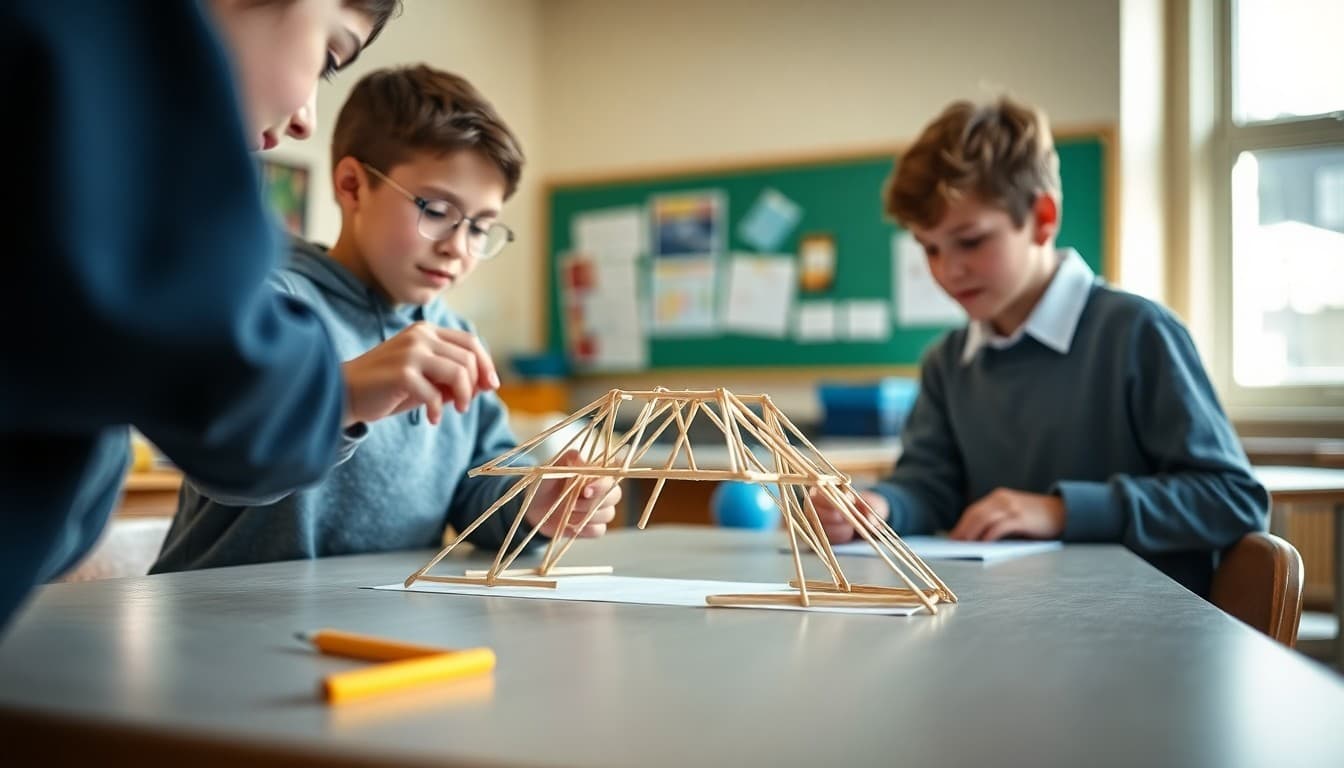
"Next week we are starting our bridge engineering challenge. Each team of three will be given 50 popsicle sticks, 60 cm of masking tape, and 20 minutes to build a bridge that spans a 30 cm gap. The bridge will be tested by adding weight until it fails. Teams will be scored on maximum weight held AND on the quality of their design documentation, including their sketches and their written explanation of the design decisions they made. After the test, each team will write a one-page reflection identifying what failed and what they would change in a second build."
Connect the challenge to real-world engineering
Students understand what they are doing better when they can see it in the real world. "Civil engineers face this exact challenge when designing bridges. They work under material and cost constraints and test scaled models before building full-size structures. The process your student is practicing is the same process engineers used to design the Brooklyn Bridge, the Golden Gate Bridge, and every overpass you drive on."
Invite families to the showcase or test day
If your challenge culminates in a public test, invite families. Watching their student's bridge hold 40 pounds or their parachute slow a weighted egg to a safe landing is a memorable experience. Daystage makes it easy to include an RSVP request so you can estimate attendance and plan the event accordingly.
Get one newsletter idea every week.
Free. For teachers. No spam.
Frequently asked questions
What is an engineering design challenge in a school context?
An engineering design challenge gives students a real-world problem and constraints, then asks them to design, build, test, and improve a solution. The emphasis is on the process, not the product. Students learn that failure is part of engineering when it produces information used to improve the next iteration. Challenges can range from simple paper tower contests to multi-week projects designing water filtration systems.
What does the engineering design process look like for K-12 students?
Most versions of the engineering design process include: define the problem, research and brainstorm, select a solution, build a prototype, test and evaluate, and iterate. The NGSS framework uses a similar structure. For younger students the vocabulary is simplified, but the core loop of build-test-improve is the same across grade levels.
How should teachers communicate engineering design challenges to families?
Name the problem students are solving and the constraints they are working under. Explain what a successful solution looks like and how it will be evaluated. Share one or two examples of student solutions with a brief description of the design decisions behind them. This makes the learning visible and helps families ask specific questions at home rather than just asking how school was.
What materials do students typically use for engineering challenges?
Low-cost challenges often use materials like index cards, tape, paperclips, straws, rubber bands, and popsicle sticks. More advanced challenges may involve kits like K'Nex, LEGO Technic, or Arduino components. The constraint on materials is often the most educational part of the challenge because it forces students to think creatively about available resources.
How does Daystage help engineering teachers communicate with families?
Daystage lets engineering program coordinators send a challenge update newsletter at the start of each project that introduces the problem, and a results newsletter at the end that shares what students built and learned. Including photos of prototypes and brief student reflections makes the newsletter more engaging and gives families a real window into what engineering class looks like.

Adi Ackerman
Author
Adi Ackerman is a former classroom teacher and curriculum writer with 8 years in K-8 schools. She writes about school communication, parent engagement, and what actually works in real classrooms.
More for STEM
Ready to send your first newsletter?
3 newsletters free. No credit card. First one ready in under 5 minutes.
Get started free