

Special Education Parent Communication: A Newsletter Guide for SPED Teachers
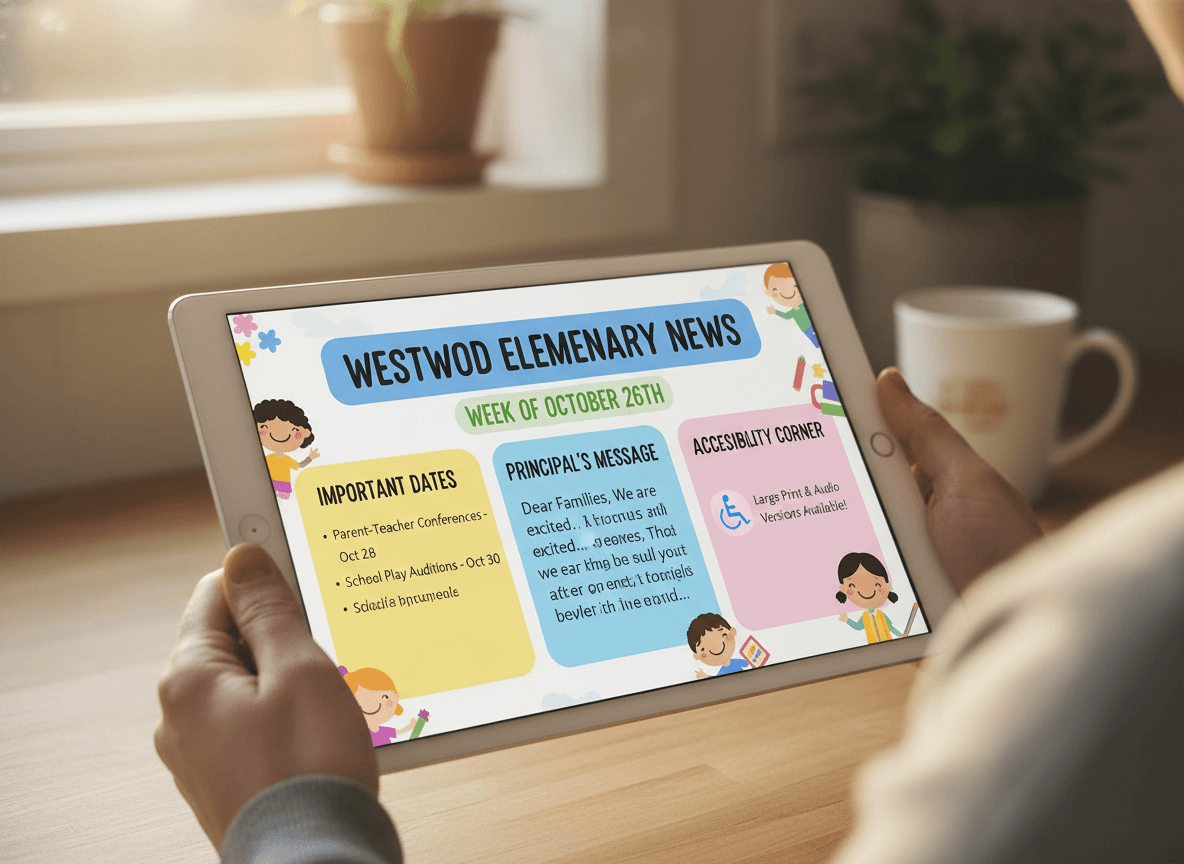
Special education families have a different relationship with school communication than general education families. They are used to formal meetings, legal documents, and clinical language. What most of them never receive is a regular, human-scale update from their child's teacher that treats them as a partner rather than a stakeholder at a compliance table.
A weekly or bi-weekly SPED teacher newsletter changes that dynamic. Done well, it becomes the most valued communication in a special education family's inbox.
Why SPED Communication Is Different
General education newsletters are primarily about engagement. SPED newsletters do that work too, but they carry additional weight.
Special education families are navigating systems that most parents never interact with: IEP teams, accommodation plans, related services, progress monitoring, eligibility reviews. The formal documentation is necessary but it is not a relationship. Between IEP meetings, many families have almost no direct contact with the teacher who knows their child best.
The newsletter fills that gap. It translates what is happening in your classroom into language parents can understand without a background in special education law. It gives families a window into their child's day that the IEP document cannot provide.
What to Include in a SPED Newsletter
Classroom activities in plain language
Lead with what students are doing that week. Not in clinical terms. Not in service abbreviations. In the same plain English you would use to describe a classroom to a neighbor.
"This week we worked on sequencing stories. Students practiced telling the beginning, middle, and end of short picture books. Several students made real breakthroughs this week with their retelling skills." No IEP jargon needed. The parent knows what their child did and that it went well.
What students are practicing at home (without calling it "homework")
Generalization is one of the hardest parts of special education. Skills that a student can demonstrate in a structured school environment often do not transfer to home without intentional practice.
Include a brief "try this at home" section in each newsletter. One specific, low-effort activity that reinforces something students are working on at school. Make it feel like a fun suggestion, not an assignment. "If you are at the grocery store this week, ask your child to find three items that start with the same letter. We have been working on initial sounds and real-world practice makes it stick faster."
Wins worth sharing
Special education families hear about their child's deficits constantly. Evaluations, eligibility meetings, progress reports, the format of special education documentation is built around what students cannot do yet.
Your newsletter is one of the few places where you can lead with what a student can do. Include a brief class-wide win each week. "Our class has been working on self-regulation strategies for six weeks. This week, four students used the calm-down toolkit without being prompted. That is a big deal and we celebrated it."
No names. No comparisons. Just an honest moment of progress shared with the parents who most need to hear it.
Upcoming dates that affect families
IEP review dates. Progress report timelines. Service schedule changes. Field trips that require extra preparation for students with sensory needs or behavioral plans. A clear upcoming dates section gives families time to prepare instead of being surprised by a phone call.
The Tone That Works
The most common mistake in SPED parent communication is defaulting to clinical language. "Student demonstrated mastery of objective 3.2 with 80 percent accuracy across three consecutive trials." This is appropriate language for a progress report. It is a terrible newsletter sentence.
The newsletter tone should be the way you would talk to a parent at pickup. Warm, specific, human. If you would not say it at pickup, rewrite it before it goes in the newsletter.
Avoid these patterns:
- Service abbreviations without explanation (OT, SLP, PT), spell them out every time or use plain language ("our occupational therapist", "speech therapy")
- Deficit framing, the newsletter is not a progress report and should not read like one
- Legalese from the IEP, "the team has determined" and "consistent with the student's present levels" belong in formal documents, not newsletters
- Generic statements about progress, "he's doing great!" tells the parent nothing; "she finished her first independent reading paragraph this week and asked to do another one" tells them everything
Frequency: Weekly vs. Bi-Weekly
Weekly is better for building the relationship, but bi-weekly is far better than nothing. The key is consistency. A bi-weekly newsletter that goes out every other Thursday is more valuable than an irregular weekly one.
If you are managing a complex caseload with multiple service providers, consider starting bi-weekly and moving to weekly when the format feels natural. Set a template. Use the same structure every time. The more predictable the newsletter, the faster it is to write.
Privacy and Confidentiality
SPED newsletters go to the families on your caseload. They should never include individually identifiable information about a specific student unless that newsletter is sent only to that student's family.
In a class newsletter (sent to all families), keep examples and wins anonymous and aggregate. "Several students this week" rather than naming the student. Use first names only if you have explicit family consent and your district allows it.
When in doubt: describe the activity, describe the progress, leave out the name. The parent of the child who made the breakthrough knows exactly who you are talking about. The other families see that something good is happening in the classroom. Everyone wins.
Building the Trust That Makes IEP Meetings Easier
Here is a pattern SPED teachers notice after sending consistent newsletters for one school year: IEP meetings get shorter and less contentious. Families who have been receiving weekly updates from the teacher for months come into the formal meeting already knowing the context. The surprise and anxiety that characterize difficult IEP meetings are dramatically reduced when the family has been a continuous partner in the child's education.
The newsletter is not a substitute for a well-run IEP meeting. It is the relationship infrastructure that makes those meetings work the way they are supposed to.
Get one newsletter idea every week.
Free. For teachers. No spam.
Frequently asked questions
When should special education teachers send newsletters to parents?
Weekly newsletters sent on a consistent day build the most trust with SPED families because predictability matters both for families managing complex schedules and for students whose home routines are often structured around school communication. Bi-weekly is acceptable if content depth is maintained, but monthly is rarely enough for the level of transparency SPED families need.
What should a special education parent communication newsletter include?
Include what the class or student worked on that week, any upcoming IEP-related dates or service changes, a specific positive observation, and a clear way for families to reach you with questions. Under IDEA, progress on IEP goals must be reported as often as report cards are issued, so the newsletter supplements but does not replace that formal obligation.
How should SPED teachers write newsletters to build trust with families?
Write in direct, specific language rather than general reassurances. Families who receive 'we had a great week' with no details quickly learn to discount the newsletter entirely. Specific observable information such as 'we practiced turn-taking during small group centers and most students needed fewer prompts than last month' gives families real data they can use.
What are common challenges with special education parent communication newsletters?
Privacy is the central challenge. SPED newsletters go to a group of families, but IDEA and FERPA protect each student's disability information, IEP details, and progress data from disclosure to others. Writing in ways that are informative for a family while not identifying any individual student in a group format requires consistent care and clear guidelines.
How can special education teachers manage newsletter communication across multiple families with different needs?
Daystage lets SPED teachers maintain separate subscriber groups for different classes or caseloads, send the classroom newsletter to everyone, and route individual notes directly to specific families from the same platform. The delivery tracking also shows which families are consistently not opening, which is a useful signal for who may need a phone call.

Adi Ackerman
Author
Adi Ackerman is a former classroom teacher and curriculum writer with 8 years in K-8 schools. She writes about school communication, parent engagement, and what actually works in real classrooms.
More for Special Education
Special Education Parent Rights Newsletter: What Every Family Should Know
Special Education · 6 min read
Special Education Reevaluation Newsletter: Preparing Families for the Three Year Review
Special Education · 5 min read
ADHD Communication Newsletter: What Schools Should Tell Families
Special Education · 6 min read
Ready to send your first newsletter?
3 newsletters free. No credit card. First one ready in under 5 minutes.
Get started free