
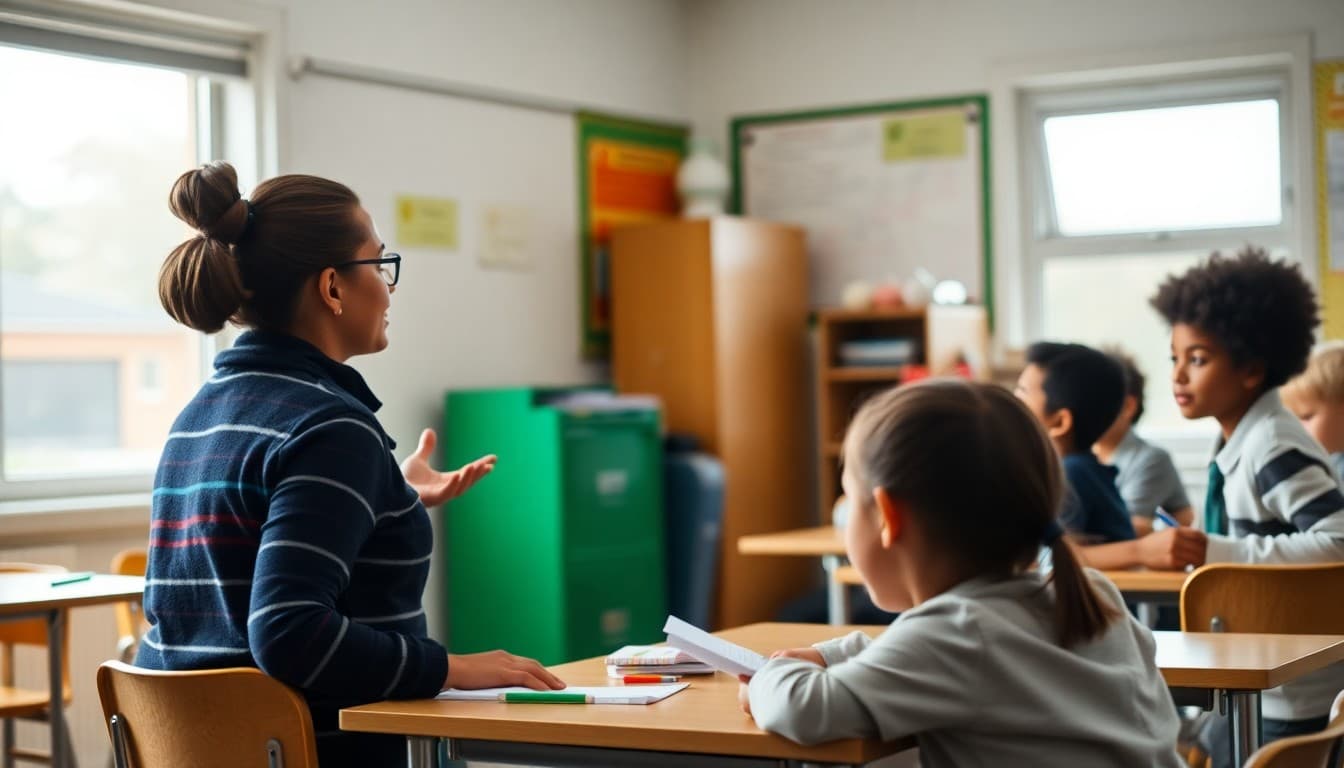
Disability Awareness Classroom Newsletter: Teaching All Students

Disability awareness curriculum benefits every student in a classroom. Students who learn to understand disability as part of human diversity are better prepared for inclusive communities, workplaces, and relationships. A newsletter that explains your disability awareness curriculum to families brings them into the learning rather than leaving them to hear about it secondhand.
Why Disability Awareness Belongs in Every Classroom
Approximately one in five people in the United States has a disability. Students who are not disabled will have classmates, family members, colleagues, and community members with disabilities throughout their lives. Schools that prepare students to navigate those relationships with respect and understanding are doing essential work, not extra credit curriculum.
Disability awareness education also matters for students who are disabled. Classrooms where all students have learned disability history, respectful language, and the value of accessibility are safer, more welcoming environments for students whose disabilities may not be immediately visible.
What Disability Awareness Education Covers
Disability awareness curriculum typically addresses: what disability is and how it varies (visible, invisible, physical, cognitive, sensory, developmental), disability language and respect (identity-first versus person-first, why "special needs" and "handicapped" are considered outdated, what language disabled people themselves prefer), disability history and civil rights (the ADA, the disability rights movement, key figures), accessibility and universal design, and media representation of disability including stereotypes to recognize and challenge.
None of these topics require students to have disabilities in the classroom to teach them. They are part of social studies, language arts, health, and community education curricula at every grade level.
Template: Disability Awareness Unit Newsletter
"Hello, families. We are beginning a disability awareness unit as part of our curriculum on human diversity and community membership. Over the next three weeks, students will learn about disability as part of human experience, develop respectful language practices, explore accessibility and universal design, and read from a selection of memoirs and fiction written by or about people with disabilities.
We will be reading [book title] together as a class, which addresses [brief description]. I have also gathered a list of related books for students who want to explore further at home, included below.
If you have questions about the unit's content or approach, please reach out. If your family has personal experience with disability that you would like to share with the class through a family guest presentation, I welcome that conversation."
Connecting Disability Awareness to Real Classroom Community
The most effective disability awareness education is connected to the real classroom community rather than taught as an abstract concept. This requires care: never use individual students with disabilities as teaching examples without their explicit choice to share their experience. The curriculum about disability is general and historical. The living example of a disabled student's value in the community is visible every day without requiring them to perform their disability for educational purposes.
A newsletter that explains this distinction helps families of disabled students feel confident that their child's privacy is protected while disability awareness is still taught.
Addressing Ableism in Your Newsletter
Some families may push back on disability awareness curriculum with questions like "why are we teaching kids to see difference" or "isn't this making things weird?" A brief newsletter paragraph that addresses this directly is worth including preemptively. "Teaching children to understand disability is not the same as teaching them to see it as a problem. It is teaching them to recognize it as part of human diversity. Students who grow up with accurate information about disability are more comfortable, not less, with the full range of human experience."
Resources for Families to Explore at Home
A newsletter section with three to five specific books, websites, or media recommendations extends disability awareness learning into the home. The Crip Camp documentary is accessible for middle and high school students. Many picture books address disability for younger children, including ones with deaf main characters, wheelchair-using protagonists, and characters with autism. Naming specific titles in a newsletter makes the resources discoverable without requiring families to research from scratch.
Get one newsletter idea every week.
Free. For teachers. No spam.
Frequently asked questions
What is the purpose of disability awareness education in K-12 classrooms?
Disability awareness education teaches all students to understand disability as part of human diversity, to use respectful and accurate language, to recognize and challenge ableism, and to interact with people with disabilities as whole people rather than objects of pity or inspiration. Students who receive explicit disability education in school develop higher levels of empathy, are more likely to advocate for accessible environments, and are better prepared for workplaces and communities that include people with diverse abilities.
How do I introduce disability awareness to families in a newsletter?
Start with the purpose and the approach. 'We are beginning a unit on disability awareness as part of our broader curriculum on human diversity. This unit teaches students to understand disability with accurate information, respectful language, and a perspective that values the contributions of people with disabilities.' That framing tells families what you are doing and why without requiring them to wonder whether this is appropriate for school.
What books are most useful for classroom disability awareness curriculum?
El Deafo by Cece Bell (grades 3-7) is a graphic memoir about deaf identity. Rules by Cynthia Lord (grades 4-7) addresses autism through a sibling's perspective. Fish in a Tree by Lynda Mullaly Hunt (grades 4-7) covers dyslexia. Wonder by R.J. Palacio (grades 4-8) covers a facial difference. Out of My Mind by Sharon Draper (grades 5-9) gives voice to a student with cerebral palsy who is minimally verbal. Naming specific books in a newsletter gives families something to look for at home.
How do I handle family concerns about discussing disability in the classroom?
Most concerns come from misunderstanding about what disability awareness education involves. A clear newsletter explanation that covers the curriculum purpose, the sources you use, and the language norms you establish typically resolves concerns before they become complaints. For families who remain concerned after reading a thoughtful explanation, a direct conversation is the right next step. What you want to avoid is a parent's first knowledge of disability awareness curriculum coming through their child's description of it.
How does Daystage help teachers communicate about sensitive curriculum topics like disability?
Daystage newsletters let you share curriculum details with formatting that separates the explanation section clearly, include links to the books or resources you are using, and give families a direct reply channel to ask questions. A structured, professional-looking newsletter communicates that disability awareness education is a deliberate, considered part of your curriculum, not an improvised lesson.

Adi Ackerman
Author
Adi Ackerman is a former classroom teacher and curriculum writer with 8 years in K-8 schools. She writes about school communication, parent engagement, and what actually works in real classrooms.
More for Special Education
Ready to send your first newsletter?
3 newsletters free. No credit card. First one ready in under 5 minutes.
Get started free