

Autism Support School Newsletter: Resources for Families
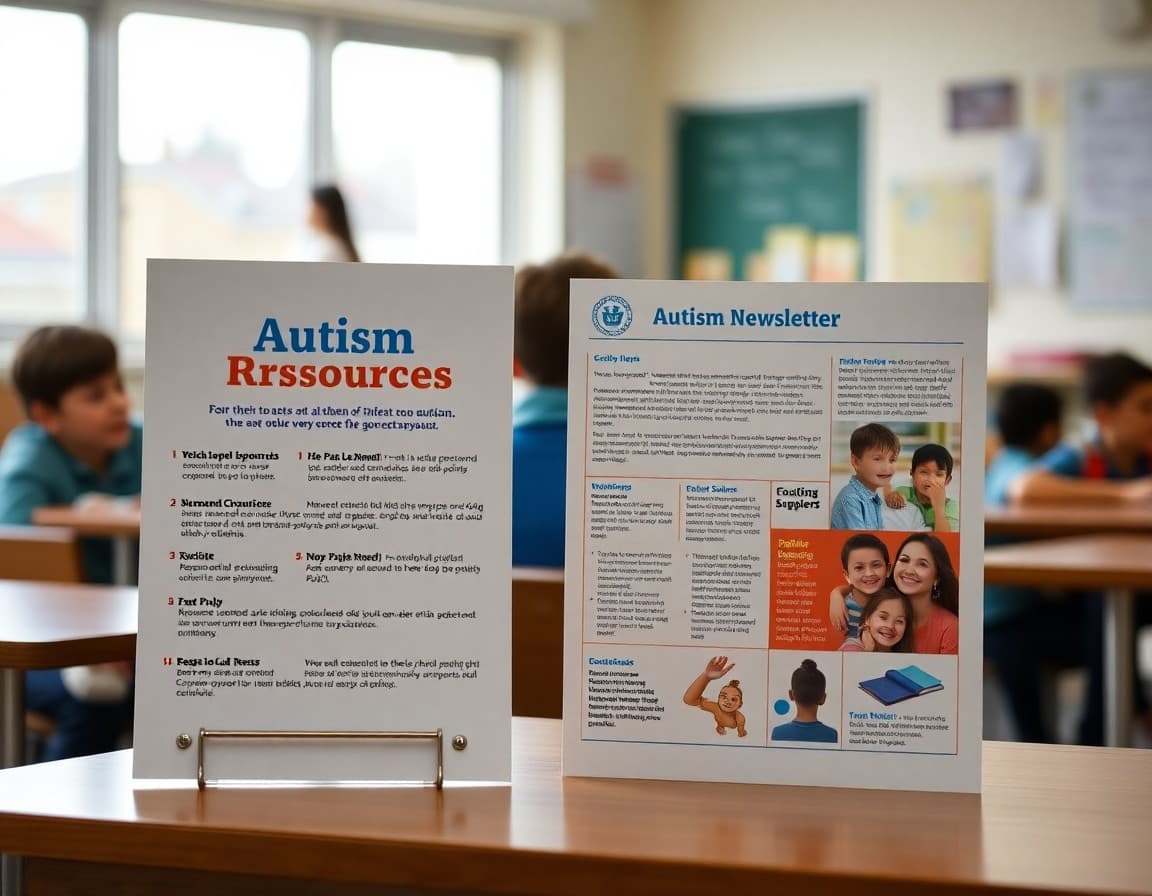
Families of autistic students benefit from consistent, specific communication about how their child's school day works. A newsletter that covers the supports, strategies, and resources relevant to autism does more than inform: it signals that your school understands autism and is actively working to serve these students well.
Why Specific Communication Matters for Autism Families
Autism is highly variable. The strategies that help one autistic student manage sensory overwhelm may not help another. Families who receive generic "we support all learners" messages often feel unseen. Families who receive specific communication about how their child's classroom handles sensory needs, transitions, communication supports, and behavior feel genuinely partnered with their school.
Specific communication also helps families prepare their child for the school day at home. If your classroom uses a visual schedule posted at the door and the first activity is always morning meeting with three specific songs, a family who knows that can reference it when helping their child prepare in the morning.
Communication Supports: What to Explain
Many autistic students use alternative or augmentative communication (AAC), including speech-generating devices, picture exchange systems, or sign-based systems. If your classroom uses any of these, explain them in your newsletter with enough detail that families understand the purpose and can practice the system at home.
"[Student] uses a speech-generating device for communication. At school, we use the Vocabulary folder in [device name] for requesting, commenting, and social communication. Families who are familiar with the core vocabulary can support communication at home using the same words and phrases." That explanation is practical and actionable.
Sensory Supports in Your Classroom
Describe the sensory accommodations your classroom provides: fidget tools, noise-canceling headphones, a sensory corner or calm-down space, flexible seating options, lighting adjustments, or scheduled sensory breaks. Families who know these tools exist may want to mirror them at home. Families who understand why sensory supports matter are less likely to view them as special treatment and more likely to advocate for their continuation.
Template section: "Our classroom includes several supports for students who experience sensory sensitivities. Students have access to noise-reducing headphones during high-stimulation activities. We have a calm-down corner with dim lighting and calming materials that any student can use when they need to regulate. Scheduled sensory breaks are built into our daily routine. Please let me know if your child has specific sensory needs I should be aware of."
Routine and Predictability
Predictable routines reduce anxiety for most autistic students. Explain how your classroom routine is structured and what you do when it changes. "Our daily schedule is posted visually in three places in the classroom. When there are schedule changes, I introduce them at morning meeting with a verbal and visual preview so students know what to expect before the change happens."
When school events disrupt the routine, such as picture day, fire drills, or assemblies, send a brief pre-event communication to autism families specifically. A heads-up about a fire drill three days out gives families time to prepare their child and reduces the chance of a significant dysregulation response.
Sharing Resources Without Overwhelming
Focus on local and practical resources. Your state's autism support organization, your district's autism specialist contact, and one or two evidence-based websites like the Autism Science Foundation or ASHA's autism resources page cover most informational needs. A social story library or visual schedule template families can use at home is often more useful than a research article link.
Home-School Consistency
The most valuable section of an autism support newsletter is the one that translates school strategies into home language. Name the specific phrases you use for transitions. Describe how you prompt a student when they are frustrated. Explain how you use praise for effort rather than compliance. Families who use the same language and strategies at home as you use at school give their child a consistent, lower-anxiety experience across both environments.
Get one newsletter idea every week.
Free. For teachers. No spam.
Frequently asked questions
What language should I use when writing about autism in a school newsletter?
The autism community is divided on identity-first versus person-first language. Identity-first language (autistic student) is preferred by many autistic self-advocates and adult autistic community members. Person-first language (student with autism) is what many families and medical providers use and what appears in IDEA. The safest approach in a general newsletter is to ask what families prefer and to use the language your school community has indicated. When in doubt, use the language families use about their own child.
What should an autism support newsletter cover?
Cover practical topics that affect daily life: how sensory needs are addressed in your classroom or school, how you support communication for non-speaking or minimally speaking students, how structured routines work, how behavior support plans are connected to communication needs, and what families can do at home to support the strategies used at school. Focus on what is actually happening, not general autism awareness messaging.
How do I communicate about meltdowns and dysregulation to autism families respectfully?
Use precise, non-judgmental language. A meltdown is a response to overwhelm, not a behavior problem or a choice. 'When your child becomes overwhelmed by sensory input or unexpected changes, our team responds with [specific strategy] to help them return to a regulated state' is accurate and respectful. Avoid language that frames dysregulation as defiance, manipulation, or poor parenting.
What home-school consistency strategies are most important for autistic students?
Visual schedules, predictable routines, consistent language for transitions, and shared social stories work best when used the same way at home and school. A newsletter that describes the specific language you use for transitions, the visual supports in your classroom, and the sensory breaks you offer gives families the context they need to mirror those strategies at home. Consistency between environments reduces anxiety significantly for most autistic students.
How do I share autism resources without overwhelming families?
Offer two to three specific resources rather than a long list. A link to your local autism support group, a specific book you recommend, and one reputable website is more useful than a 20-link resource section. Daystage newsletters let you embed clickable links so families can access resources directly from the newsletter without copying URLs.

Adi Ackerman
Author
Adi Ackerman is a former classroom teacher and curriculum writer with 8 years in K-8 schools. She writes about school communication, parent engagement, and what actually works in real classrooms.
More for Special Education
Ready to send your first newsletter?
3 newsletters free. No credit card. First one ready in under 5 minutes.
Get started free