

SEL Newsletter on Social Awareness: A Template Worth Keeping
Social awareness is the third CASEL competency, and it is the one most newsletters reduce to "we talked about being kind this week." Kindness is fine. Social awareness is bigger. It is the ability to notice what other people are feeling and adjust what you say or do based on what you see. That is a real skill that takes years to build. A newsletter that names it clearly and gives parents one thing to try beats one that quotes a kindness curriculum.
What social awareness actually means
Social awareness is reading the room and the people in it. For a five-year-old, that might mean noticing a classmate is crying and going to check on them. For a fourth grader, it might mean sensing that a kid does not want to talk and giving them space. The skill builds through repetition. Notice. Guess. Check. Adjust.
The "she might be feeling" prompt
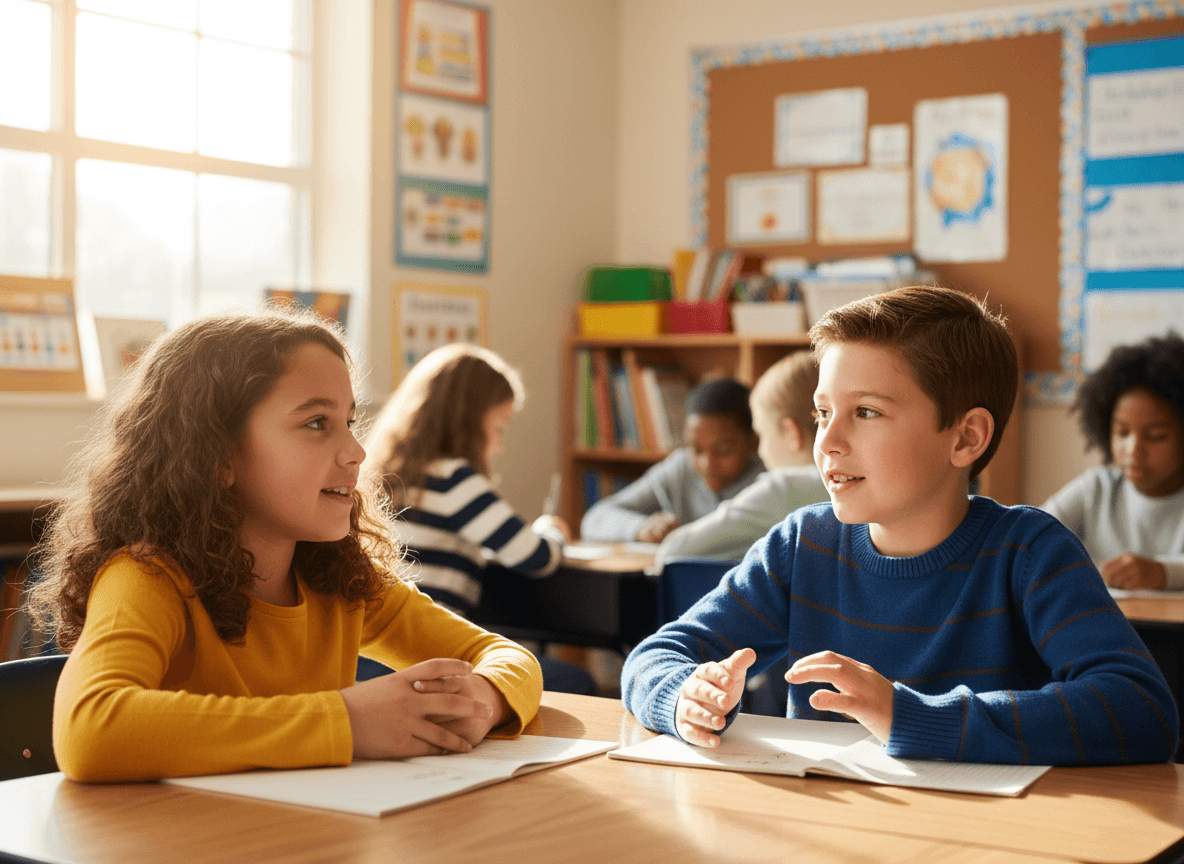
Our class has been practicing one sentence stem all month. "She might be feeling..." or "He might be thinking..." We use it during partner reading, during recess debriefs, during read-aloud. A kid sees something happen. They guess at what the other person might be feeling. They check by asking. They adjust. That four-step loop is the whole skill.
Use stories before you use real conflicts
It is easier to ask a kid how Charlotte felt in Charlotte's Web than to ask them how their classmate felt during a fight at recess. Books are a low-stakes way to practice perspective-taking. Once the muscle is built in fiction, it transfers to real life. Pick a picture book where two characters see the same situation differently. Ask kids what each one was feeling. Do not rush them.
A short example from this week
On Monday during morning meeting, a kid I will call R shared that he had a hard weekend because his dog was sick. The class listened. After R was done, another student, a kid I will call T, said, "I think you might be feeling worried because you do not know if your dog will be okay." R nodded. T did not solve anything. He just named what he saw. That is social awareness working.
The skill we have been practicing is called social awareness. It is the ability to notice what other people are feeling and imagine what they might be thinking. At home, you can build this by reading a book together tonight and pausing once to ask, "What do you think this character might be feeling right now?" Let your child guess. There is no wrong answer.
Cultural and family differences matter
Social awareness includes recognizing that different families, cultures, and households do things differently. A child who notices that her friend's family eats dinner at a different time, or celebrates different holidays, or has different rules about shoes in the house, is doing social awareness work. We talk about this in class without ranking the differences. They are just differences.
What to skip in the newsletter
Skip the word empathy in the headline. It is in the family of this skill but it is its own thing, and using both terms in one newsletter confuses parents. Skip vague claims like "we built community this week." Replace them with the actual moment. Skip the call to "have meaningful conversations about diversity." Give parents one specific book to read or one specific question to ask.
Common pitfalls in social awareness newsletters
The first pitfall is collapsing social awareness into kindness. They are related but not the same. Keep them separate so parents can build vocabulary over time. The second pitfall is using broad cultural language without a concrete example. "Celebrating diversity" without a specific classroom moment lands as filler. The third pitfall is asking parents to "discuss differences" without giving them a single prompt. Always end with one specific question.
Subject lines that get opened
"T noticed something about R this week" gets opened. "Social Awareness Update" does not. Try "One question to ask your kid about a classmate tonight" or "What we mean when we say perspective-taking." Specific over generic. Story over jargon. Write the subject after the newsletter, when you know which moment to highlight.
Length and cadence
Keep the body to 350 to 500 words. Two short sections. One photo of a morning meeting or partner work, with permissions cleared. Send every two to three weeks. That cadence keeps the language alive at home without becoming background noise. The consistency is what makes parents start using the prompts.
How Daystage helps with social awareness newsletters
Daystage drafts SEL newsletters in parent-friendly language from a few notes you type in. The social awareness template includes a real classroom moment, a perspective-taking activity, and one dinner-table prompt. You read, edit, send. Most teachers finish the whole newsletter in under ten minutes.
Get one newsletter idea every week.
Free. For teachers. No spam.
Frequently asked questions
What does social awareness look like in young kids?
A first grader who notices that a classmate is sitting alone and goes to ask if they want to play is doing social awareness. So is a fourth grader who reads the room before cracking a joke and decides not to. The skill is noticing other people and adjusting based on what you see.
What is perspective-taking?
Perspective-taking is the ability to imagine how another person might be feeling or thinking, even when it is different from your own experience. It is a skill that builds slowly from age four through adolescence. Younger kids can do it for one feeling at a time. Older kids can hold multiple perspectives in their head.
How do you teach social awareness without being preachy?
Drop the lecture. Use moments. When two kids have a conflict, ask each of them what they think the other one was feeling. Do not correct. Just ask. Over time, the asking becomes the habit, and the habit becomes the skill.
What can parents do to build social awareness at home?
Read books out loud and pause to ask what a character might be feeling. Watch a show together and notice when someone reads a situation wrong. Talk about a real interaction from the day and wonder out loud what the other person might have been thinking.
Does Daystage have a social awareness newsletter template?
Daystage has SEL templates for all five CASEL competencies. The social awareness template includes a perspective-taking activity, a classroom example, and one prompt for parents. You type your notes, Daystage drafts it, you send.

Adi Ackerman
Author
Adi Ackerman is a former classroom teacher and curriculum writer with 8 years in K-8 schools. She writes about school communication, parent engagement, and what actually works in real classrooms.
More for Social-Emotional Learning
Ready to send your first newsletter?
3 newsletters free. No credit card. First one ready in under 5 minutes.
Get started free