
SEL Newsletter on Conflict Resolution: A Quick Template
Conflict resolution is a skill kids practice every day at school whether the school plans for it or not. Recess. Lunch. Group work. Walking in line. Every disagreement is a chance to build the muscle or skip it. A newsletter that names the strategy your class is using and tells parents how to mirror it at home turns one classroom practice into a whole-week practice.
What conflict resolution actually means
It is the skill of working out a disagreement without making it bigger. Kids who learn this can hold a different point of view, name what they need, and find a path forward. It is not the same as avoiding conflict. Avoiding is a different skill, and it has its own costs. We are teaching kids to face the disagreement and get to the other side.
I-statements, plain version
An I-statement is a sentence that names how you feel and why, without blaming. We use a simple frame in class. "I felt _____ when _____ because _____." A first grader can fill it in. "I felt mad when the marker got taken because I was using it." The structure does the work. The kid does not have to think about how to phrase it. The phrasing is already there.
The peace path
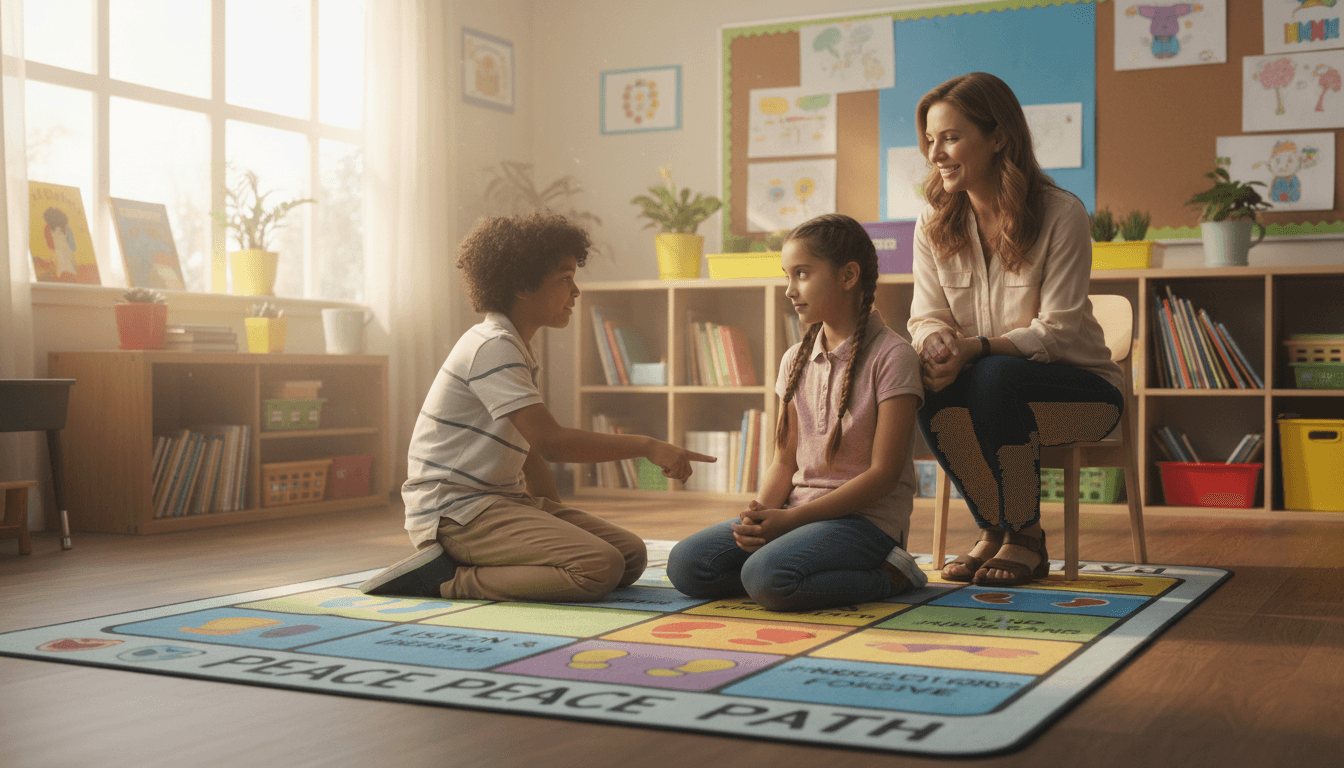
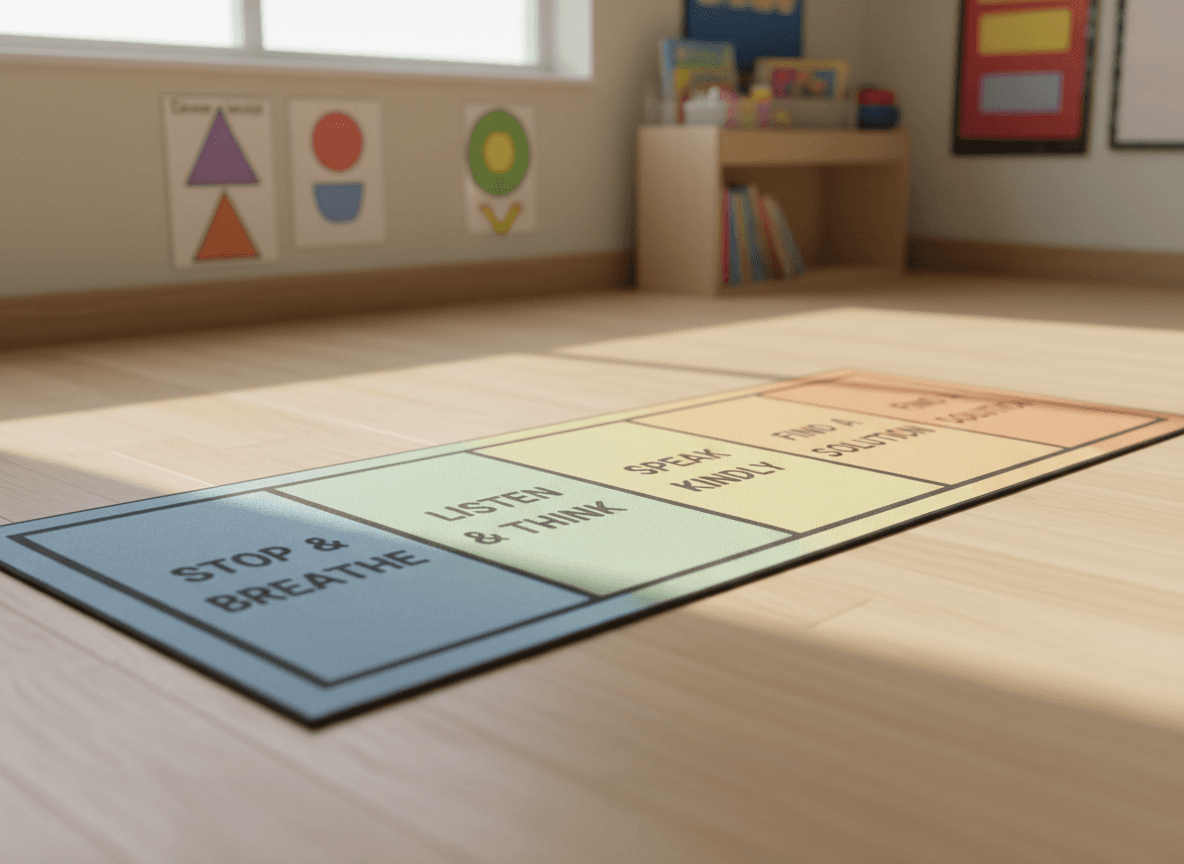
We have a printed peace path mat near the carpet. It has four squares. Square one, name how you feel. Square two, listen to the other person. Square three, think of two options. Square four, pick one and shake on it. In Room 4, two second graders, a kid I will call S and a kid I will call K, used it twice last week without an adult prompting them. The first time took eight minutes. The second time took two. The path becomes a habit.
When the adult steps in
Most small conflicts do not need an adult. Hover close. Let the kids try. Step in if safety is at stake, if the same conflict keeps repeating, or if one kid has clearly shut down. When you do step in, do not solve it. Coach it. Ask each kid how they feel. Ask each kid what they need. Hand the work back to them as soon as you can.
A short section parents will actually read
On Wednesday, two kids in our class had a fight over who got to be the line leader. One of them said, "I felt left out when you went ahead because we agreed I would go first today." The other one said, "I forgot, sorry. You can go." That was the whole conflict. Resolved in twelve seconds. A few months ago, the same fight would have ended with one kid in tears.
The skill we have been practicing is called conflict resolution. It is the ability to work through a disagreement without making it worse. At home, you can try this with siblings tonight. When they get into it, say, "Each of you tell me how you felt and why, using the words 'I felt ____ when ____.'" Then step back and see what happens.
What to skip in the newsletter
Skip the word "drama" if you can. It minimizes feelings that are real to the kids. Skip claims that conflict resolution stops all bullying. It does not. It builds skills that prevent some fights and shortens others. Skip generic advice like "encourage your child to use their words." Give parents the exact sentence frame and one prompt.
Common pitfalls in conflict-resolution newsletters
The first pitfall is implying that conflict is bad. Conflict is part of being human, and the goal is not to avoid it. The goal is to move through it. The second pitfall is solving kids' fights for them. They learn nothing that way. The third pitfall is teaching the I-statement frame once and never repeating it. The frame needs reps. Mention it in every newsletter for a month. Then keep mentioning it.
Subject lines that get opened
"How S and K worked out a fight in two minutes this week" gets opened. "Class Update Week 12" does not. Try "The sentence frame we use for fights in Room 4" or "One thing to say next time your kids argue." Story-driven and specific. Write the subject line after the body, once you know which moment is the anchor.
Length, cadence, and visuals
Keep the body to 350 to 500 words. Two short sections. One photo of the peace path or two kids working it out, with permissions cleared. Send every two to three weeks. The cadence is what makes the I-statement frame stick at home. Parents start using it themselves after a few months of seeing it in print.
How Daystage helps with conflict resolution newsletters
Daystage drafts SEL newsletters from a few notes you type in. The conflict resolution template includes the I-statement frame, a real classroom moment, and one parent prompt. You read, edit, send. Most teachers finish in under ten minutes.
Get one newsletter idea every week.
Free. For teachers. No spam.
Frequently asked questions
What is an I-statement?
A sentence that names how you feel and why, without blaming the other person. 'I felt sad when the ball got taken because I was still using it.' Compare that to 'You took the ball, you are mean.' The first invites a conversation. The second invites a fight.
What is a peace path?
A printed mat or visual with four to six steps that two kids walk through to work out a disagreement. Stand on the first square and say how you feel. Move to the next and listen. Brainstorm options. Pick one. Shake or high-five at the end. The structure makes the hard part easier.
When should an adult step into a kid conflict?
When safety is at stake. When the same conflict keeps repeating without progress. When one kid clearly has more power and the other one is shut down. Otherwise, hover close and let them work it out. Adult interventions in every small fight prevent kids from building the skill.
What can parents do at home with sibling fights?
Resist the urge to be judge and jury. Try this instead. 'Tell me what happened from your side. Now tell me from your sibling's side. What do you each need right now?' Most fights deflate when each kid feels heard. The ones that do not deflate are the ones that need adult support.
Does Daystage have a conflict resolution newsletter template?
Daystage has SEL templates for the five CASEL competencies and adjacent skills like conflict resolution. The template includes a classroom moment, a plain-language strategy, and one parent prompt. You type a few notes, Daystage drafts, you send in under ten minutes.

Adi Ackerman
Author
Adi Ackerman is a former classroom teacher and curriculum writer with 8 years in K-8 schools. She writes about school communication, parent engagement, and what actually works in real classrooms.
More for Social-Emotional Learning
Ready to send your first newsletter?
3 newsletters free. No credit card. First one ready in under 5 minutes.
Get started free