
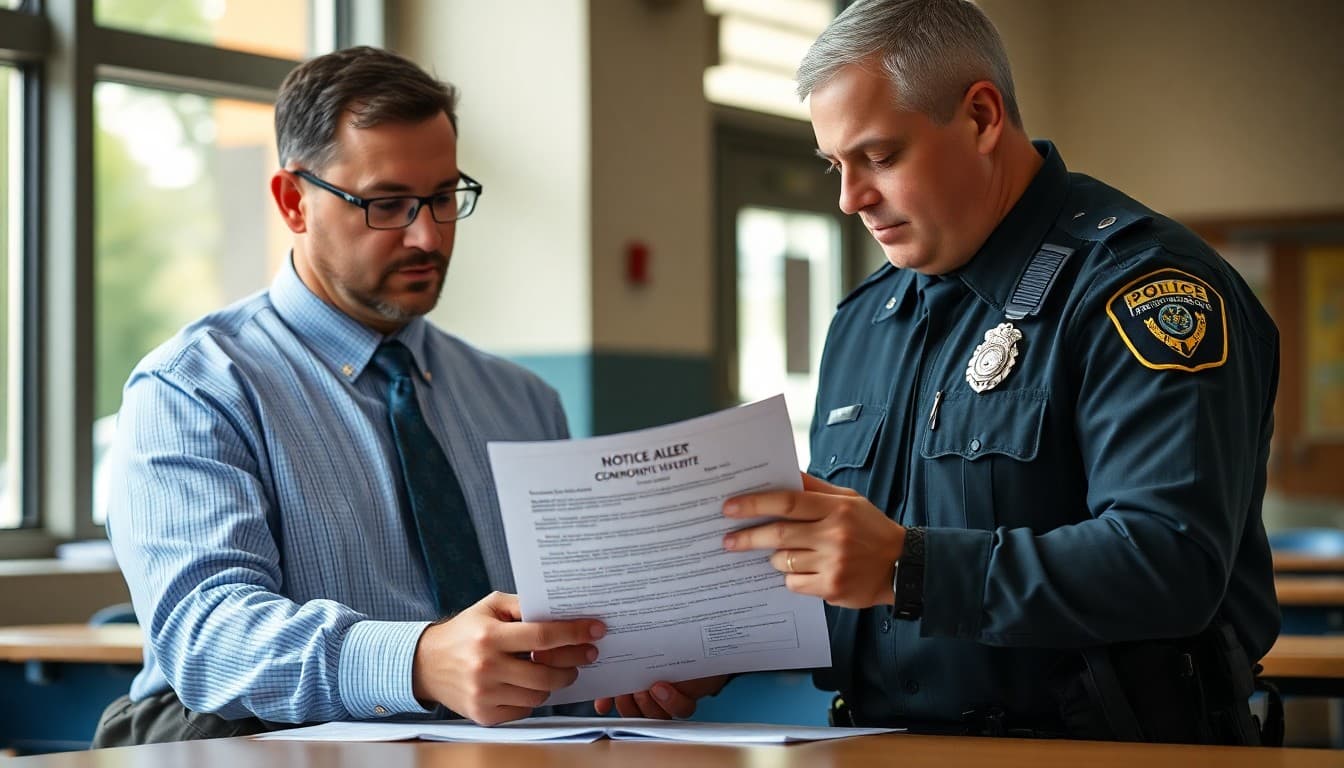
School Newsletter: Neighborhood Safety Alert for Families

Neighborhood safety alerts put schools in the role of community safety communicators. When a credible safety concern exists in the area surrounding the school, families need to hear about it from the school as part of their safety information network, not just from local news or community Facebook groups. A timely, accurate alert from the school adds the school's authority to the information and directs families toward protective action.
Verify the Information With Law Enforcement First
Before sending a neighborhood safety alert, confirm the information with your school resource officer or local law enforcement. You need to know that the concern is real, that it has not already been resolved, and that there is no law enforcement reason why the school should not communicate about it. A brief confirmation call takes fifteen minutes and prevents the school from sending an alert based on social media rumor or outdated information.
Describe the Nature of the Concern in General Terms
Reference the law enforcement advisory directly: "The [local police department] has issued an advisory regarding [general description of the concern] in the area surrounding the school." Link to or attach the official advisory. Do not describe specific incidents in more detail than the advisory provides. The school's role is to ensure families see the official information, not to editorialize on it.
Describe Any Changes to School Procedures
If the neighborhood concern is prompting any changes to arrival, dismissal, or transportation procedures, describe those changes specifically. Additional staff supervision during arrival and dismissal, adjusted walking routes, or changes to the after-school program schedule are all appropriate responses depending on the nature of the concern.
Provide Protective Guidance for Families
Give families specific behavioral guidance: have children walk to and from school in groups, avoid certain routes if law enforcement has identified a particular area of concern, talk to children about what to do if they feel unsafe, and report anything suspicious to law enforcement and the school immediately. Practical guidance channels family concern into appropriate action.
Emphasize Student Reporting
Remind students and families that if a student witnesses or experiences anything concerning related to the neighborhood safety issue, they should tell a trusted adult immediately. Students who walk to and from school are often the first to notice things that adults miss. Their reports are valuable and should be acted on.
Include Law Enforcement Contact Information
Provide the non-emergency police line for reporting concerns, the school resource officer's direct contact, and the school office number. Families who know exactly who to call are more likely to report concerns than families who have to find the number when they are already anxious.
Commit to Follow-Up Communication
Let families know that the school will follow up when the situation is resolved or when the law enforcement advisory is lifted. Families who receive a follow-up "all-clear" message are reassured, and the school's commitment to closing the communication loop builds credibility for future alerts.
Daystage makes neighborhood safety alerts fast to compose and reliable to send. An alert that reaches every family at the same moment is more effective than a message that spreads through informal channels at different speeds. That consistency matters when the situation involves student safety in transit to and from school.
Get one newsletter idea every week.
Free. For teachers. No spam.
Frequently asked questions
When should schools send a neighborhood safety alert?
When law enforcement has issued a public safety advisory that affects the area surrounding the school, when a pattern of criminal activity in the neighborhood poses a risk to students traveling to or from school, or when a specific incident near the school warrants family awareness.
What information should a neighborhood safety alert include?
Describe the general nature of the safety concern using information from law enforcement advisories, what precautions families should take, any changes to school dismissal or arrival procedures, and law enforcement contact information for reporting concerns.
Should schools describe criminal incidents in detail in the alert?
No. Describe the nature of the concern in general terms. Reference the law enforcement advisory rather than describing incidents directly. Families can access the law enforcement advisory for complete information. The school's role is to alert, not to report.
How should schools coordinate with law enforcement before sending a neighborhood alert?
If possible, verify with the school resource officer or local law enforcement that the alert is appropriate to send and that the information is accurate. Law enforcement may have additional guidance on how to communicate the concern or may have additional information they can share.
How does Daystage support neighborhood safety alerts?
Daystage allows schools to send an urgent neighborhood safety alert to all families quickly with links to the official law enforcement advisory and to safe walking route resources. Fast, organized delivery is particularly important for safety alerts that require immediate family action.

Adi Ackerman
Author
Adi Ackerman is a former classroom teacher and curriculum writer with 8 years in K-8 schools. She writes about school communication, parent engagement, and what actually works in real classrooms.
More for School Safety
Ready to send your first newsletter?
3 newsletters free. No credit card. First one ready in under 5 minutes.
Get started free