

School Safety Plan Newsletter: Our Emergency Procedures
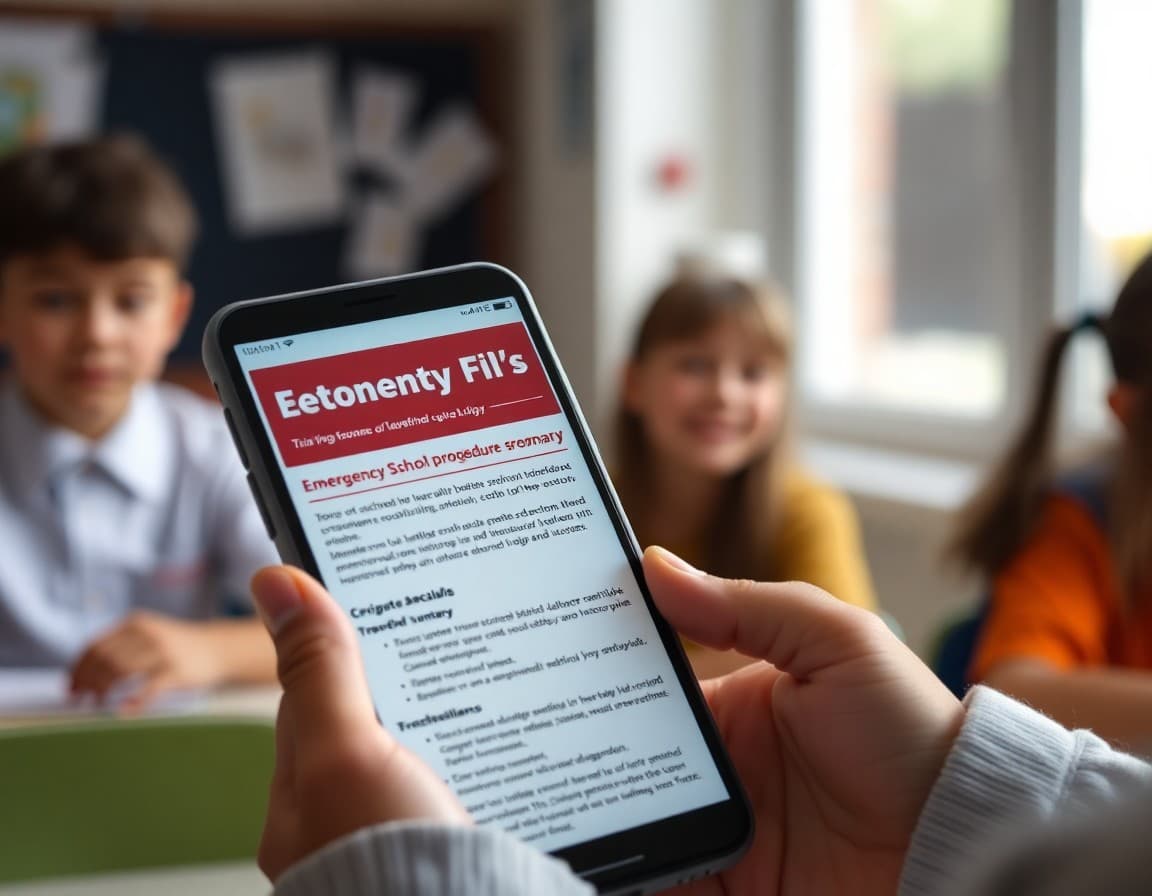
Families rarely see the work that goes into a school safety plan. When they have no information, they fill the gap with anxiety. A clear, well-written safety plan newsletter changes that equation. It shows your community that safety is structured, practiced, and taken seriously every day of the year.
Open by Naming What Your School Plans For
Start by listing the types of emergencies your safety plan addresses: fire, severe weather, medical emergencies, gas leaks, and campus lockdowns. You don't need to describe each response in detail. Simply naming them shows families that your school has thought through a wide range of scenarios, not just the most obvious one.
Explain How Staff Are Trained
Families want to know that the adults responsible for their children know what to do. State specifically how often staff train and what that training covers. "All staff complete emergency response training in August and January. Custodians, cafeteria staff, and office personnel are included, not only teachers" tells families that training is school-wide and current.
Describe Your Drill Schedule Without Revealing Dates
Explain that you conduct regular drills throughout the year and name the types: fire evacuation, shelter-in-place, and lockdown practice. You do not need to publish exact dates in advance, as announced drills reduce their effectiveness. Instead, tell families that they will receive a brief notice after each drill, confirming it was completed and how students responded.
Use a Template Section for Emergency Contact Information
Every safety plan newsletter should include a section like this:
"In the event of an emergency, [School Name] will notify families via [method: text, phone call, email]. Initial notification will go out within [X] minutes of the situation being confirmed. Follow-up information will be posted to [platform or website]. If you need to pick up your child, the designated location is [address]. Please bring a photo ID. Questions about emergency procedures can be directed to [name and contact]."
This section can stay nearly identical year after year with minor updates.
Address the Student Reunification Process
One of the top parent concerns in any emergency is: "How do I get my child?" Explain your reunification process clearly. Where will students be gathered? Who authorizes release? What ID does a parent need? What happens if a student's emergency contact cannot be reached? Answer these questions before parents have to ask them during a stressful moment.
Explain Who Is Responsible for Safety on Campus
Name the roles, not just abstract systems. Tell families that the principal is the incident commander, the school counselors coordinate student support, and the school resource officer serves as the law enforcement liaison. When families know who is responsible for what, they trust the system more and call the right person when they have a concern.
Invite Families to Share Concerns
One of the best safety tools a school has is informed families who speak up when they notice something concerning. Make it explicit: "If your child mentions something at home that worries you, call the front office or email [principal] directly. We take every concern seriously." This builds a culture of shared responsibility rather than passive confidence.
Close with a Date for the Next Safety Update
End by telling families when they will next hear from you about safety. "We will send our next safety update in January. If any significant changes to our plan occur before then, we will reach out immediately." A committed future date shows that this is an ongoing conversation, not a one-time message sent to satisfy a requirement.
Get one newsletter idea every week.
Free. For teachers. No spam.
Frequently asked questions
What should a school safety plan newsletter include?
Cover the types of emergencies your school plans for, how students and staff respond in each scenario, how families will be notified, where to pick up students if evacuation is necessary, and who to contact with questions. Avoid publishing specific tactical details about lock-down procedures that could compromise the plan if seen by someone with harmful intent.
How detailed should a school share its safety plan with families?
Share enough to build confidence without creating a vulnerability. Families need to know that a plan exists, that staff are trained, that drills happen on a schedule, and that there are clear channels for emergency notification. They do not need the full operational document. The goal is informed families, not a published playbook.
When is the right time to send a school safety plan newsletter?
Send it at the beginning of the school year and again at the start of the second semester. If your plan changes significantly, send an update. If a real emergency occurs, send a brief factual summary once the situation is resolved. Proactive timing is better than reactive communication.
How do you reassure families without making them feel like something is wrong?
Lead with what your school does routinely rather than what would happen in a crisis. 'Our staff complete safety training three times a year' is more reassuring than 'if there is an active threat.' Frame the newsletter around preparation and professionalism rather than fear. Calm, specific language does more reassurance work than vague statements like 'your child is safe.'
Can Daystage help schools archive and resend safety plan newsletters?
Yes. Daystage stores every newsletter you publish, so you can pull up last year's safety plan communication, update the dates and any changed procedures, and send it without rebuilding from scratch. This makes annual and semester safety plan updates faster and more consistent across years.

Adi Ackerman
Author
Adi Ackerman is a former classroom teacher and curriculum writer with 8 years in K-8 schools. She writes about school communication, parent engagement, and what actually works in real classrooms.
More for School Safety
School Safety Committee Newsletter: Keeping Our School Secure
School Safety · 6 min read
Earthquake Preparedness Newsletter: Communicating Drop-Cover-Hold On Procedures to School Families
School Safety · 5 min read
Bus Safety Newsletter: What Families Need to Know About Student Transportation Safety
School Safety · 5 min read
Ready to send your first newsletter?
3 newsletters free. No credit card. First one ready in under 5 minutes.
Get started free