

Alabama School Safety Newsletter: What to Communicate and When
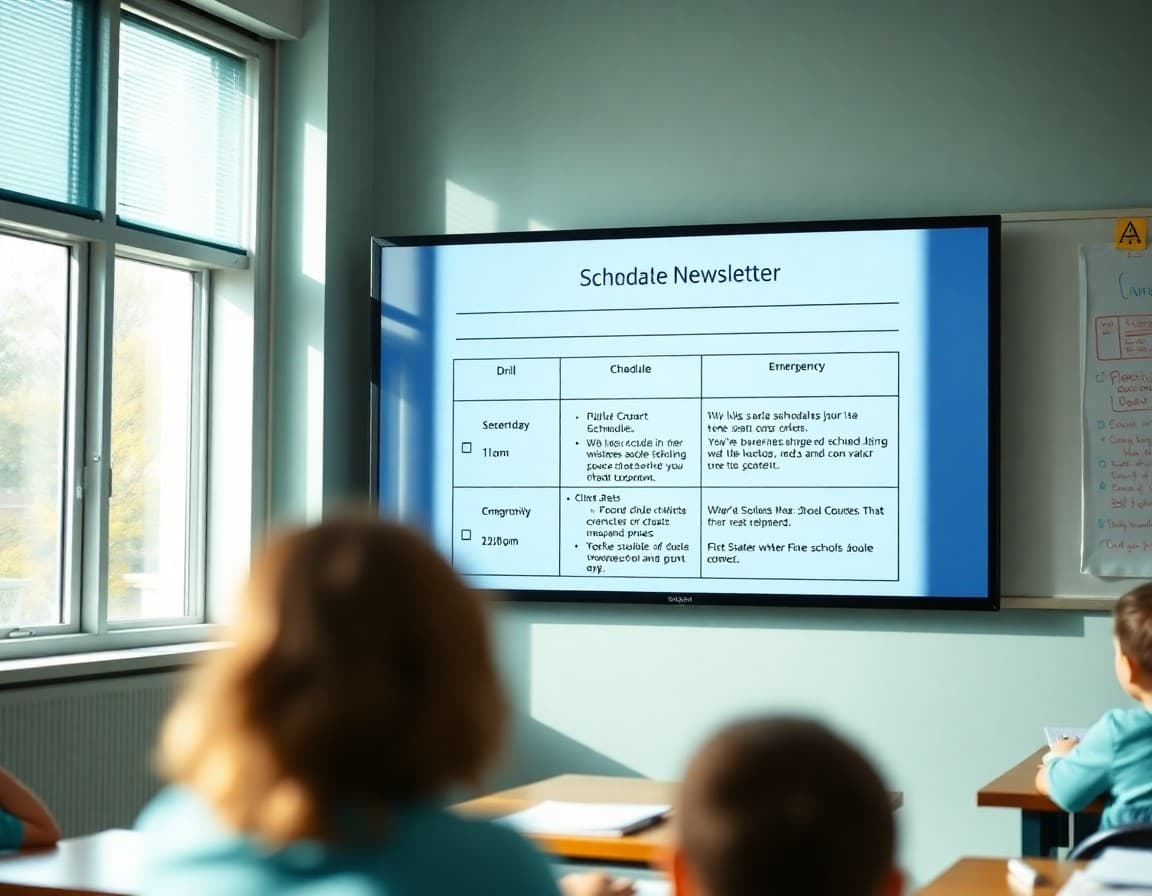
A family in Alabama reads a school safety newsletter differently than they read a lunch menu update. The stakes are different. The questions they bring are different. They want to know whether the school has a plan, whether staff know how to execute it, and whether they will be told what to do if something goes wrong. A well-written safety newsletter answers all three questions before they are asked.
Here is a practical framework for Alabama schools building or improving their safety communication strategy.
Start With What Alabama Families Actually Need to Know
Before writing, identify the three things every family in your school should be able to answer after reading your newsletter: How will the school contact me in an emergency? Where do I go to pick up my child if they are released early? What should I not do during a lockdown?
If your newsletter answers these questions clearly, it has done its most important work. Everything else supports those answers.
Alabama-Specific Weather Emergencies Deserve Their Own Section
Alabama sits squarely in Tornado Alley. Severe weather is not a hypothetical for schools in this state. Your spring safety newsletter should cover shelter locations in the building, how students are moved during a tornado warning, and what families should do if a storm hits during school hours and roads are blocked.
Include the specific shelter areas if you can. Families who know their child goes to the interior hallway near the gym during a warning have less anxiety than families who only hear "we have a plan."
How to Frame Lockdown Drill Notifications
Send a brief notice before every lockdown or intruder drill. State the drill type, the scheduled date and time range, and what students will be asked to do. Note that teachers review procedures with students beforehand and that the school counselor is available afterward for anyone who needs to talk.
A sample opening line: "On Thursday, October 12, our school will conduct a lockdown drill in partnership with [county] law enforcement. Students will practice moving away from windows and doors and remaining quiet until the all-clear signal. Teachers will prepare students in advance."
Visitor Policy Updates Need Context, Not Just Rules
When your visitor policy changes, explain why. "Beginning this fall, all visitors will check in at the main office and receive a printed visitor badge before entering any hallway" is a rule. Adding "This change is part of our annual safety review and aligns with Alabama's school safety guidelines" gives the rule context that builds trust.
Families are more likely to comply with visitor procedures they understand. They are also more likely to support those procedures with other adults who might push back.
Reunification Procedures Are Under-Communicated
Most school safety newsletters say nothing about reunification. That is a significant gap. Families need to know: Where do I go? What do I bring? How will I prove I am authorized to pick up my child? How long might the process take?
Cover your reunification site at least once per year. If your school uses a nearby parking lot, recreation center, or church as a reunification point, name it. Families who have read this information once arrive at reunification calmer and move through the process faster.
Mental Health Crisis Communication Requires a Different Tone
When a safety communication involves a mental health incident, suicide attempt, or student threat that was addressed, the tone shifts. The communication should confirm that the school responded, that supports are in place, and that counselors are available. It should not include identifying details. It should acknowledge that families may want to speak with their child about what happened and offer specific guidance on how to approach that conversation.
What a Good Alabama Safety Newsletter Template Looks Like
A reliable template includes a header identifying it as a safety communication, a brief summary of what is covered, three to five sections with clear headings, emergency contact information at the bottom, and a note about how future safety communications will be sent. Daystage makes it straightforward to build this template once and reuse it each time, keeping the format familiar so families know what to look for.
Consistency Builds the Trust That Makes Crisis Communication Work
The goal of a year-round safety communication strategy is not to prevent all emergencies. It is to ensure that when an emergency happens, families already trust the school's communication and know what to do. That trust is built through consistent, clear, calm newsletters sent before anything goes wrong.
Alabama schools that communicate proactively about safety see fewer panicked calls during drills, faster reunification, and more cooperative families during incidents. The newsletter is not an administrative requirement. It is a safety tool.
Get one newsletter idea every week.
Free. For teachers. No spam.
Frequently asked questions
What should an Alabama school safety newsletter include?
Every Alabama school safety newsletter should cover how families will be contacted during an emergency, the school's current drill schedule, any updates to visitor or lockdown policy, and one concrete action families can take to support safety at home. State-specific context matters: Alabama schools face tornado and severe weather risks that should be addressed explicitly each spring and fall.
How often should Alabama schools send safety newsletters?
At minimum, four times per year: once at the start of school to cover the full safety plan, before major drill seasons, after any significant policy change, and at the close of the year. Integrating a short safety section into monthly school communications keeps families connected without requiring a separate full-length newsletter each time.
What Alabama state requirements affect school safety communication?
Alabama schools follow the Alabama School Safety Act, which requires annual safety plans and coordination with local law enforcement. Communication to families should reflect what is in that plan: drill types, emergency contacts, reunification procedures, and visitor policies. Administrators should confirm their newsletter content aligns with their most current approved safety plan.
How do you write about lockdown drills without alarming Alabama families?
Lead with what the school has prepared and practiced rather than with the threat. Tell families the drill type, when it will happen, and what students are taught to do. Note that staff are trained and that counselors are available for students who find drills stressful. Factual and forward-looking language reduces anxiety without minimizing the seriousness of the preparation.
What tool do Alabama schools use to send safety newsletters?
Many Alabama principals and safety coordinators use Daystage to send structured safety newsletters to their entire school community. Daystage's templates keep safety content organized and easy to read on any device, which matters when families are receiving urgent or time-sensitive communications.

Adi Ackerman
Author
Adi Ackerman is a former classroom teacher and curriculum writer with 8 years in K-8 schools. She writes about school communication, parent engagement, and what actually works in real classrooms.
More for School Safety
School Safety Newsletter Guide: What Principals and Safety Coordinators Should Be Communicating All Year
School Safety · 7 min read
Lockdown Drill Communication Newsletter: What to Tell Families Before, During, and After
School Safety · 6 min read
School Emergency Plan Newsletter for Families: Sharing What Parents Need to Know Without Overwhelming Them
School Safety · 6 min read
Ready to send your first newsletter?
3 newsletters free. No credit card. First one ready in under 5 minutes.
Get started free