
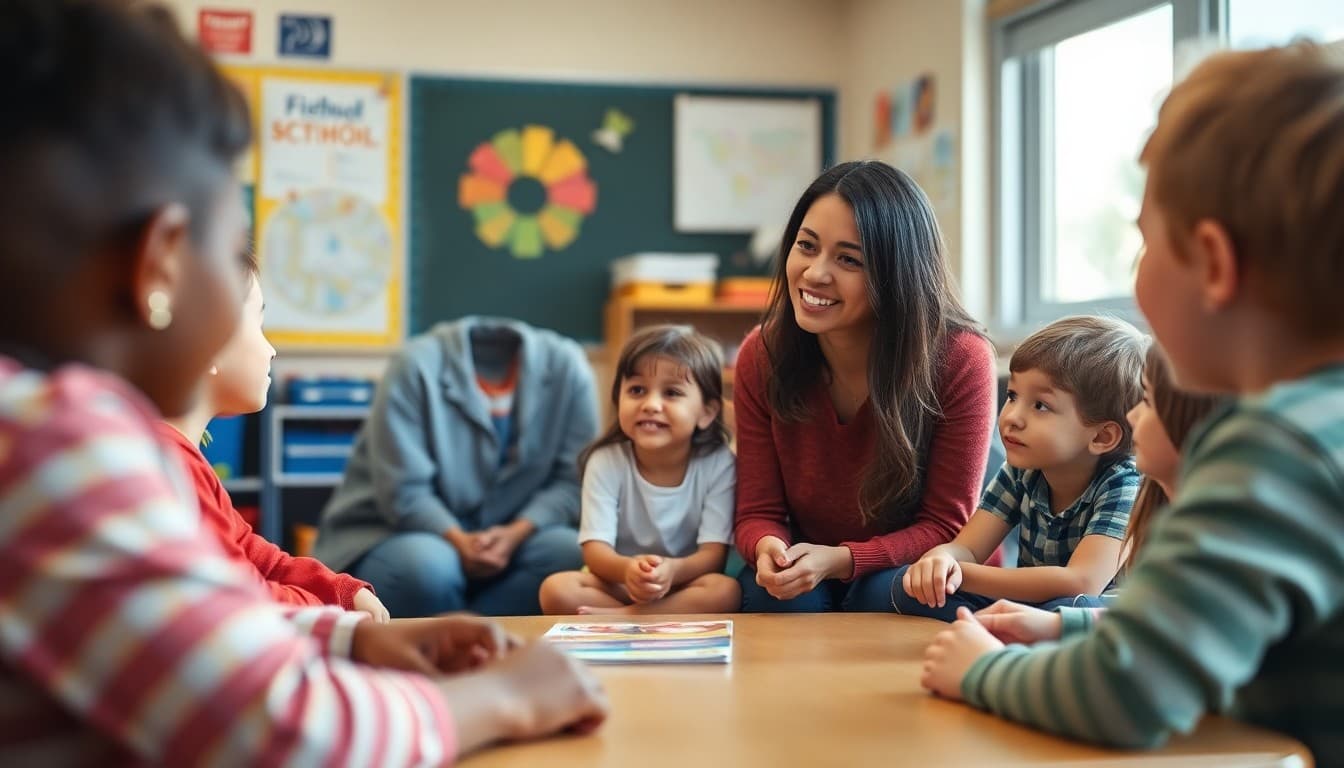
School Counselor Friendship Skills Newsletter: Making and Keeping Friends

Friendship skills are among the most consequential social competencies schools can support, and they are deeply amenable to direct teaching. A student who lacks the skills to initiate friendships, join group activities, or repair a conflict without ending a relationship can be taught these skills. The counselor's newsletter is one of the most effective tools for extending that teaching to the home environment where most friendship building actually happens.
Why Friendship Skills Need to Be Explicitly Taught
Most adults assume that children learn social skills naturally through exposure to other children. Many do. But a significant portion of children, including those with social anxiety, ADHD, autism spectrum profiles, or limited social experience, do not pick up these skills through observation alone. For these students, explicit instruction in the mechanics of friendship, the same way they receive explicit instruction in reading or math, produces dramatically better outcomes than simply hoping they will figure it out through trial and error.
Even students who are not struggling with friendship benefit from explicit instruction because it gives them language for what they are already doing intuitively, which allows them to apply it more consistently and to teach and support peers who are struggling.
The Mechanics of Making a Friend
Breaking down friendship initiation into concrete steps makes it teachable. Step one: choose a target. Pick someone who seems approachable, is doing something you are interested in, or has something you can comment on positively. Step two: make a bid. A bid is a low-stakes conversation opener: a comment about something you both can see ("that is a cool design on your notebook"), a question ("have you played that game before?"), or a compliment ("you are really good at that"). Step three: listen for shared ground. After the bid, listen for something the other person says that you can respond to with genuine interest. Step four: suggest a next step. "Do you want to sit together at lunch?" or "Do you want to try that together?" moves the interaction toward a repeated connection.
These steps feel obvious to a naturally social adult. They are not obvious to a child who has never had them explained explicitly. Teaching them directly changes outcomes.
Keeping Friendships: Skills Beyond Initiation
Many students who can initiate friendships cannot maintain them. The skills required to keep a friend differ from those required to make one. Reliability (doing what you say you will do), reciprocity (showing interest in the other person's life rather than making the friendship primarily about your own needs), repair (apologizing and making amends after a conflict rather than simply ending the friendship), and confidentiality (not sharing what a friend told you in private) are the primary maintenance skills. Students who struggle with friendship maintenance rather than initiation need a different intervention focus than those who struggle to make initial contact.
A Template for the Friendship Skills Newsletter Section
This section can be sent monthly with a different skill focus each time:
"This month in classroom guidance and small groups, we practiced the skill of 'joining a group.' This is one of the hardest social situations for many children: walking up to kids who are already playing or talking together and becoming part of it. The strategy we taught: (1) Watch for a moment to enter without interrupting. (2) Find something to add, not take over. (3) Match the energy of the group rather than changing it immediately. Ask your child to show you how they practiced this. Having them teach you the skill is one of the best ways to consolidate it."
When a Child Has No Friends: Warning Signs and Action Steps
A child who reports having no friends and seems distressed about it needs attention within two to four weeks, not months. The warning signs that distinguish a temporary social rough patch from a more serious situation include: a dramatic and persistent change in mood related to school, physical complaints (stomach aches, headaches) on school days, resistance to attending school, and no invitations to or from peers over a period of several months. If these signs are present, a conversation with the school counselor is warranted. The counselor can observe the student in social settings, identify the specific skill gaps or social dynamics contributing to the problem, and develop a plan that addresses the actual issue rather than the symptoms.
The Role of Extracurricular Activities in Friendship Building
Structured extracurricular activities provide an ideal context for friendship initiation because they create repeated interaction around a shared interest with a built-in conversation topic. A student who is struggling to make friends in an unstructured classroom setting often finds connection much more naturally in a chess club, drama program, robotics team, or sports context. Encouraging the student to try one activity they are genuinely interested in is more likely to produce a friendship than coaching them on initiation strategies in a context where they have nothing to talk about.
The counselor's newsletter can include a list of school clubs and activities with a specific note for families: "If your child is struggling to find their people, the best first step is usually finding an activity they love. Shared interest is the most reliable foundation for a new friendship."
Supporting Shy or Anxious Children
Shyness and social anxiety both create barriers to friendship initiation but respond to different interventions. Shyness is a temperament trait that typically responds to graduated exposure and accumulated positive social experiences. Social anxiety is a clinical condition that often requires professional support alongside school-based strategies. The counselor's newsletter can help families distinguish between the two by describing what social anxiety looks like behaviorally: avoidance that is consistent and distressing, physical symptoms in social situations, and significant interference with daily function. When that picture is present, a referral to community mental health services alongside school support is appropriate.
Get one newsletter idea every week.
Free. For teachers. No spam.
Frequently asked questions
What friendship skills are most important for elementary school students to develop?
The foundational friendship skills for elementary students are: initiating contact (walking up to someone and starting a conversation), finding common interests (asking questions and listening for overlap), joining a group that is already playing (without disrupting or taking over), managing conflict without ending the friendship, and being a reliable friend (doing what you say you will do, keeping confidences). Children who lack one or more of these skills often have difficulty maintaining friendships even when they successfully initiate them.
How can families tell if their child is socially isolated versus just introverted?
Introversion is a preference for lower levels of social stimulation, not an inability to form friendships. An introverted child typically has one to three close friendships they value deeply and feels satisfied with that social life. Social isolation looks different: the child is distressed about their peer relationships, rarely gets invited to activities, does not have anyone to sit with at lunch, or regularly avoids social situations due to fear or anxiety. If your child says they have no friends and seems unhappy about it, that is a signal to address, not a personality trait to accept.
At what age do peer relationships become more important than family relationships?
Research shows that peer relationships begin to surpass family relationships in perceived importance for most children around ages 10-12. By early adolescence, peer acceptance is the primary social priority for most students. This shift is developmentally normal and healthy, but it means that the social skills deficits that were manageable in elementary school become more consequential in middle school when peer rejection has a larger impact on emotional well-being and school engagement.
What should families do when their child is excluded from a social group?
Before intervening with the school or other parents, get a clear picture of the situation from your child's perspective, while understanding that their account represents one viewpoint. If the exclusion is persistent and deliberate, it may warrant a conversation with the school counselor. If it is situational, it may resolve with coaching on initiation strategies or with finding a different peer group. Adults sometimes make exclusion situations worse by involving themselves in ways that increase social complexity for the child. Help your child develop a plan rather than making one for them.
How does the school counselor newsletter help parents support friendship skills at home?
A newsletter that describes what the counselor is teaching, in the specific language used at school, gives families conversation starters that connect home and school. Daystage allows counselors to include interactive elements: a link to a brief parent workshop on social skill development, a list of conversation starters for talking about friendships, or a video clip demonstrating the skill of the month. Families who receive specific, actionable guidance are significantly more likely to address friendship skill development at home than those who receive general advice to 'help your child make friends.'

Adi Ackerman
Author
Adi Ackerman is a former classroom teacher and curriculum writer with 8 years in K-8 schools. She writes about school communication, parent engagement, and what actually works in real classrooms.
More for School Counselors
Ready to send your first newsletter?
3 newsletters free. No credit card. First one ready in under 5 minutes.
Get started free