
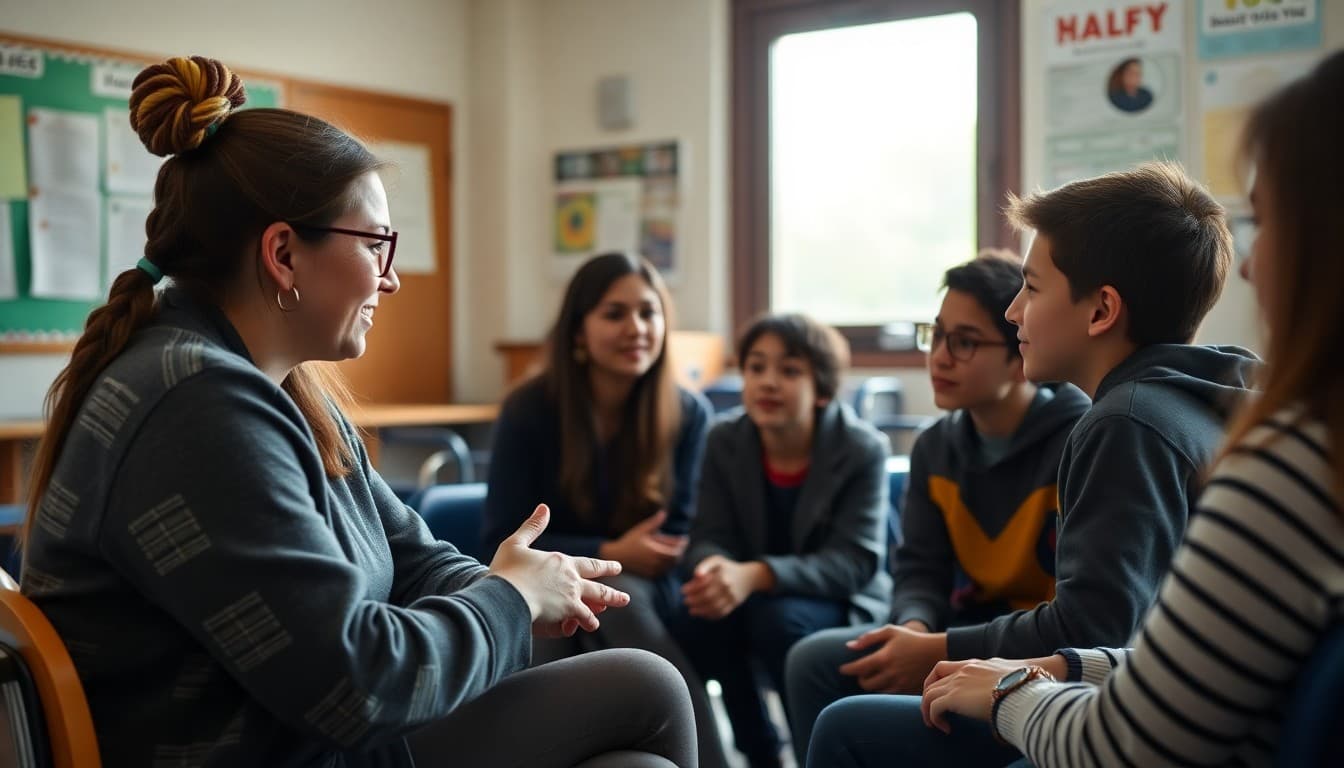
School Counselor Social Skills Group Newsletter

Social skills groups are one of the most effective interventions school counselors run, and one of the most misunderstood by families. The invitation to a social skills group sometimes produces defensiveness rather than gratitude because families interpret it as a statement that their child has a deficit rather than an opportunity to develop skills that are genuinely teachable. A clear, warm newsletter section about social skills groups changes that response.
Social Skills Are Teachable: The Core Message
The most important thing the social skills group newsletter needs to communicate is that social skills are not innate personality traits. They are learnable competencies that develop through a combination of observation, practice, and feedback. A student who struggles to initiate conversations or read social cues is not "weird" or "broken." They have a skill gap that can be addressed with the same kind of instruction and practice that addresses a reading gap or a math gap. Framing it this way removes stigma and activates families as partners in the process rather than as recipients of a diagnosis.
What Happens in a Social Skills Group Session
Each session follows a predictable structure that allows students to practice in a safe, low-stakes environment before applying skills in the more complex social world of the school hallway or cafeteria. A typical 30-minute session: five minutes of check-in (what was one social situation this week that went well? One that was challenging?), ten minutes of direct instruction on the skill of the week, ten minutes of role-play practice with coaching and feedback, and five minutes of planning (when will you use this skill this week?). The structured format gives students a scaffold they can rely on, and the explicit practice is what separates a social skills group from a conversation about social skills.
Skills Covered Over an Eight-Week Group Cycle
A standard eight-week social skills curriculum for elementary students covers: week one, making eye contact and using open body language; week two, how to start a conversation with someone you do not know well; week three, active listening, including giving signals that you are paying attention; week four, joining a group that is already playing or talking; week five, how to disagree without being mean; week six, what to do when someone says no; week seven, reading body language and facial expressions; week eight, review and real-world practice planning. This sequence builds progressively, with each skill drawing on the ones before it.
A Template for the Social Skills Group Newsletter Section
This section works both as a group invitation and as a universal newsletter resource for families:
"Our social skills groups are forming now. These groups meet once per week for eight sessions and focus on the practical skills that make it easier to make and keep friends: how to start a conversation, how to join a group, how to handle it when a friendship hits a rough patch. If your child is struggling with peer relationships and you think they might benefit from this kind of structured practice, please reach out to me. Participation is voluntary and confidential. Families of current group members receive a brief weekly email with the skill we practiced and one activity to try at home."
Home Practice Activities That Actually Work
The research on social skills group effectiveness shows that the biggest outcome difference between groups is not which curriculum is used but how consistently skills are practiced outside of the group setting. Families who actively practice skills at home produce children who retain and generalize social skills far more effectively than families who leave the work entirely to the group.
The key is authentic practice rather than scripted scenarios. When a natural social situation occurs, such as calling a grandparent, ordering at a restaurant, or meeting a neighbor, briefly prompt the skill: "Remember what we talked about with making eye contact? Try it when you order your food." Debrief afterward: "You made eye contact with the server. What did that feel like compared to when you used to look at the floor?" That brief, real-world practice loop is the most powerful extension of group work available.
Generalization: The Hardest Part of Social Skills Training
Skills learned in a controlled group environment do not automatically transfer to the chaotic social world of a school lunch table, a recess field, or a bus ride. Generalization, the ability to use a learned skill in a new context, requires explicit practice across multiple settings. This is why the counselor communicates with teachers about what skills are being practiced in group so teachers can create opportunities for practice in the classroom. A student who practiced joining a group in the counseling room needs a teacher who knows to watch for and acknowledge that behavior on the playground.
Progress Monitoring in Social Skills Groups
Counselors who collect pre/post data on social skills group effectiveness can demonstrate impact to families, administrators, and school boards. A simple five-item rating scale completed by teachers at the start and end of the group, a self-report survey completed by students before and after each eight-week cycle, and behavioral data like office referrals for social conflicts all provide evidence of impact. Sharing aggregated progress data in the counselor's newsletter, without identifying individual students, shows families that the program is working and builds support for continuing it.
Get one newsletter idea every week.
Free. For teachers. No spam.
Frequently asked questions
Who benefits most from a school-based social skills group?
Students who benefit most from social skills groups include those who have difficulty initiating or maintaining peer relationships, students with social anxiety who avoid peer interaction, students with ADHD who struggle with conversational turn-taking and impulse control in social settings, students on the autism spectrum who are learning the unwritten rules of social interaction, and students who have experienced social setbacks (recent move, recent loss, bullying) and need structured support to rebuild peer connections. Social skills groups are not just for students with diagnoses; any student experiencing significant peer relationship difficulties can benefit.
What specific skills do social skills groups typically teach?
Social skills groups typically address: conversation initiation (how to start a conversation with someone you do not know well), active listening (giving visual and verbal signals that you are paying attention), turn-taking in conversation, reading nonverbal cues (body language, facial expressions, tone of voice), joining a group that is already interacting, perspective-taking (understanding what another person might be thinking or feeling), handling disagreement or conflict without ending a relationship, and how to exit a conversation gracefully. The specific curriculum depends on the group's composition and the students' identified needs.
How are social skills groups different from friendship groups?
Social skills groups focus on teaching specific communication and interaction skills that students practice in a structured, coached environment. Friendship groups focus on building actual peer bonds through shared activities. Social skills groups often include role-play scenarios, video analysis, and direct instruction on social rules. Friendship groups emphasize shared experience, fun, and natural relationship development. Many programs offer both types of groups because they serve different needs: a student needs the skills before they can benefit most from the connection.
How can families practice social skills at home?
The most effective home practice happens during naturally occurring social situations rather than in artificial scenarios. When a social situation comes up, such as a family gathering, a playdate, or a trip to the store, briefly coach the skill beforehand and debrief afterward. 'Before we go to the party, let's practice: how would you start a conversation with a cousin you haven't seen in a year?' After the event: 'I noticed you introduced yourself to the neighbor's kids. How did that feel?' This approach transfers the skills from the group setting to real-world contexts.
How does the school counselor newsletter help families support social skills development at home?
A newsletter that shares the specific skill taught in group this week, with a family practice activity, creates the home reinforcement that makes skill development stick. Daystage lets counselors send targeted newsletters to families of group participants so that the specific skill matches what their child is working on in group rather than a generic social skills tip. Students who practice the same skill in group, in the classroom, and at home develop the skill at significantly faster rates than students who only practice in one context.

Adi Ackerman
Author
Adi Ackerman is a former classroom teacher and curriculum writer with 8 years in K-8 schools. She writes about school communication, parent engagement, and what actually works in real classrooms.
More for School Counselors
Ready to send your first newsletter?
3 newsletters free. No credit card. First one ready in under 5 minutes.
Get started free