

School Counselor Self-Esteem Newsletter for Students and Families
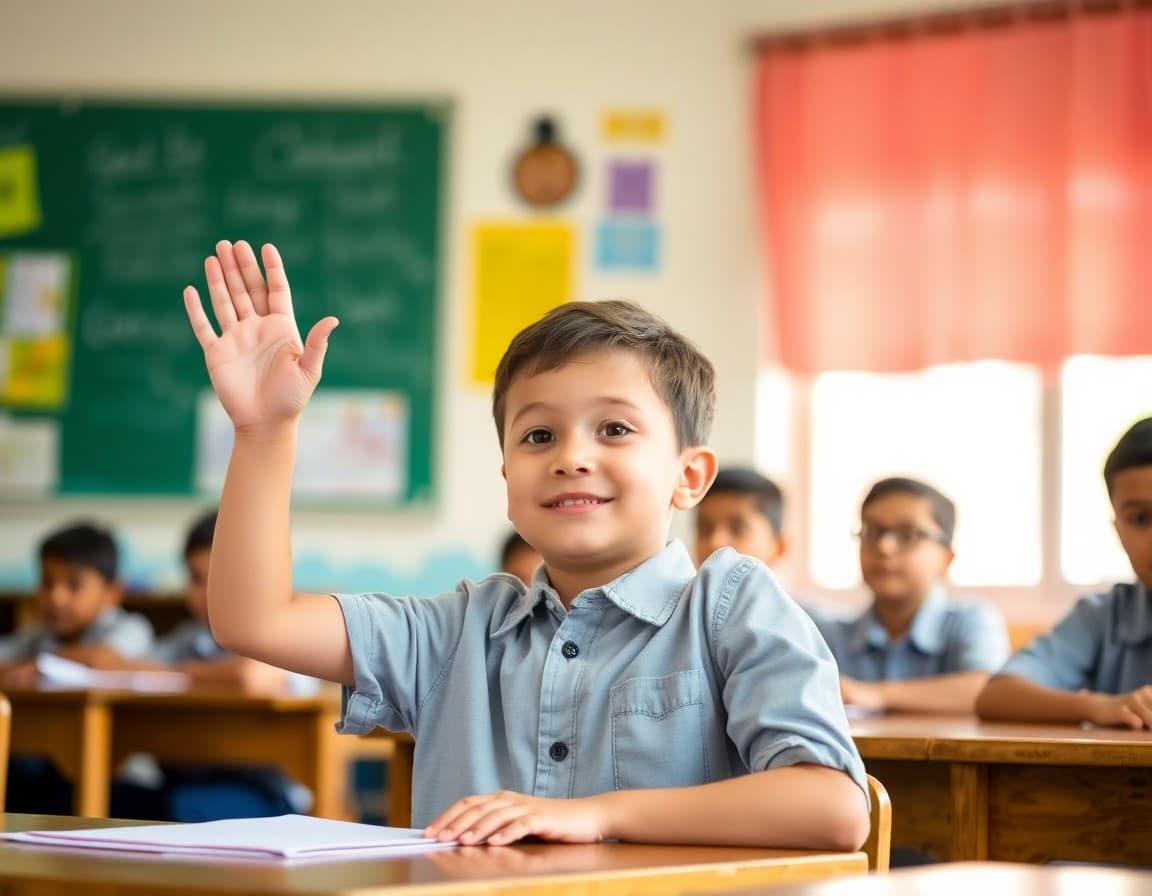
A self-esteem newsletter from the school counselor has a specific challenge: it needs to address a topic that is deeply personal for many students and families without feeling clinical, condescending, or focused only on children who are struggling. The most effective approach is universal, strengths-based, and practical rather than therapeutic.
Why Self-Esteem Communication Belongs in the Counselor's Newsletter
Self-esteem affects academic risk-taking, peer relationships, response to failure, and willingness to seek help. Students with low self-confidence avoid challenging coursework, give up when they encounter difficulty, struggle to form friendships, and often mask their self-doubt with either withdrawal or disruptive behavior. These patterns are visible to teachers and counselors but are rarely understood by families as self-esteem issues. A newsletter that gives families a framework for what self-esteem looks like in behavior creates a bridge between home and school that makes intervention more effective.
What Actually Builds Self-Esteem in Students
The research on self-esteem interventions identifies three mechanisms that produce lasting results. First, mastery experiences: a child who successfully completes a challenging task has one concrete piece of evidence that they can do hard things. The key is calibrating the challenge so it is genuinely difficult but achievable with effort. Too easy, and success feels meaningless. Too hard, and failure reinforces existing negative beliefs. Second, process praise: replacing "you are so smart" with "you worked really hard on that" and "you tried a new strategy when the first one did not work" builds effort-based identity rather than fixed-trait identity. Third, exposure to models: students who see peers and mentors who look like them succeeding at hard things adjust their own sense of what is possible.
How Families Inadvertently Undermine Self-Esteem
Most self-esteem damage in children comes from well-intentioned adults. Rescuing children from discomfort, completing tasks for children who are struggling, and over-praising ordinary effort all teach children that they cannot be trusted to handle difficulty on their own. Criticism in front of others, comparison to siblings, and conditional acceptance ("I love you, but I am disappointed when you fail") create the internal conditions that produce low self-esteem despite the family's genuine care for the child.
The counselor's newsletter is an effective vehicle for sharing this information because it reaches families without singling anyone out. A section on "how to praise your child in ways that build lasting confidence" benefits every family, not just those whose children are struggling.
A Template for a Self-Esteem Newsletter Section
This section can be adapted for any grade level and any month:
"This month in our counseling program, we are talking about what it means to be resilient: the ability to try something hard, struggle, and keep going. Here is one thing you can try at home this week: the next time your child succeeds at something difficult, instead of saying 'you are so smart,' try 'I noticed you kept trying even when it was hard. That is what made the difference.' This kind of specific praise builds a belief that effort matters, which produces students who are willing to take on challenges throughout their school careers and beyond."
Self-Esteem at Different Developmental Stages
Elementary students build self-esteem primarily through mastery experiences and teacher and parent feedback. The most impactful interventions at this stage focus on creating structured opportunities to experience success at appropriately challenging tasks and on teaching children to accurately attribute that success to their own effort and strategy.
Middle school students face a self-esteem crisis that is nearly universal and predictable. The transition to comparative peer evaluation, academic differentiation, and puberty all converge to produce self-concept instability. The counselor's role is to normalize this as a developmental experience while providing specific skills for managing the heightened sensitivity to peer comparison and criticism.
High school students benefit from self-esteem work that connects to identity development: who am I, what do I value, what do I want to do with my life? Confidence at this stage is more domain-specific: a student may have high academic self-efficacy and low social confidence, or strong self-concept in athletics and fragile self-concept in academic settings. Interventions need to address the specific domain where the student is struggling.
The Role of Belonging in Self-Esteem
Self-esteem does not exist in isolation from belonging. Students who feel connected to at least one caring adult in the school building and to a peer group where they are genuinely accepted show higher self-esteem than isolated students regardless of academic achievement. Building belonging is therefore a direct self-esteem intervention. The counselor's newsletter can support this by featuring student stories (with permission), promoting inclusive extracurricular opportunities, and explicitly addressing the isolation that many students feel but rarely name.
Connecting Self-Esteem to Academic Performance
Low self-esteem is often misread as lack of motivation. A student who refuses to try difficult assignments, says "I don't care" about grades, or consistently deflects feedback may be protecting themselves from failure rather than genuinely indifferent. Distinguishing between these two dynamics is one of the most important things a school counselor can help teachers and families understand. The counselor's newsletter can frame this distinction clearly and give adults practical tools for responding differently to a student who is protecting themselves versus one who is genuinely disengaged.
Get one newsletter idea every week.
Free. For teachers. No spam.
Frequently asked questions
What is the difference between self-esteem and self-efficacy, and why does it matter for counselors?
Self-esteem is a person's overall evaluation of their own worth. Self-efficacy is their belief in their ability to succeed at specific tasks. Research suggests that self-efficacy is more trainable and more directly connected to academic outcomes than global self-esteem. A student who believes they can get better at math if they practice is more likely to invest effort than one who simply feels generally good about themselves. School counselors can build self-efficacy through specific, task-focused success experiences more reliably than through self-esteem exercises focused on general positive feelings.
How should counselors communicate about self-esteem with families without stigmatizing students?
Use language focused on skills and growth rather than deficits. Instead of 'your child has low self-esteem,' say 'we have been working on strategies to help your child feel more confident when they make mistakes' or 'your child is practicing asking for help when they are stuck.' The newsletter is an effective tool for introducing self-esteem concepts to all families universally, which reduces the stigma of individually targeted support and gives families language and strategies to use at home.
What does research say about the most effective ways to build student self-esteem?
The research is clear that praise focused on effort and strategy, rather than intelligence or talent, builds more durable confidence. Carol Dweck's work on growth mindset demonstrates that students who are told they are smart tend to avoid challenges to protect that identity, while students praised for working hard seek out challenges as opportunities to grow. Counselors building self-esteem programs should center effort, improvement, and the process of learning rather than fixed identity traits.
At what age do children develop meaningful self-concept?
Children begin forming self-concept as early as age 2-3, but it becomes more complex and socially comparative around ages 6-8 when children begin comparing themselves to peers systematically. Middle school represents another significant self-concept development period when peer comparison intensifies and academic self-concept often declines for many students. High school self-concept becomes more differentiated, with students distinguishing between academic, social, and physical domains. Counselor interventions need to be developmentally calibrated to address the specific self-concept challenges of each age group.
How can the school counselor newsletter support self-esteem across the whole school community?
A monthly self-esteem newsletter section that shares one research-based strategy, one family activity, and one student story (with permission) builds a common language across the community. Daystage lets counselors share these newsletters with different audiences simultaneously: a student-facing version and a family-facing version can share the same topic while adjusting the tone and activities for the audience. Universal communication normalizes self-esteem work as a school-wide priority rather than something only struggling students need.

Adi Ackerman
Author
Adi Ackerman is a former classroom teacher and curriculum writer with 8 years in K-8 schools. She writes about school communication, parent engagement, and what actually works in real classrooms.
More for School Counselors
Ready to send your first newsletter?
3 newsletters free. No credit card. First one ready in under 5 minutes.
Get started free