
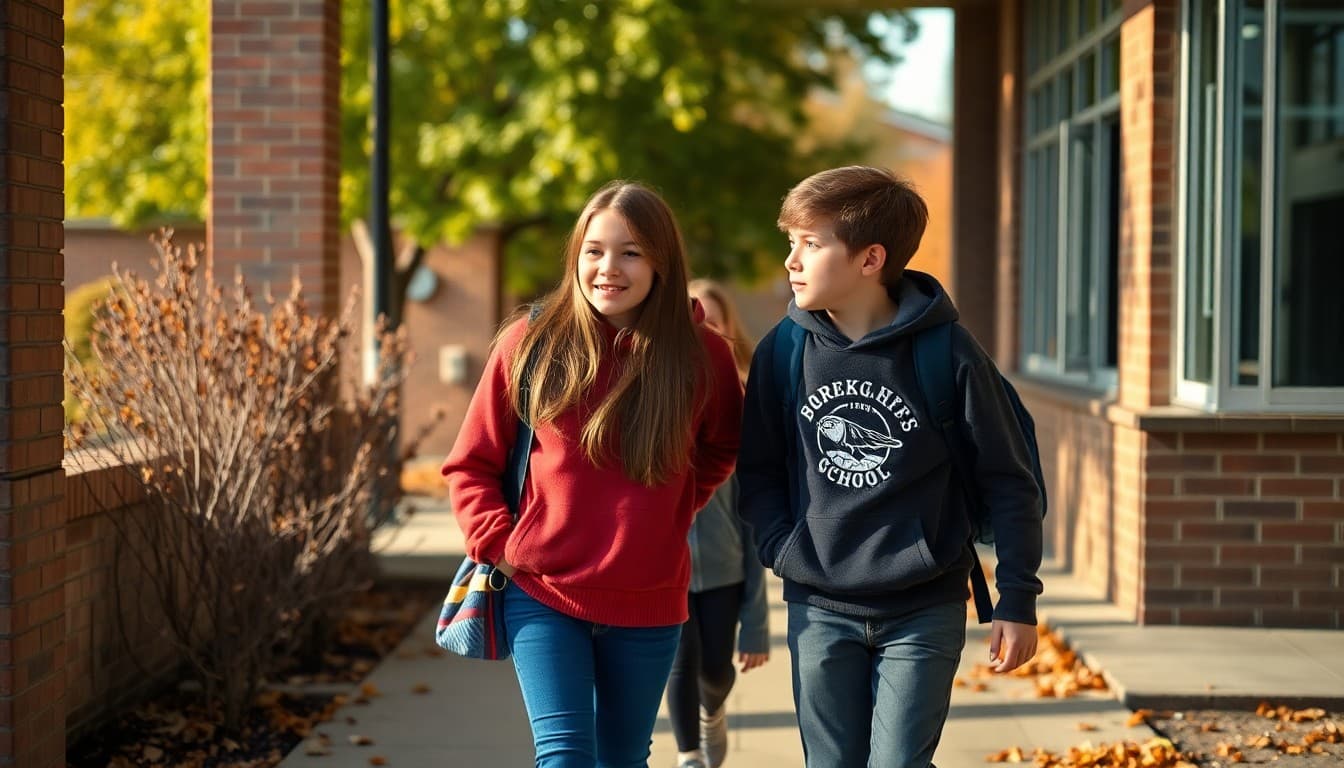
October Friendship Skills Newsletter for School Families

By October, the initial excitement of a new school year has leveled off. Friend groups that formed in September have been tested by real conflict, shifting schedules, and the ordinary friction of spending hours together every day. This is when friendship skills stop being theoretical and start being genuinely necessary.
Friendship in Mid-Fall: What Changes
The social bonding that happens in August and September is largely based on proximity and novelty. Students sit next to each other, end up in the same lunch period, or share a class and call each other friends. By October, they actually know each other, and that shifts things. Some friendships deepen. Others crack under the weight of personality differences or competing social needs. Your October newsletter helps families understand this transition as normal rather than alarming.
Maintaining Friendships Takes Skills Too
Most social-skills education focuses on making friends. Less attention goes to the skills needed to keep them: repair after conflict, flexibility when plans change, the ability to tolerate a friend having other friends, and the capacity to have disagreements without ending the relationship. These are advanced skills that many adults still struggle with. October is a good time to address them because students are facing exactly these challenges right now.
Friend Group Shifts in Middle School
Middle school friend group dynamics in October can feel catastrophic to the students inside them. The student who was included in September may find themselves on the edge of the group by Halloween. Help families normalize this without dismissing it. Remind them that middle school social dynamics are genuinely unstable and that who a student sits with in October is not a fixed verdict on their social worth. Clubs and activities outside of lunch-table politics often provide the reset students need.
Conflict Resolution Between Friends
By October, most students have had at least one friendship conflict. Give families a simple framework for helping their child navigate it at home: name the feeling, describe the specific behavior that caused it, ask what they need, and listen to what the other person says. This is not a therapy script. It is a basic communication structure that most students have never been explicitly taught and that dramatically improves their ability to repair friendships rather than abandon them.
When a Friendship Becomes Unhealthy
Some friendships that form in September become controlling, one-sided, or emotionally draining by October. Help families recognize the signs: a child who always adapts to what the other person wants, who is told who they can talk to, who cries often because of the friendship rather than despite its absence, or who has stopped mentioning other peers altogether. These are not just difficult friendships. They are potentially harmful ones that warrant a conversation with you.
What Is Happening in Classroom Guidance This Month
If your October guidance lessons focus on conflict resolution, cooperative skills, or empathy, tell families specifically what students are learning. A one-paragraph description of your lesson plan builds family awareness and gives parents conversation hooks for home. "Your child is learning about how to repair a friendship this month. You might ask them what they would do if a friend said something hurtful." That kind of concrete connection increases the transfer of skills from school to real life.
Encouraging New Connections in Fall Activities
Fall sports, drama rehearsals, and school clubs are all in full swing by October. These contexts create natural opportunities for friendship because they bring together students who share interests rather than just schedules. Encourage families to support their child's participation even when their child is ambivalent. The social connections that form around shared activities tend to be more durable than classroom friendships because they are grounded in something the student actually cares about.
Keeping Communication Consistent With Daystage
If you are using Daystage to manage your newsletter calendar, your October issue should already be drafted and scheduled. Families who have received a September issue from you are already conditioned to open October's. That consistency is how a newsletter becomes a resource families rely on rather than one they occasionally notice.
Get one newsletter idea every week.
Free. For teachers. No spam.
Frequently asked questions
What friendship challenges emerge in October that counselors should address?
By October, initial friendships have formed and some have already fractured. Common issues include friend group exclusion, shifting alliances in middle school, and students who made a good start but are struggling to maintain connections as the newness wears off.
How can families help a child whose friendship group shifted in October?
Validate the disappointment without catastrophizing it. Help them identify one or two new potential connections rather than trying to repair a group dynamic that may have genuinely changed. Clubs, teams, and activities outside of class often reset social status in helpful ways.
What does healthy conflict resolution between friends look like?
Healthy conflict involves both students expressing how they feel without attacking the other person, listening to understand rather than to win, and finding a path forward that both can accept. It does not mean one person always gives in. Teaching this process explicitly helps students handle friendship repairs without adult intervention every time.
How should a counselor respond when a student says their best friend dumped them?
Take it seriously. Peer rejection activates the same neural pathways as physical pain. Validate the student's distress, help them identify what support they have, and work on rebuilding social confidence before jumping to problem-solving who else they could befriend.
What tool helps counselors schedule October friendship newsletters?
Daystage lets counselors batch-schedule fall newsletters so October's issue is already queued by the time September closes. That consistency builds a readership over the semester without requiring new effort every month.

Adi Ackerman
Author
Adi Ackerman is a former classroom teacher and curriculum writer with 8 years in K-8 schools. She writes about school communication, parent engagement, and what actually works in real classrooms.
More for School Counselors
Ready to send your first newsletter?
3 newsletters free. No credit card. First one ready in under 5 minutes.
Get started free