
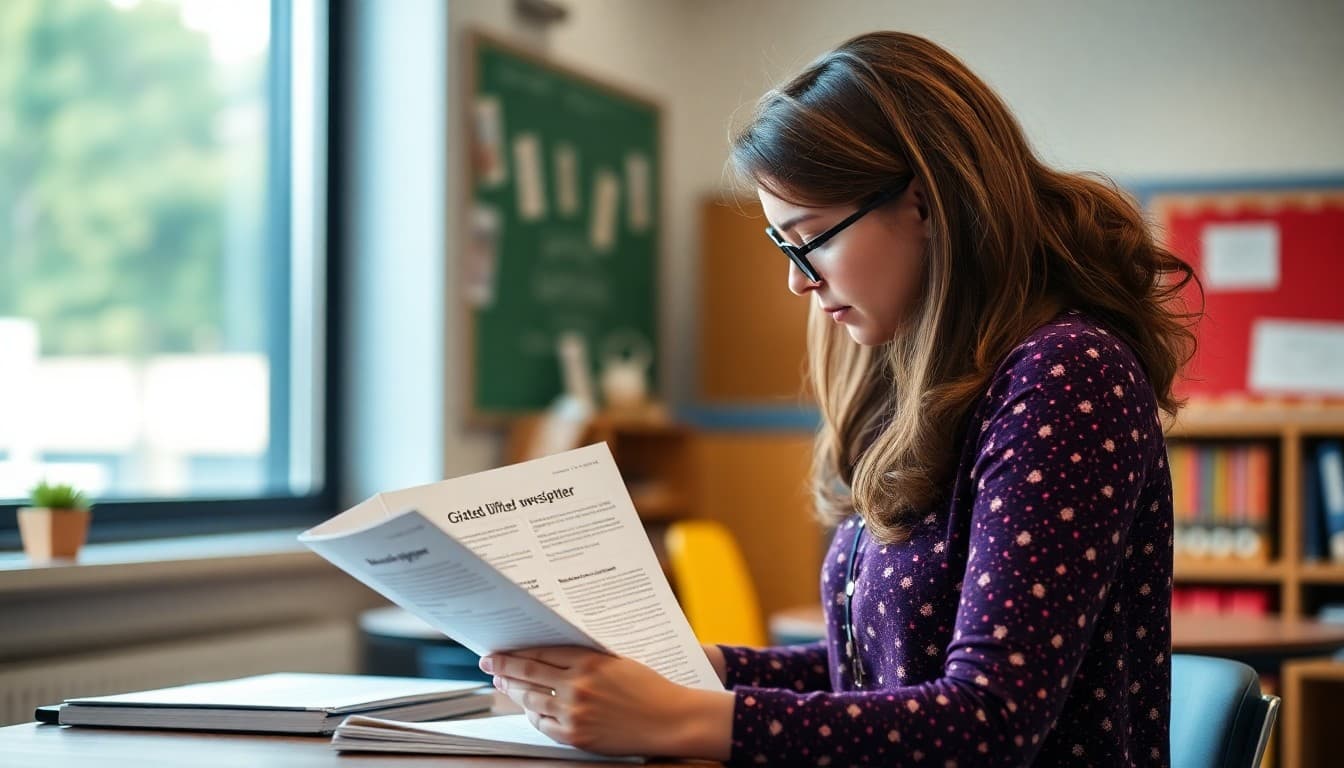
Teacher Newsletter Gifted Update: Communicating Advanced Learning to Families

Families of gifted students are often highly engaged with their child's education and have strong opinions about what advanced learning should look like. A newsletter from a gifted program or advanced classroom has to balance celebrating achievement with honest communication about what the program actually provides, what it does not, and how families can support their child without creating the achievement pressure that tends to undermine gifted students' love of learning.
Explaining the Program's Philosophy
Every gifted program operates from a set of beliefs about what advanced learners need and what the program exists to provide. Whether the focus is acceleration, enrichment, independent research, creative problem-solving, or some combination, families deserve a clear explanation of the underlying philosophy. This is especially important for families new to the program who may have preconceived ideas about what "gifted" means that do not match your program's actual approach.
Current Curriculum and Projects
Describe what students are working on with specificity: not just "advanced math" but "students are working through modular arithmetic and exploring how cryptography works". Not just "independent projects" but the specific topics students are investigating this month. Families of gifted students are generally curious and engaged, and they appreciate curriculum details that give them something real to discuss with their child at home.
Upcoming Competitions and Opportunities
Many gifted programs involve optional competitions, showcases, or external programs: Science Olympiad, Mathcounts, National History Day, spelling bees, writing competitions. When these opportunities arise, announce them clearly with deadlines, what is involved, and how families can help their child decide whether to participate. Frame participation as an opportunity for growth and challenge, not as an expectation or a measure of giftedness.
Social and Emotional Context
Gifted students often face social and emotional challenges that are less visible than their academic strengths: perfectionism, intensity, asynchronous development, and difficulty finding peers who share their interests. A newsletter that occasionally acknowledges these realities, without pathologizing them, helps families understand that their child's experience is normal and that the program attends to the whole child, not just academic performance.
What Families Should Avoid
This is unusual content for a newsletter but genuinely valuable for gifted families: a brief note about what tends not to help. Constantly praising intelligence (rather than effort and process) tends to increase performance anxiety. Overscheduling enrichment activities leaves no time for the open-ended exploration that gifted children need. Comparing their child to other gifted students backfires. Naming these patterns in the newsletter gives families permission to do less and trusts them to respond thoughtfully to honest guidance.
How to Extend Learning at Home Without Creating Pressure
The best at-home enrichment for gifted students follows their own interests rather than the teacher's agenda. If a student is obsessed with astronomy, support that obsession with library books, documentaries, and conversations about what they are learning. If another student loves coding, give them time and tools to build what they want to build. The newsletter can offer these kinds of interest-following suggestions rather than assigned supplemental work, which tends to feel like more school rather than genuine enrichment.
Building a Program Community
Gifted students often feel isolated in their general education classrooms. The gifted program community matters enormously to these students and families. A newsletter that builds program identity through celebration of students' work, profiles of interesting projects, and community-building information helps families feel connected to something their child genuinely values. Daystage makes it easy to produce these newsletters consistently with the polish that reflects the seriousness of the program.
Get one newsletter idea every week.
Free. For teachers. No spam.
Frequently asked questions
What should a gifted education newsletter update include?
Current enrichment or acceleration focus, any independent projects or research students are working on, upcoming competitions or events, and guidance for how families can support advanced learners at home without pressuring them to always perform at the highest level.
How do you communicate with families of gifted students without creating unhealthy pressure?
Celebrate intellectual curiosity and the process of learning rather than only achievements and outcomes. Acknowledge that gifted students still experience failure and frustration, and that this is normal and valuable. Avoid framing every update in terms of performance or comparison.
How do gifted program newsletters differ from general classroom newsletters?
Gifted program newsletters often need to explain the program's specific philosophy, describe how acceleration or enrichment differs from the standard curriculum, and provide guidance for parents who are navigating the unique social and emotional challenges of raising a high-ability child.
What at-home enrichment do families of gifted students value most?
Open-ended exploration: visiting museums, pursuing independent research on topics of deep interest, engaging with challenging books or documentaries, and having unstructured time to think and create. Many gifted families over-schedule their child with enrichment activities. The newsletter can gently challenge this tendency.
What tool works best for gifted program newsletters?
Daystage makes it easy for gifted coordinators and teachers to produce polished newsletters that communicate the program's philosophy and activities clearly. It handles distribution to program families without requiring a separate mailing list.

Adi Ackerman
Author
Adi Ackerman is a former classroom teacher and curriculum writer with 8 years in K-8 schools. She writes about school communication, parent engagement, and what actually works in real classrooms.
More for Professional Development
Classroom Newsletter Ideas That Parents Actually Read and Save
Professional Development · 6 min read
Teacher Newsletter for Parent Engagement: What Actually Works
Professional Development · 6 min read
Teacher Newsletter Special Education Update: Inclusive Communication for All Families
Professional Development · 6 min read
Ready to send your first newsletter?
3 newsletters free. No credit card. First one ready in under 5 minutes.
Get started free