
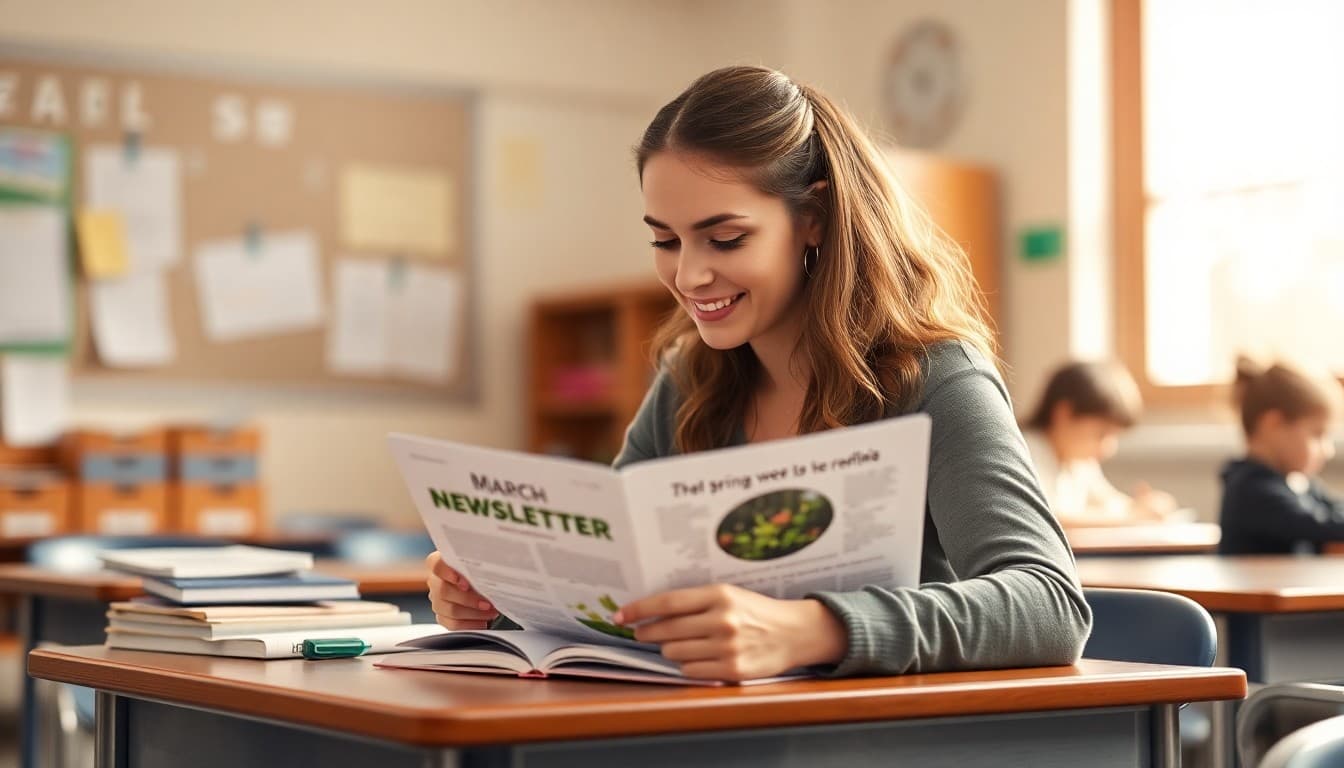
March School Newsletter Template for Teachers
March is a newsletter-rich month: Read Across America on March 2, Women's History Month throughout, spring testing on the horizon, and spring break at the end. A good March newsletter manages all of this without becoming a bulletin board dump. Here is a structure that keeps it useful and readable.
Lead with National Reading Month
March is National Reading Month, which gives reading at home a natural narrative hook. "March is National Reading Month. In our class, we are celebrating by [specific activity: book tasting, author study, genre exploration]. Our current read-aloud is [title]. The best reading-at-home practice this month: 20 minutes of independent reading daily, in any book your student chooses. Choice drives engagement. Engagement builds fluency. Fluency makes everything else in school easier."
Women's History Month: be specific
Describe what students are actually studying, not just that the school celebrates it. "Our social studies unit this month focuses on women who shaped American history, including [specific names connected to your curriculum]. Students are analyzing primary sources and creating short biographies." Two specific sentences are more credible and informative than a paragraph of general celebration language.
Spring testing: calm and concrete
If state assessments are coming in April or May, March is the right time to address them. Keep the tone calm. "State assessments begin on [date]. The best preparation is continued reading and math practice, consistent sleep, and a normal morning routine on test days. There is no single-day preparation that matters more than the daily habits already in place. If you have questions about the assessments, please reach out."
Spring break information
Share dates clearly. "Spring break is [start date] through [end date]. We return on [date]. There is no required work over break. A great way to stay in reading mode: take a trip to the public library before break and let your student choose two or three books they are genuinely excited about." Brief, respectful, and models reading without mandating it.
Template: March teacher newsletter
"March Update , [Class/Grade] | [Teacher Name] Reading Month: [2-3 sentences on classroom reading activities and the home reading recommendation]. Women's History Month: [2-3 sentences on specific content]. Spring testing: [2-3 sentences with dates and calm preparation framing]. Spring break: [Dates and any optional reading suggestions]. March calendar: [3-5 bullet points with specific dates]."
Daystage makes it easy to build this March newsletter from a saved template with embedded links to reading resources and testing calendars so families can access everything immediately.
Get one newsletter idea every week.
Free. For teachers. No spam.
Frequently asked questions
What should a March teacher newsletter include?
A March teacher newsletter should cover: Read Across America and National Reading Month activities, Women's History Month content if relevant to the curriculum, spring testing preparation and what families should know about upcoming assessments, spring break dates and any preparation or expectations for the break, and one home-support activity connected to current learning. March is also a strong month to reinforce reading at home since National Reading Month makes the recommendation feel timely.
How should teachers explain upcoming standardized testing in a March newsletter?
Be honest and calm rather than alarming. 'State assessments begin in April. These tests assess grade-level reading and math skills. The best preparation is continued daily reading and math practice, good sleep, and a calm morning routine on test days. Tests do not define your student and one test does not determine placement or promotion. If you have questions about what the assessments cover or how results are used, please contact me.' This framing reduces family anxiety without dismissing the importance of assessments.
How should teachers address Women's History Month in a March newsletter?
Like Black History Month, Women's History Month coverage is strongest when it is specific. Describe the actual content: which women students are studying, what primary sources are being used, what projects students are creating. 'Our class is reading biographies of women scientists this month and exploring how social expectations of the 19th and 20th centuries shaped women's access to scientific careers.' Specific content beats general celebration language every time.
What should a March newsletter say about spring break?
Give families specific spring break dates. Share whether any work or reading is expected over break without being preachy about it. 'Spring break is [dates]. There is no required homework over break. If your student wants to keep reading, [specific book recommendation or list] is a great choice. We return [date] and will jump straight into [what is coming up next].' This is informative, respectful of family time, and still models reading as a value.
How does Daystage support March teacher newsletters?
Daystage lets teachers embed links to Read Across America resources, Women's History Month book lists, and state testing preparation guides directly in the newsletter. Families can access everything with one tap rather than having to search for resources. A March newsletter through Daystage with embedded links to specific books and testing calendars is far more useful than a newsletter with general encouragement to read and prepare.

Adi Ackerman
Author
Adi Ackerman is a former classroom teacher and curriculum writer with 8 years in K-8 schools. She writes about school communication, parent engagement, and what actually works in real classrooms.
More for Professional Development
Ready to send your first newsletter?
3 newsletters free. No credit card. First one ready in under 5 minutes.
Get started free