
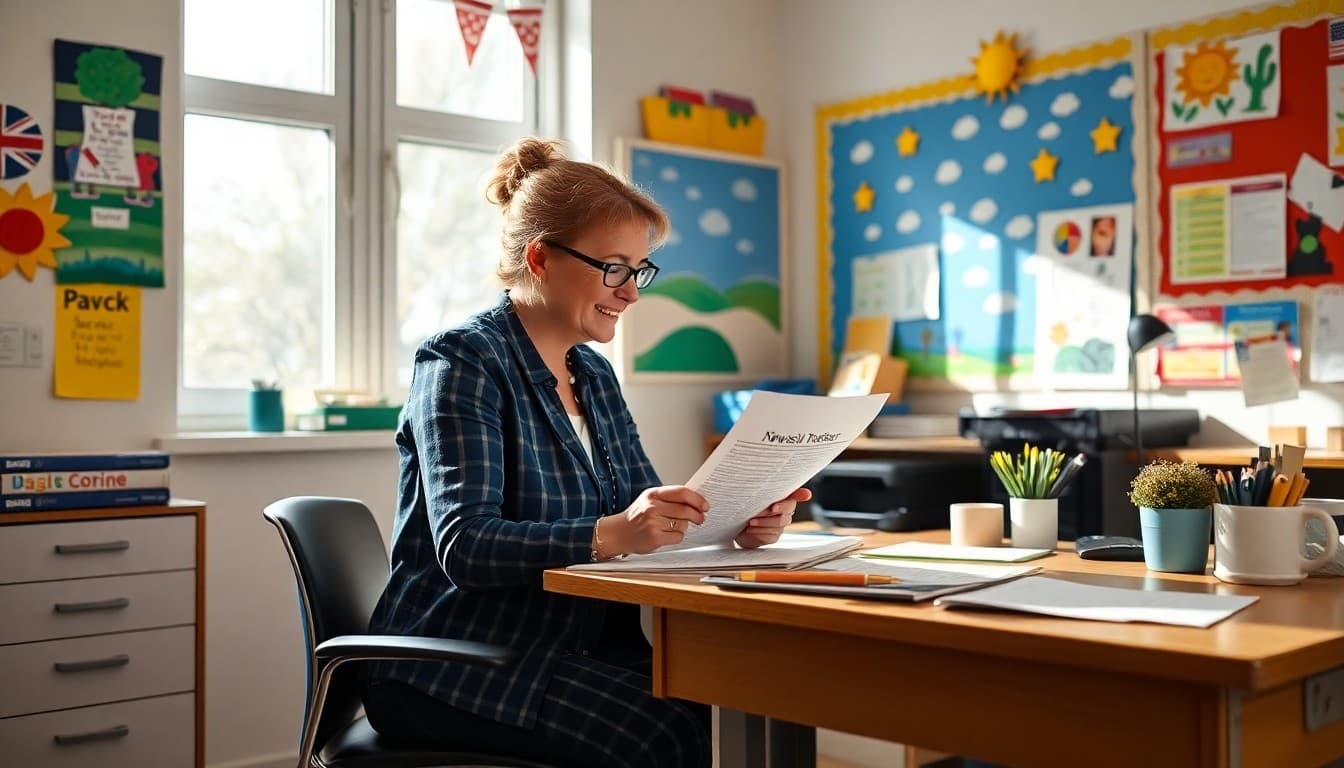
June School Newsletter Template for Teachers
The June newsletter is the last one families will receive from this year's teacher. Most families read it carefully. It is the year-end document, and the quality of the closing message shapes how families remember the year. Write it with the care that deserves.
Acknowledge the year honestly and specifically
The June opening should acknowledge the year with specificity. "This has been a year of real growth. In September, our class was reading [average level] and writing [type of work]. In June, students are reading [what has changed] and producing [what has changed]. That growth represents hundreds of hours of work, hundreds of small decisions to keep trying, and a year of partnership between school and home." Specific beats sentimental every time.
End-of-year logistics
Give families the complete logistics in one clear list. Last day of school. Library book return deadline. Supply take-home instructions. Portfolio or work collection dates. Report card distribution. Any end-of-year event dates that remain. Field day schedule. Families who know all of this at the beginning of June can plan accordingly.
Summer skill maintenance: specific and achievable
"For summer reading: 20 minutes daily, any book your student chooses. The public library summer reading program starts June 15 and is free. For math: five to ten minutes of fact practice three times a week prevents the regression that takes weeks to recover in the fall. For everything else: outdoor play, conversations with adults, and exploring things they are curious about. The summers that matter most are the ones where students stay curious."
Transition guidance
Tell families what to expect for next year, to the degree you know it. "Students will move to [grade/program] next year. Class assignments are typically communicated in August via [school communication channel]. If you have questions about placement or services for next year, contact the main office." Keep it brief and direct families to the right people for specifics.
Template: June teacher newsletter closing
"June , End of Year | [Class/Grade] | [Teacher Name] This year: [2-3 sentences on specific growth and accomplishments]. End-of-year logistics: [Bulleted list with specific dates and actions]. Summer skills: [Reading recommendation, math practice suggestion, and one general encouragement]. Next year: [Brief transition guidance and where to direct questions]. Thank you: [2-3 genuine sentences acknowledging the family partnership and what this year has meant]."
Daystage makes it easy to send this final June newsletter with embedded summer resources, library links, and a professional design that families will read and keep.
Get one newsletter idea every week.
Free. For teachers. No spam.
Frequently asked questions
What should a June teacher newsletter include?
A June teacher newsletter should cover: a genuine acknowledgment of the year's work and growth, specific end-of-year logistics (last day, supply return, classroom cleanup), summer maintenance recommendations for key skills (reading, math facts, any subject the class specifically worked on), transition information for next year (if known), and a closing message that honors the family partnership. June is the one newsletter a year that families read carefully and remember.
How should teachers close a school year in a newsletter?
Close with specificity and warmth, not clichés. 'This year you watched your student learn to [specific skill], navigate [specific challenge], and achieve [specific accomplishment]. That did not happen by accident. It happened because of what you did at home, the partnership you showed up for, and the belief you demonstrated in your student every day. I am proud of every student in this class.' Specific, earned, and honest closes better than any generic well-wishing.
What summer skill maintenance should teachers recommend in a June newsletter?
Give families specific, time-bound recommendations rather than vague encouragement. 'For reading: 20 minutes daily, any book your student chooses. For math: ten minutes of fact practice three times a week using [specific app or flash cards]. For writing: a summer journal, even two or three sentences a day. These small habits prevent the summer regression that typically requires four to six weeks of school time to recover in the fall.'
How should teachers address the transition to next grade in a June newsletter?
Share what families can expect for next year without making promises you cannot keep. 'Next year, students will be in [grade/program]. Class assignments are typically communicated in August. The most important thing you can do to prepare your student for next year is keep them reading and maintain consistent sleep and routine over the summer.' If specific teachers or programs are known, share them. If not, direct families to the school office for placement questions.
How does Daystage support June end-of-year teacher newsletters?
Daystage lets teachers send a June closing newsletter with embedded links to summer reading programs, math practice apps, and library registration pages. A newsletter with links families can tap immediately is far more likely to result in summer practice than a newsletter with suggestions they have to search for. Daystage also lets teachers include photos from the school year to celebrate the journey with families.

Adi Ackerman
Author
Adi Ackerman is a former classroom teacher and curriculum writer with 8 years in K-8 schools. She writes about school communication, parent engagement, and what actually works in real classrooms.
More for Professional Development
Ready to send your first newsletter?
3 newsletters free. No credit card. First one ready in under 5 minutes.
Get started free