

July School Newsletter Template for Teachers
A July newsletter is a quiet competitive advantage. Most families hear nothing from school during July. A teacher who reaches out in July with a warm, informative newsletter arrives at August orientation with families who already feel connected and prepared. Here is how to do it without making it feel like summer homework for anyone.
Introduce yourself before school starts
If families are just learning who their student's teacher will be, a July newsletter is the perfect first introduction. "My name is [Name] and I will be your student's [grade] teacher this year. I have been teaching for [years] and I am genuinely excited about the class we are going to build together this year. In the coming weeks I will share more about our classroom, but for now, my most important message is: keep reading." Brief, warm, focused.
Summer reading: the highest-leverage July ask
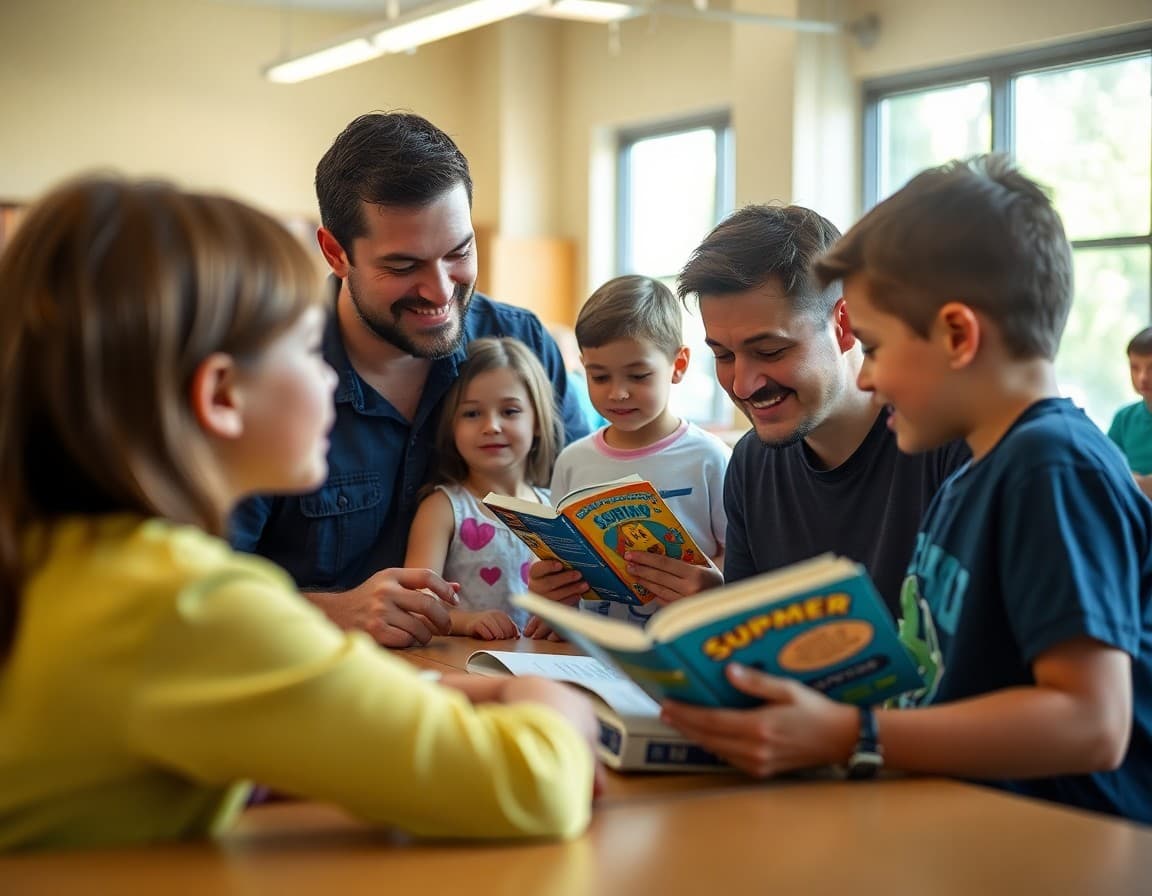
July is prime summer reading time. Make a specific, age-appropriate recommendation. "For your rising [grade] student, I recommend: [Title 1] for students who love adventure, [Title 2] for students who love realistic fiction, and [Title 3] for students who prefer non-fiction. Any of these will have your student ready for the kind of thinking we will do together in [month]." Specific books with a brief rationale get read. Generic lists do not.
Supply list: give families time to prepare
If you have a supply list ready, include it or link to it. "This year's supply list is attached. The only item that is hard to find: [specific item]. I recommend getting that one early. Everything else is easy to find at any office supply or dollar store." If the list is not ready yet, say so. "The supply list will be shared by [date]. Watch for an email from the school."
Back-to-school dates and logistics
Share whatever you know. First day of school. Orientation or open house dates. Arrival and dismissal procedures. Any new school policies families should know before day one. "Our classroom open house is [date] from [time]. This is the best time to drop off supplies, meet me in person, and see the room before the first full day. First day of school is [date]. Doors open at [time] and I will be there to greet every student."
Template: July teacher newsletter
"July Hello , [Class/Grade] | [Teacher Name] Introducing myself: [3-4 sentences on your background and approach]. Summer reading: [2-3 specific title recommendations with brief rationale]. Supply list: [List or link, or note that it is coming soon]. Back-to-school dates: [Open house, first day, arrival procedures]. Questions this summer? [Email and note of typical response time]."
Daystage makes it easy to send a July newsletter before school starts, establishing a direct family communication channel that continues seamlessly into the school year.
Get one newsletter idea every week.
Free. For teachers. No spam.
Frequently asked questions
Should teachers send a newsletter in July and what should it cover?
A July newsletter is optional but valuable for teachers who want to build early family relationships. A July newsletter typically covers: a brief introduction to the new teacher (for teachers whose class assignments are communicated in July), a supply list if it is ready, a summer reading recommendation with specific titles, a preview of what the class will focus on in the first weeks of school, and back-to-school event dates (orientation, open house, first day). It signals that the teacher is engaged and prepared even before school starts.
How should a new teacher introduce themselves in a July newsletter?
Keep the introduction brief and personal without oversharing. Name, teaching background, and one or two genuine things about your approach to teaching. 'My name is [Name] and I will be your student's [grade] teacher this year. I have been teaching [subject/grade] for [years] and I genuinely love [specific aspect of teaching]. This year we will spend a lot of time [brief description of approach].' One short paragraph is enough. The relationship will build in person starting in August.
What summer reading should teachers recommend in a July newsletter?
July is the heart of summer reading season. Recommend specific titles by grade level, mention the public library summer reading program, and emphasize student choice. 'The best summer reading is what your student wants to read. If they need ideas: [2-3 specific titles appropriate for the grade level you will be teaching]. The public library's summer reading program runs through [date] and has great incentives. Twenty minutes daily is all it takes to keep the reading gains from last year.' Specific titles with a clear why are more useful than a long booklist.
What back-to-school logistics should a July newsletter include?
Share whatever back-to-school logistics you know in July: the supply list if it is ready (or note that it is coming soon), orientation or open house dates, the first day of school, carpool and arrival procedure information, and how families will receive information about classroom placement if assignments are not yet posted. Early information gives families the lead time to prepare without scrambling in August.
How does Daystage support July teacher newsletters?
Daystage lets teachers send a July newsletter before school even starts, establishing a direct communication channel with families from the first week of July. A teacher who reaches families in July with a warm, informative newsletter arrives at August orientation with families who already feel connected. Daystage makes it easy to include supply list links, orientation details, and summer reading recommendations with embedded links.

Adi Ackerman
Author
Adi Ackerman is a former classroom teacher and curriculum writer with 8 years in K-8 schools. She writes about school communication, parent engagement, and what actually works in real classrooms.
More for Professional Development
Ready to send your first newsletter?
3 newsletters free. No credit card. First one ready in under 5 minutes.
Get started free