
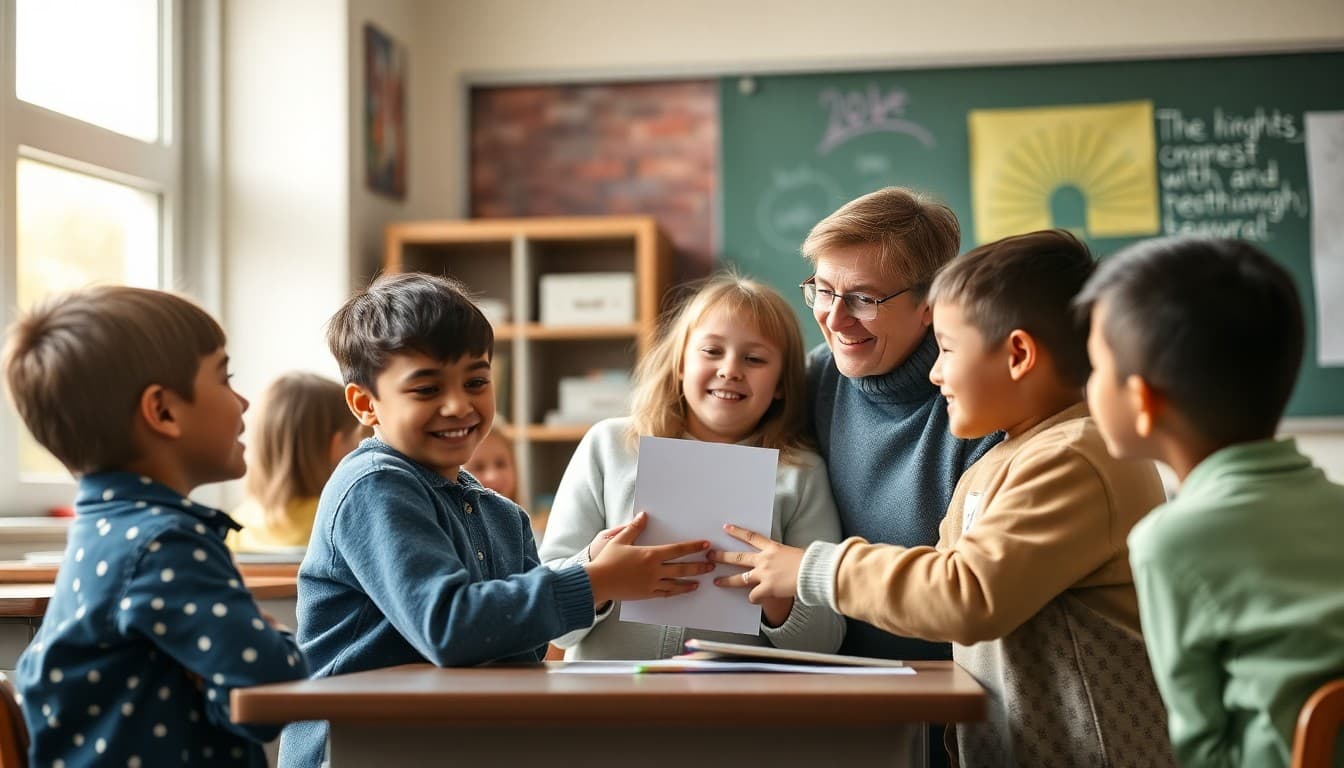
Classroom Community Newsletter: Building Connection and Belonging

Classroom community is not a soft add-on to the curriculum. It is the foundation that makes everything else possible. Students who feel they belong take more intellectual risks, persist longer through difficulty, and treat each other with more care. A newsletter that explains how and why you build community gives families a window into the social and emotional life of the classroom and invites their partnership.
Why community is not separate from academics
"Before students can focus on learning, they need to feel safe and connected. Research on belonging and academic achievement consistently shows that students who feel they belong in their classroom outperform academically comparable students who do not feel that sense of belonging. Building classroom community is not time away from academics. It is the precondition for academics. Every minute we invest in community early in the year pays dividends in learning productivity throughout the year."
How we build community in this classroom
Describe your specific practices. "Every day starts with a morning meeting where every student has a voice. We have classroom agreements that students helped create. We celebrate birthdays and achievements together. When conflicts arise, we address them through a structured conversation that focuses on understanding rather than punishment. Our classroom walls include work and representations from every student. Every student in this room is known by me and known by their peers."
What belonging looks like in practice
"Belonging is specific. It is a student who raises their hand knowing their idea will be taken seriously. It is a student who makes a mistake and knows the class will not mock them. It is a student who is absent and whose classmates notice and welcome them back. It is a student who looks different from most of their peers and still feels fully part of the group. We work on each of these things deliberately."
How families can reinforce community values
"The best way to reinforce our classroom community values at home is to use the same language. Ask your student: what is one thing someone in your class did today that you appreciated? What is something hard about your class community right now? What would make our classroom feel more like a place everyone belongs? These questions signal that you value the social life of the classroom, not just the academic grades."
This month's community challenge
Give families a monthly community challenge they can do at home. "This month's challenge: eat dinner together at least twice a week with no screens at the table. Go around the table and have each person share one specific thing they appreciated about someone else in the family that day. Specificity is the rule: not 'you were nice' but 'I noticed you helped your brother when he was frustrated and I appreciated that.' This practice mirrors exactly what we do in classroom community circle."
Template: classroom community newsletter section
"Our Classroom Community This month we are focused on [specific community skill or practice]. Students have been [specific activity or conversation]. Why community matters: [1-2 sentences connecting belonging to academic achievement]. To reinforce at home: [One specific family activity or conversation prompt]. Questions about our classroom culture? Contact me at [email]."
Daystage makes it easy to send classroom community newsletters with photos from community-building activities, giving families a real sense of what belonging looks like in the room.
Get one newsletter idea every week.
Free. For teachers. No spam.
Frequently asked questions
Why should teachers send a newsletter specifically about classroom community?
Classroom community is the foundation of academic learning. Students who feel they belong take more intellectual risks, collaborate more effectively, and persist longer through difficulty. When families understand how the teacher builds community and why it matters, they can reinforce those values at home. A newsletter about classroom community also invites families into the social and emotional life of the classroom, not just the academic content, which builds a richer partnership.
What community-building practices should teachers describe in a newsletter?
Specific practices that work well in newsletters: morning meetings or circles where every voice is heard, community agreements that students create together, peer collaboration structures that ensure all students are included, celebration rituals for individual and group achievements, conflict resolution processes that students participate in, and cultural celebrations that honor the diversity of the classroom. These are concrete enough for families to understand and value.
How do teachers explain social-emotional learning through a classroom community newsletter?
Connect SEL to classroom community explicitly. 'The social-emotional skills we build in our community include: empathy (recognizing and responding to others' feelings), conflict resolution (addressing disagreements respectfully), perspective-taking (understanding situations from others' viewpoints), and collaboration (achieving shared goals together). These skills are not separate from academic learning. They are the foundation that makes academic learning possible.'
How can families reinforce classroom community values at home?
Families reinforce classroom community by: using the same values language the class uses (respect, belonging, responsibility), having family conversations about how to handle conflict and disappointment, modeling empathy in how adults in the family talk about other people, celebrating effort and growth rather than only achievement, and making home a place where every family member feels heard. A newsletter can offer specific conversation starters or scenarios that connect home to school.
How does Daystage support classroom community newsletters?
Daystage lets teachers send classroom community newsletters with photos from community-building activities, embedded links to family conversation guides, and consistent branding that gives families a sense of the classroom culture. A newsletter that includes a photo of students celebrating a community achievement communicates the classroom culture more powerfully than any description. Daystage makes it easy to include these images in a professional, shareable newsletter.

Adi Ackerman
Author
Adi Ackerman is a former classroom teacher and curriculum writer with 8 years in K-8 schools. She writes about school communication, parent engagement, and what actually works in real classrooms.
More for Professional Development
Positive Behavior Support Newsletter: What PBIS Means for Families
Professional Development · 6 min read
SEL Newsletter for Middle School: Navigating Emotions and Friendships
Professional Development · 6 min read
School Newsletter Emotional Intelligence: Why EQ Matters for Students
Professional Development · 6 min read
Ready to send your first newsletter?
3 newsletters free. No credit card. First one ready in under 5 minutes.
Get started free