
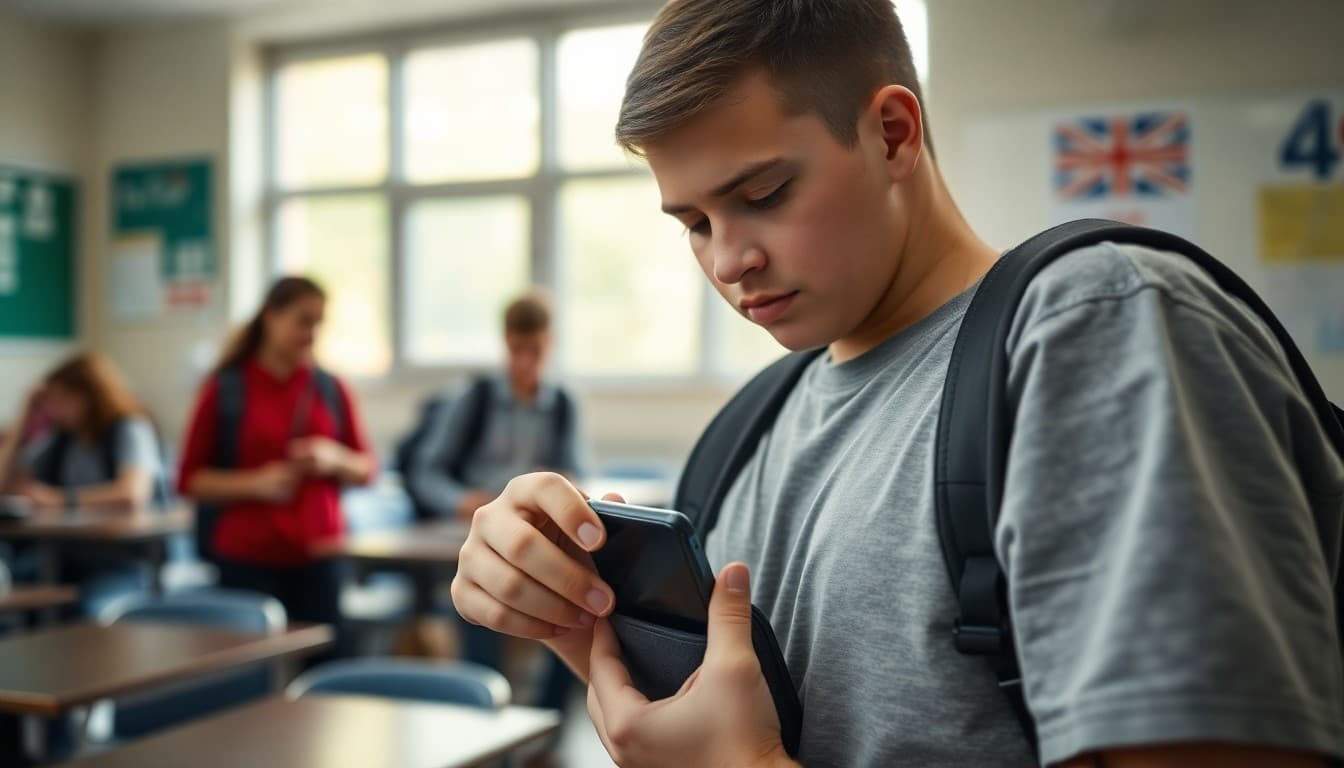
Communicating Your Social Media Policy in the Principal Newsletter

Social media and phone policy newsletters generate more family responses than almost any other type of communication. Some families will agree strongly. Others will disagree just as strongly. The newsletter that navigates this well is one that explains the policy clearly, grounds it in real student experience, and respects that families have their own views on technology.
State the Policy Before You Defend It
Families need to know what the rule is before they can understand why it exists. "Starting January, personal phones and devices must be stored in designated pouches during the school day. Phones will be returned at dismissal." That is the policy. One clear sentence. Then you can explain the rationale. Burying the actual rule inside paragraphs of context frustrates everyone.
Explain the Rationale With Specific Evidence
Abstract concerns about phones do not move families. Specific observations from your school do. "This fall, we administered an anonymous survey to our eighth graders. Seventy-two percent reported feeling distracted by their phone during class at least three times per week. Forty percent said they check social media during instruction. We are responding to what we observed, not to a trend we read about." That kind of evidence invites parents to see the policy as a solution to a real problem.
Define What Is and Is Not Covered
Families need clear boundaries. "Personal devices are stored from arrival through dismissal. Teachers may permit device use for specific instructional purposes and will communicate this in advance. Phones remain accessible in cases of family emergency -- students may contact the office, who will reach the family and allow a call if needed." Each of those sentences addresses a common concern before families have to ask.
A Template Policy Announcement Section
Here is a newsletter section that covers the key points:
"Starting February 1, students at Jefferson Middle School will use individual phone pouches during the school day. Phones go into the pouch at arrival and are returned at dismissal. This policy applies to all grades. Teachers may permit specific instructional use and will communicate that in class. If a family emergency requires a student to contact home, students come to the office. We are implementing this based on clear patterns we observed in our own building -- and based on growing evidence about the impact of phone access on adolescent attention and anxiety. We are committed to explaining this directly and answering any questions at our family Q&A on January 22."
Address Social Media Behavior Off-Campus
The newsletter should clarify the school's position on off-campus digital behavior. "Our social media policy does not govern what students do at home, but incidents that directly affect the school community -- harassment, threats, or targeted exclusion that involves our students -- are addressed through our discipline process regardless of where they originated." That clarity prevents families from being surprised when the school gets involved in an off-campus incident.
Offer Families Tools for Enforcement at Home
Families who feel alone in managing their child's social media use at home often resist school policies because they feel unsupported. Flip that. Offer resources: parental control settings, suggested evening phone cutoff times, two or three conversation starters for families to use with their teen. "We know that school policies work best when families apply the same values at home. Here are a few practical tools that may help." That framing builds partnership instead of compliance.
Host a Q&A for Families Who Have Questions
Any policy that restricts something families care about will generate questions and some resistance. A 30-minute virtual Q&A session in the first week after the newsletter gives families a structured place to raise concerns. Announce it in the newsletter. Come prepared with data and specific examples. Families who feel heard are far more likely to support the policy than those who feel like it was handed down without conversation.
Follow Up After the First Month
A brief check-in newsletter after the policy has been in place for a month tells families you are paying attention. "We have completed four weeks of our phone-free day policy. Office referrals for phone-related disruptions are down 60 percent. Classroom observations suggest significantly improved focus. We will continue this policy through the school year and review it with families at the spring open house." Families who see results trust the policy. Data is your best defense.
Get one newsletter idea every week.
Free. For teachers. No spam.
Frequently asked questions
What should the principal newsletter say about the school's social media and phone policy?
State the policy clearly and specifically: what is permitted, what is not, when and where phones may be used, and what happens when the policy is violated. Then explain the rationale in one paragraph. Families are more likely to support a policy they understand than one that appears as a rule without context.
How do I communicate a new phone policy without generating parent backlash?
Lead with the research and the student experience rather than the rule. 'We are seeing that phone access during the school day is directly correlated with decreased attention and increased anxiety in our students. This policy is our response to what we are observing, not a blanket restriction for its own sake.' That framing invites families into the reasoning.
What should the newsletter say about social media incidents that started off-campus?
Explain that behavior affecting the school community is addressed by the school regardless of where it originated. 'Cyberbullying or harassment between students that spills into our building is part of our responsibility to address, even if the original incident happened on a home device.' Families need to understand the scope of school authority on this topic.
How do I involve families in enforcing the social media policy at home?
Give them practical tools. Suggest specific apps or settings for monitoring. Recommend having a device check-in time before bed. Share a brief script for talking with their teen about social media. Families who feel equipped to act are more likely to partner with the school on enforcement.
What communication tool helps explain a policy change like social media rules to all families at once?
Daystage is well-suited for policy newsletters. You can include the full policy as a PDF attachment, a plain-language summary in the newsletter body, and links to research or resources -- all in one send.

Adi Ackerman
Author
Adi Ackerman is a former classroom teacher and curriculum writer with 8 years in K-8 schools. She writes about school communication, parent engagement, and what actually works in real classrooms.
More for Principals
Ready to send your first newsletter?
3 newsletters free. No credit card. First one ready in under 5 minutes.
Get started free