
Launching Your Anti-Bullying Campaign Through the Principal Newsletter

Anti-bullying newsletters can feel like they are written by a committee -- careful, vague, and ultimately useless to the families who most need guidance. The ones that actually help are specific, honest, and written by someone who knows their school. That person is you. Here is how to write one that does real work.
Name the Campaign and What It Involves
If your school is doing Bully Prevention Month, PBIS lessons on peer respect, or a specific curriculum like Second Step or Character Strong, name it. Tell families what students will be doing during the campaign. "This month, every homeroom class is spending two sessions with our counselor on bystander behavior -- specifically, what to do when you see someone being excluded or targeted." That is a concrete program. Families can ask their child about it. It is more credible than a general statement about kindness.
Define Bullying Clearly for Families
Not every family uses the same definition. The newsletter is a useful place to establish the school's working definition. Something direct: "Bullying at our school means any repeated, intentional behavior meant to harm or exclude another student where there is a real or perceived power difference. A single conflict or argument is not bullying. Online behavior that continues off school grounds can still be addressed through our process." That kind of clarity prevents misunderstandings and sets the right expectations for what families should report.
Give Families Specific Guidance for Home
The most useful thing your anti-bullying newsletter can do is give families something to do tonight. One or two concrete conversation starters: "Ask your child: 'Is there anyone at school who makes it hard for other kids to feel included?' and 'What would you do if you saw someone left out at lunch?'" These are questions any parent can ask, and they open conversations that are much harder to start from scratch.
A Template Campaign Launch Section
Here is an opening that works:
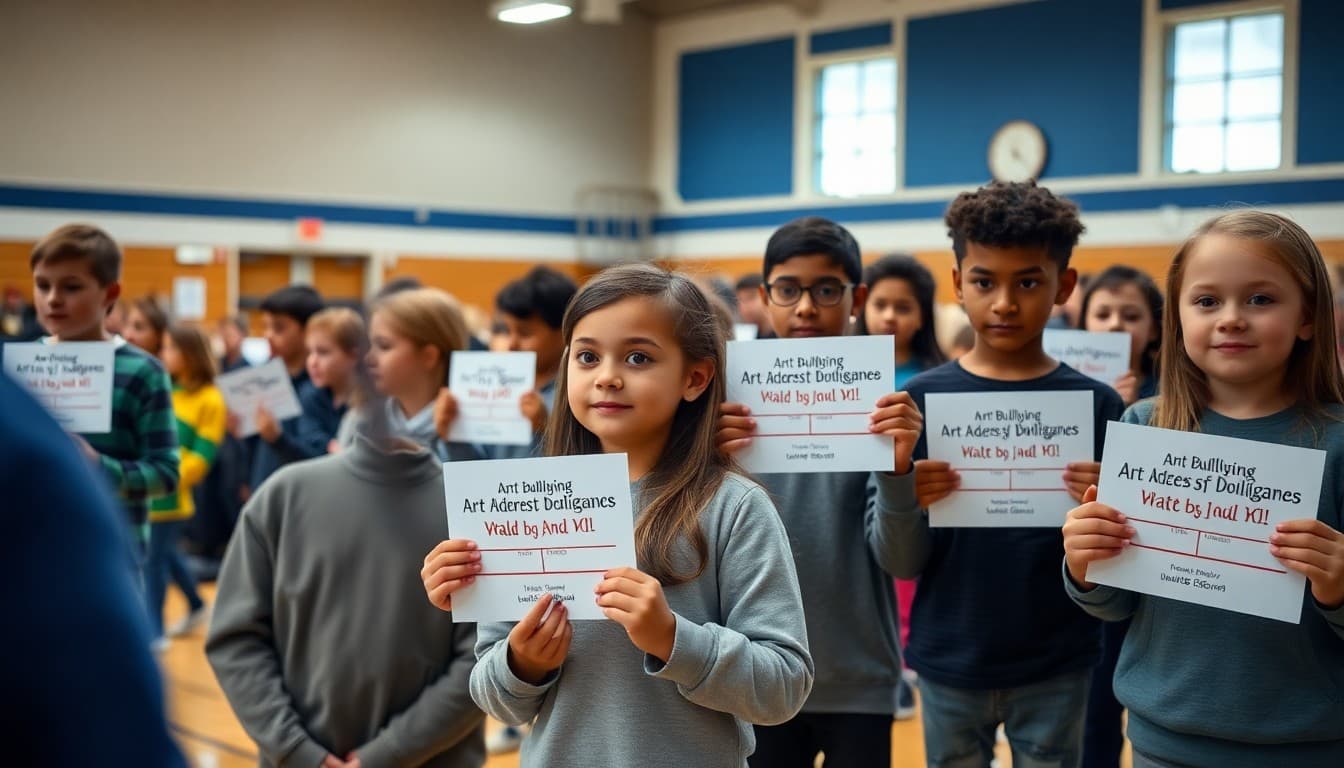
"October is National Bully Prevention Month, and we are marking it with intention at Riverside Elementary. Every class will complete two sessions this month focused on being an upstander -- what it looks like to act when you see someone being treated unkindly. Our counselor, Mr. Alvarez, is leading every session. Students will also sign a school-wide pledge that will be displayed in the main hallway. At home, consider asking your child: 'What did you learn today about how to help a friend who is having a hard time?' Even a two-minute conversation makes a difference."
Address the Reporting Pathway
Families need to know what to do if their child is being bullied -- or if they are bullying someone else. Be explicit. Name the contact person, the process, and the expected timeline for follow-up. "If your child tells you they are being bullied, please contact their classroom teacher first or call the main office. All reports are taken seriously and followed up within two school days. Anonymous tips can also be submitted through the link below." That clarity alone prevents a lot of late-night parent frustration.
Address Cyberbullying Specifically
Online behavior does not stay at home. When conflicts that start on social media show up in the cafeteria on Monday morning, the school is involved. Your newsletter can acknowledge this reality and give families guidance. "Our policies apply to behavior that affects our school community regardless of where it originated. If you see something alarming online involving students from our school, please report it." That statement signals that the school is paying attention and that parents are expected to be part of the solution.
Follow Up Mid-Campaign
A brief mid-month update -- "students have completed session one, here is what they discussed" -- keeps momentum alive and reminds families that this is real and ongoing. Share one concrete thing students learned. Ask families to check in with their child. The follow-up is the part most newsletters skip, and it is often where the most meaningful engagement happens.
Close With Accountability to Families
End your anti-bullying newsletter with a commitment you intend to keep. "We will report back in November on what we observed and learned from this campaign." Or: "Our counselor will present a brief update on school climate at the October 18 PTA meeting." Naming what you will do next makes the launch newsletter feel like the start of something real, not just a one-time communication.
Get one newsletter idea every week.
Free. For teachers. No spam.
Frequently asked questions
What should a principal newsletter say when launching an anti-bullying campaign?
Describe the campaign activities students will participate in, explain the school's definition of bullying clearly, and give families concrete guidance on how to talk with their children about it. Avoid language that sounds reactive -- frame the campaign as proactive culture-building, not damage control.
How do I explain the difference between bullying and conflict in the newsletter?
This distinction matters for families and is worth naming. Bullying is repeated, intentional, and involves a power imbalance. A conflict is a disagreement between peers with roughly equal standing. The newsletter can include a brief definition of each so families know what to look for and what to report.
How do I avoid alarming families while still taking bullying seriously?
Be factual and forward-looking. 'We are launching this campaign because we believe prevention is more effective than response' is different from 'we are seeing a bullying problem in our school.' One is proactive. The other triggers anxiety without actionable information. Lead with the program, not the problem.
Should a principal mention specific incidents or patterns in the anti-bullying newsletter?
No. Specific incidents are confidential. Patterns can be mentioned briefly and in general terms: 'We have seen an uptick in social exclusion behaviors among our middle schoolers that we want to address directly.' That acknowledges reality without compromising any student's privacy.
What tool helps organize anti-bullying resources and campaign details in a newsletter?
Daystage lets you include resource links, counselor contact information, and event details for campaign activities all within a single formatted newsletter. For a multi-week campaign, you can send a kickoff newsletter and follow-up newsletters from the same platform.

Adi Ackerman
Author
Adi Ackerman is a former classroom teacher and curriculum writer with 8 years in K-8 schools. She writes about school communication, parent engagement, and what actually works in real classrooms.
More for Principals
Ready to send your first newsletter?
3 newsletters free. No credit card. First one ready in under 5 minutes.
Get started free