
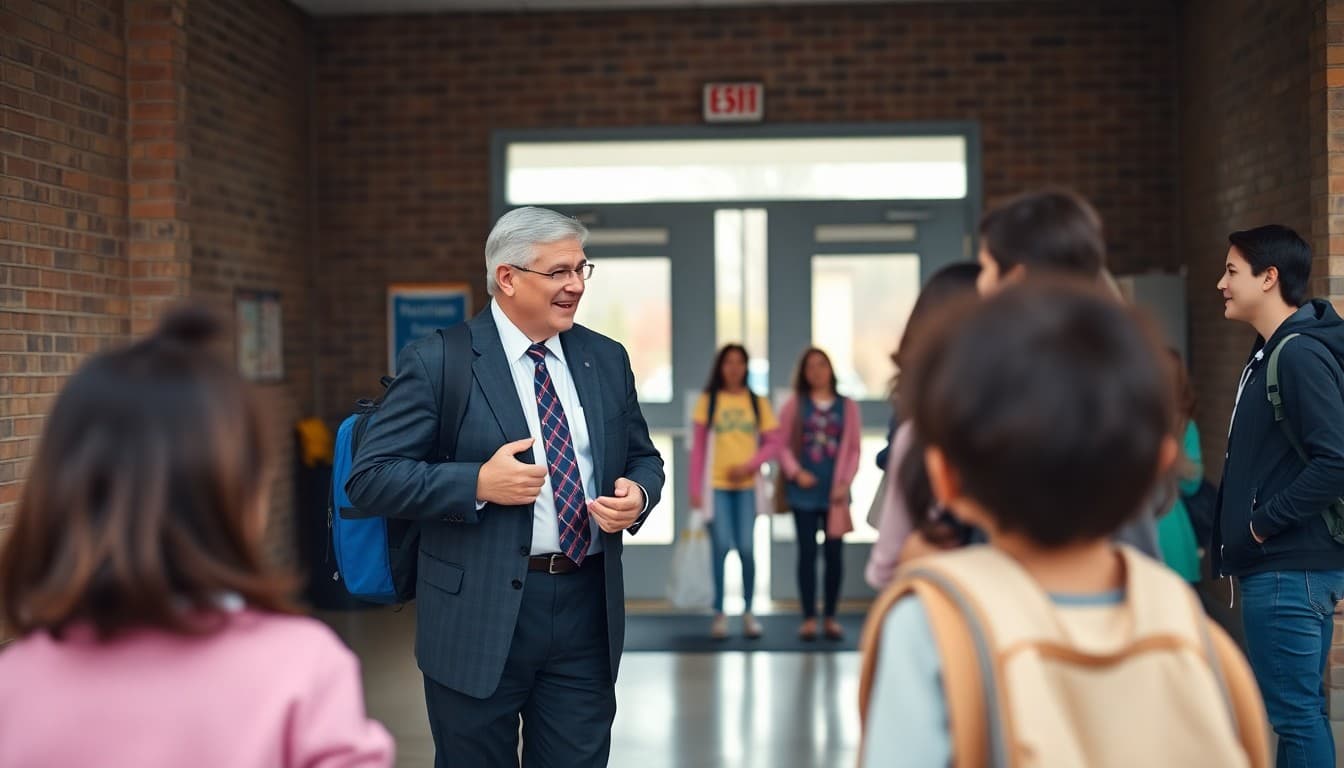
Welcome Back to School: Principal Newsletter Template

The back-to-school welcome newsletter sets the tone for the entire year. Families read it and make a snap judgment: is this principal someone I can trust, someone who is organized, someone who gets what our kids need? You have one newsletter to answer yes to all three. Here is how to make it count.
Lead With Something Human
Skip the "As the new school year begins" opener. Families have read that sentence in every welcome letter they have ever received. Start somewhere real. "I spent part of August walking every classroom in this building, looking at what was on the walls and thinking about what we were teaching last year and what we want to do differently this year." Or: "Every year on the first day of school I stand at the front door and greet every student by name. This year I am looking forward to meeting 40 new faces." That kind of opening shows a real person behind the newsletter.
Cover the Practical Details Families Need Most
Once you have their attention, give them the logistics. School hours, drop-off procedures, supply lists, key dates in the first month, and who to call for what. Be specific and organized. Use bullet points or a short table for schedules. Families appreciate clarity here -- they have a dozen things to coordinate for the first week and the easier you make it, the better.
Introduce Your Theme or Focus for the Year
If your school has a focus word, a goal, or a theme for the year, name it here and explain it briefly. "This year our school theme is Curiosity. Every unit, every project, every conversation is going to be grounded in one question: what do we still not understand about this, and how do we find out?" That kind of framing gives families a lens for understanding what their child is experiencing all year.
A Template Opening That Works
Here is an opening you can adapt:
"Welcome to the 2026-2027 school year. I have been at Washington Elementary since June, getting the building ready and thinking about what kind of year we want this to be. The short answer: one where every student feels known. That is my promise this year -- not a program or a slogan, but the real thing. Below you will find everything you need for the first week. Please read it. And if something is missing, call me."
Mention Your Staff
Families trust the school more when they know the people running it. Name new teachers, acknowledge returning staff briefly, and introduce any new counselors or support staff. "We welcome three new teachers to our building this year -- Ms. Ortega in second grade, Mr. Li in fifth grade, and Ms. Patel as our new reading specialist. Each of them spent time this summer getting ready for your children." That sentence makes new staff feel real before families ever meet them.
Give Families a Way to Reach You
Your email and the main office number belong in the welcome newsletter. So does a note that you actually read and respond to parent messages. "My door is open. So is my inbox. I respond to all parent emails within two school days." That commitment, made explicitly, changes how families feel about reaching out when something comes up.
Point to What Is Coming
Preview the first few weeks. Back-to-school night, the first library checkout day, the start of any schoolwide programs. Give families a sense of the rhythm. When people know what is coming, they feel less anxious about the transition. The welcome newsletter is the first chapter of the school's story. Write it like one.
Send It Right Before School Starts
Two to three days before the first day is the sweet spot. Early enough for families to prepare. Late enough that the information is final. Follow it with a brief first-week recap to close the loop on how the opening days went. Daystage makes both sends quick to put together -- so you can focus on being at the front door for that first morning instead of finishing your newsletter at midnight.
Get one newsletter idea every week.
Free. For teachers. No spam.
Frequently asked questions
What should a principal include in the back-to-school welcome newsletter?
Cover the basics families need to navigate the first week: school hours, drop-off and pickup procedures, key dates, supply information, and who to contact with questions. Then add a brief personal note that establishes your tone as a leader. The combination of practical information and genuine voice makes the first newsletter useful and memorable.
What tone should the back-to-school newsletter take?
Warm, confident, and specific. Families are deciding whether this year is going to feel different than last year. Your newsletter is their first signal. Avoid boilerplate language. Write like yourself -- the same way you would talk at a back-to-school night. That tone carries more trust than any polished corporate language.
How personal should the welcome letter be?
Personal enough to sound human, not so personal that it becomes a diary entry. One paragraph about why this year matters -- what you are working toward, what you noticed over the summer -- is right. The rest should be practical and clear. Families want to feel connected to the principal and also know where the bus stop is.
When should the welcome newsletter go out?
Ideally two to five days before school starts. Early enough for families to prepare, late enough that the details are finalized. A second, shorter newsletter on the first or second day of school is a good follow-up. Some principals send a preview newsletter in mid-August to build anticipation and give families an early look at the calendar.
What makes a back-to-school newsletter from Daystage stand out?
Daystage lets principals send a formatted newsletter with photos, an event block for open house, key links to the school calendar, and a warm personal note -- all in one professional send. Families receive it in their inbox and it looks like something that took care to create, because it did.

Adi Ackerman
Author
Adi Ackerman is a former classroom teacher and curriculum writer with 8 years in K-8 schools. She writes about school communication, parent engagement, and what actually works in real classrooms.
More for Principals
Ready to send your first newsletter?
3 newsletters free. No credit card. First one ready in under 5 minutes.
Get started free