
Elementary Principal Newsletter: What to Send in November
November is the first month of the school year where elementary principals feel the competing pull of multiple major communication needs at once. Report cards are going home. Parent-teacher conferences are happening or just finished. Thanksgiving week is coming, along with the attendance challenges that always come with it. A food drive is probably underway. And the weather is changing in ways that affect daily school routines like recess and outdoor time.
Your November newsletter can address all of it clearly if you structure it well. Families at the elementary level are engaged and receptive. A well-written November newsletter builds the kind of partnership that makes second semester smoother for everyone.
Principal's note: the middle of the first chapter
The November principal's note sits at an interesting moment: the year is established but not done. Families have enough information about their student's experience to have real opinions about how the year is going. Students are in a routine. Teachers know their classes.
Write the November note as a genuine mid-fall update. Name something you are proud of from October. Name something you are still working on as a school. Mention something you are looking forward to in November. Elementary families respond well to a principal who speaks with warmth and specificity. A note that feels like it came from a person who knows the school earns more trust than one that reads like a form letter.
Report cards: understanding and using them
Report card communication in November should be both logistical and helpful. Tell families the following in clear, direct language:
- When report cards go home, whether that is digitally through the parent portal or physically in the backpack.
- How to access digital report cards and what to do if there is a login issue.
- What the grading scale means. If your school uses standards-based grading with a 1-4 scale, briefly explain what each number means in practice. Many families are still unfamiliar with standards-based grading after years of traditional letter grades.
- How to request a follow-up conversation with the teacher if the report card raises questions.
- What academic support resources are available for students who are below grade level in a subject area.
Thanksgiving community event or celebration
Many elementary schools hold a Thanksgiving family event: a feast day where families are invited to eat lunch with their child, a classroom feast, or a schoolwide gratitude assembly. If your school does this, the November newsletter is where families get the full picture. Include the date and time, which grades or classrooms are participating, whether family attendance is by invitation or open to all, and what families should bring or know about.
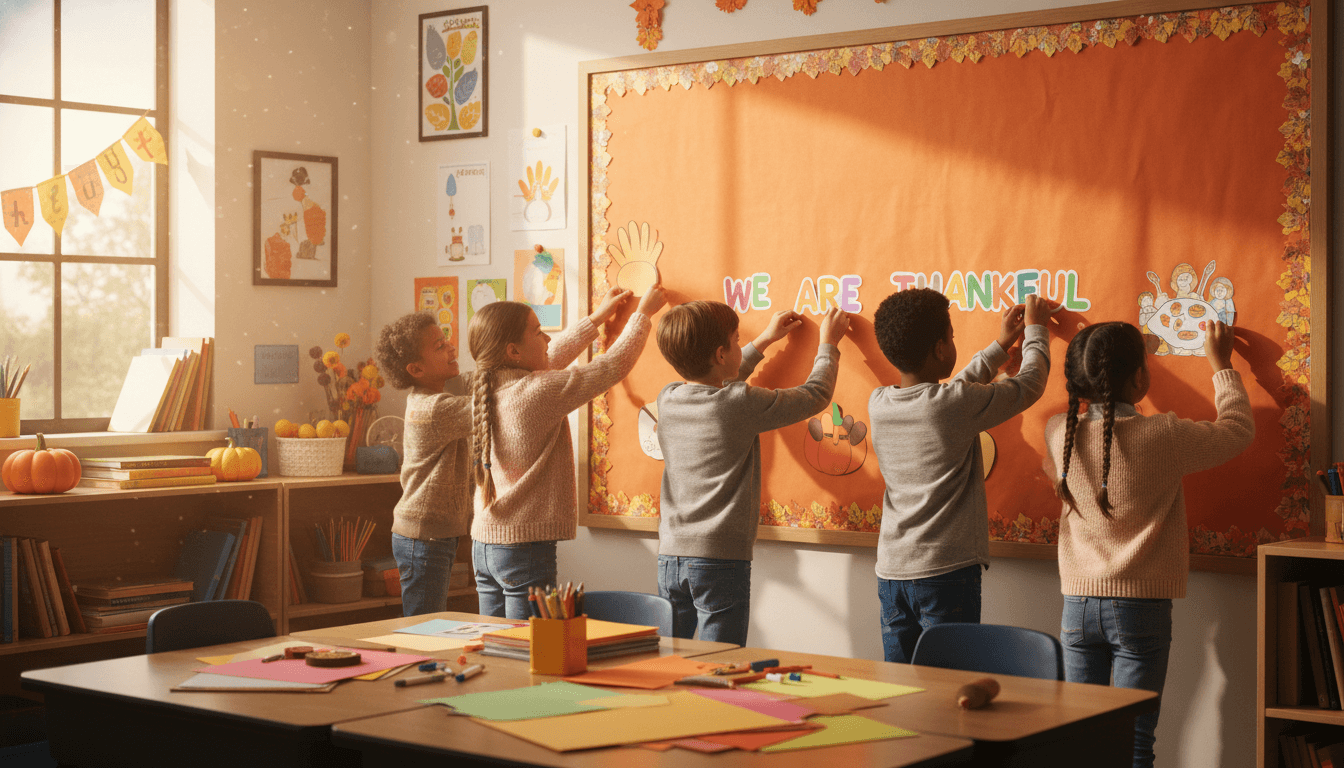
Even if your school does not hold a formal Thanksgiving event, a brief note about how classrooms are marking the season builds the sense of a school community that acknowledges the full year's rhythms, not just its academic requirements.

Thanksgiving food drive
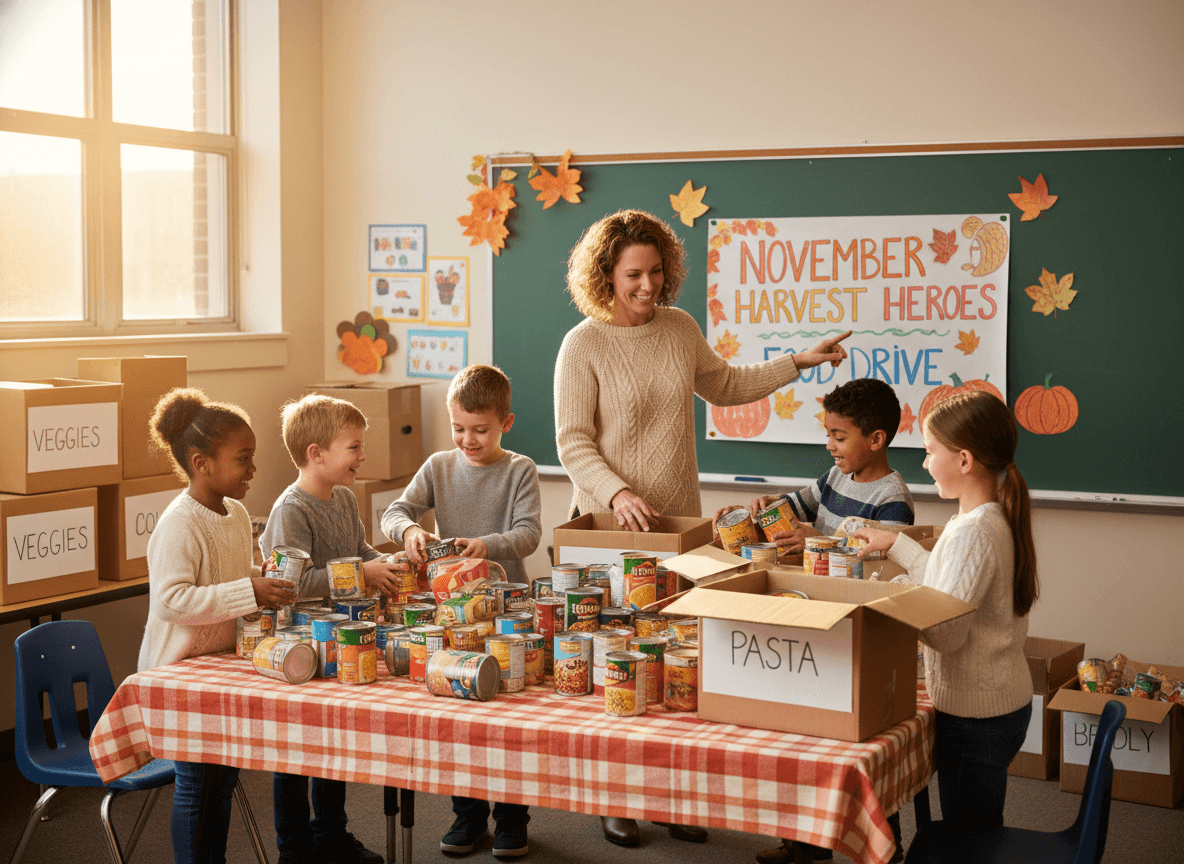
If your school runs a Thanksgiving food drive, the November newsletter is where most families first engage with it. Be specific: which organization receives the donations, what items are most needed, where in the building donations are collected, and what the deadline is. If your school has a classroom competition tied to the drive, explain the mechanics and how participation is counted.
A brief, factual statement about the community partner and the need they serve motivates more participation than generic language. Families who understand that their donation goes to a specific food pantry two miles away give differently than families who hear "help those in need."
Attendance before Thanksgiving break
Address this one directly. Every elementary school deals with the same pattern: the Tuesday and Wednesday before Thanksgiving see elevated absences as families extend the break. Your November newsletter is the right place to ask families to keep students in school those days.
Make the case with specifics rather than a general appeal. What is happening academically the week of Thanksgiving? Is a unit wrapping up? Are classrooms doing something special? Is there a project due? Tell families. A principal who explains what students will miss by being absent on November 25th gets a different response than one who simply says attendance matters.
Fall parent-teacher conferences
If your fall conferences are happening in November rather than October, this section needs full treatment. Include the scheduling method, available dates and times, interpretation services, and the deadline for sign-up.
For an elementary audience, include a brief conference prep guide. Ask families to come with: observations about how their student talks about school at home, any subjects the student seems to love or avoid, and any social dynamics or friendships they have noticed. Tell families what to expect in return: concrete information about where their student is academically, what goals the teacher has for the second half of the year, and how families can support learning at home.
Indoor recess policy and November weather
November weather is unpredictable enough in most of the country to generate family questions about recess. Address the indoor recess policy in the newsletter before families ask. Include your school's specific temperature threshold, how the daily decision is made and communicated, and what indoor recess looks like for students who are accustomed to outdoor play.
Include a brief note about outdoor clothing: if the temperature is above the indoor recess threshold, students go outside. Families who send their student in November without a coat should know that the school will follow its normal policy and the student will be cold. A simple reminder to send coats, hats, and gloves prevents both student discomfort and frustrated family calls.
Get one newsletter idea every week.
Free. For teachers. No spam.
Frequently asked questions
How should an elementary principal communicate report cards in November?
Report card communication in the elementary November newsletter should cover logistics first, then context. Tell families when report cards go out, whether they are digital or paper, and how to access them. Then briefly explain how to read the report: what the rating scale means, how attendance is factored in, and what the difference is between a standards-based grade and a traditional letter grade if your school uses one or both. For families whose student is struggling in a particular area, include a clear sentence about how to request a teacher conversation or access support resources. Families who understand what they are reading respond to report cards more productively.
What should an elementary principal say about the Thanksgiving food drive?
The Thanksgiving food drive section should be specific and action-oriented. Name the partner organization receiving donations, the specific items most needed, drop-off locations in the building, and the deadline. For schools doing a classroom competition, explain how the competition works and how points are tallied. A brief sentence about the need in the specific community being served, naming the organization by name, motivates more participation than generic language about 'helping those in need.' For families who want to do more than donate food, include information about volunteering with the partner organization directly.
How should an elementary principal address Thanksgiving week attendance?
Thanksgiving week attendance is a recurring challenge at every elementary school. Families extend the break, keep students home for mild illness, or pull them early for travel. The most effective way to address this in the November newsletter is to be specific. Name the academic content happening in the days before Thanksgiving: a math unit wrapping up, a writing project coming due, a class celebration happening on Wednesday. Tell families directly that those school days matter and that you are asking them to keep students enrolled and attending. A principal who makes the specific case for attendance during Thanksgiving week gets more cooperation than one who sends a generic reminder.
What is the right way to handle the indoor recess weather policy in November?
Indoor recess policies in November prevent a significant volume of family questions and student complaints. State your school's specific temperature threshold for indoor recess, who makes the daily call, and how it is communicated to families and students. If indoor recess has a different activity structure than outdoor recess, briefly describe what students do. Remind families of the dress code expectation on days when outdoor recess is possible: if students have a coat and appropriate outdoor clothing, they go outside. If they arrive without a coat on a cold day and have indoor recess, that is a student comfort issue, not a school policy failure.
What newsletter platform works well for elementary principals who want strong family communication in November?
Daystage is designed for the kind of family-forward communication elementary principals need, especially in November when the newsletter competes with Thanksgiving prep and the busy fall close. The template keeps the structure consistent so families know where to look. The scheduling feature means the November newsletter can go out on time even when the principal is coordinating conferences, food drives, and report card distribution simultaneously. Elementary principals using Daystage consistently report that November is the month the newsletter becomes a habit rather than a burden.

Adi Ackerman
Author
Adi Ackerman is a former classroom teacher and curriculum writer with 8 years in K-8 schools. She writes about school communication, parent engagement, and what actually works in real classrooms.
More for Principals
Ready to send your first newsletter?
3 newsletters free. No credit card. First one ready in under 5 minutes.
Get started free