
Elementary Principal Newsletter: What to Send in December
December is the most emotionally charged month of the school year for elementary families. Winter concerts, classroom celebrations, gift exchanges, holiday giving projects, and the anticipation of winter break all converge in four weeks that also happen to include the last instructional push before a two-week pause. Your December newsletter needs to manage family logistics, set clear expectations, and close the first semester with the warmth and specificity that elementary families have come to expect from you.
Send it early in December, in the first week if possible, so families have time to plan before the concert, the classroom party, and the last day of school all arrive.
Principal's note: closing the first half of the year
The December principal's note is the most-read section of your most-read newsletter of the first semester. Elementary families are sentimental about the school year, and December amplifies that. Write this one with genuine care. Mention something specific about what the first four months have been: a moment in the hallway, something a class did that surprised you, a teacher who went above and beyond, a student who grew in a way that mattered.
Close the note by looking ahead to January with something specific. What is the school working on? What are you excited to bring to the second semester? A December principal's note that closes a chapter and opens a new one is something families remember. A generic holiday greeting is something they scroll past.
Winter concert: all the details families need
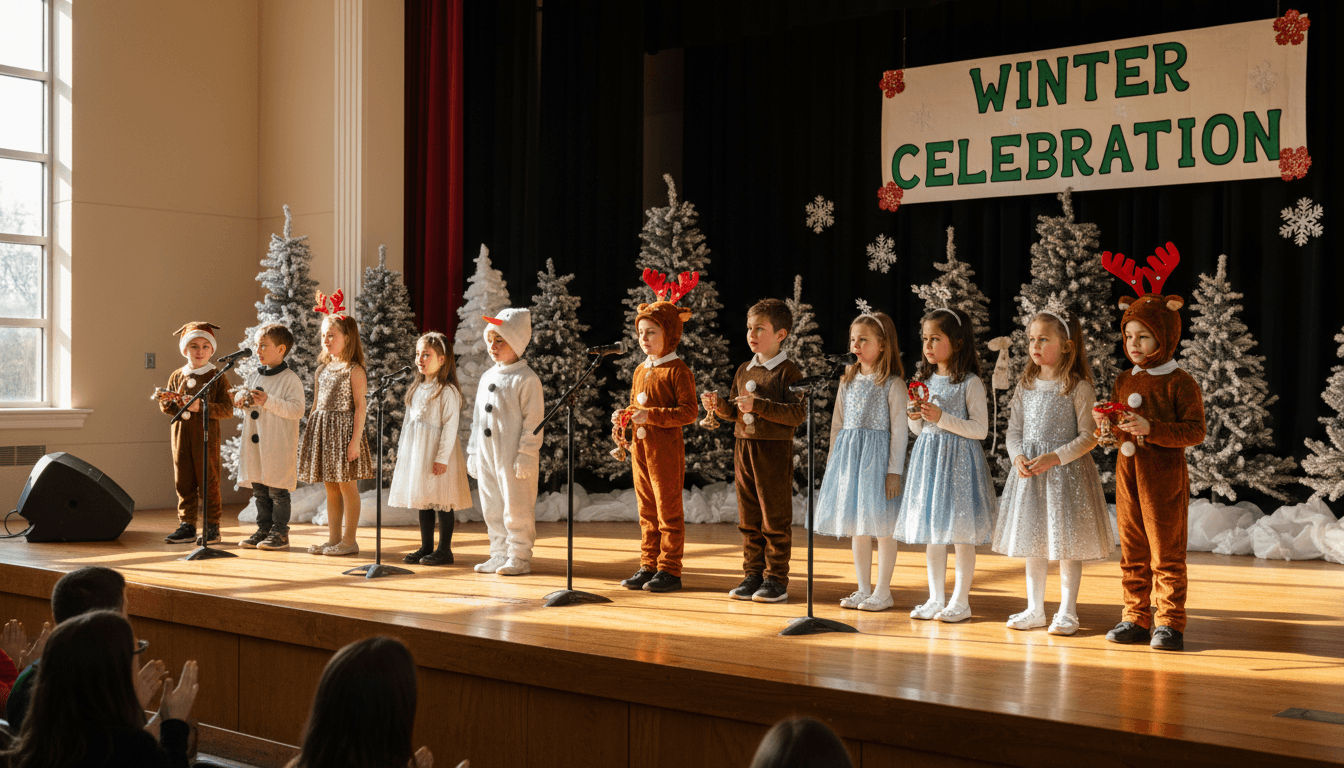
The winter concert is the most anticipated school event of the first semester for most elementary families. Do not leave anything out of this section:
- Date, time, and location: Include both the start time and an expected end time so families can plan childcare and schedules.
- Which grades or classes perform: List them in order if the order is set.
- Tickets: Required or not, how to obtain them, and any guest limits per family.
- For performing students: What to wear, when to arrive (separate from audience arrival), and what to bring.
- Parking: Directions and recommended arrival time to find a spot.
- Multiple performances: If the school holds two shows, explain how families find out which to attend.
Classroom holiday celebrations and gift-giving policy
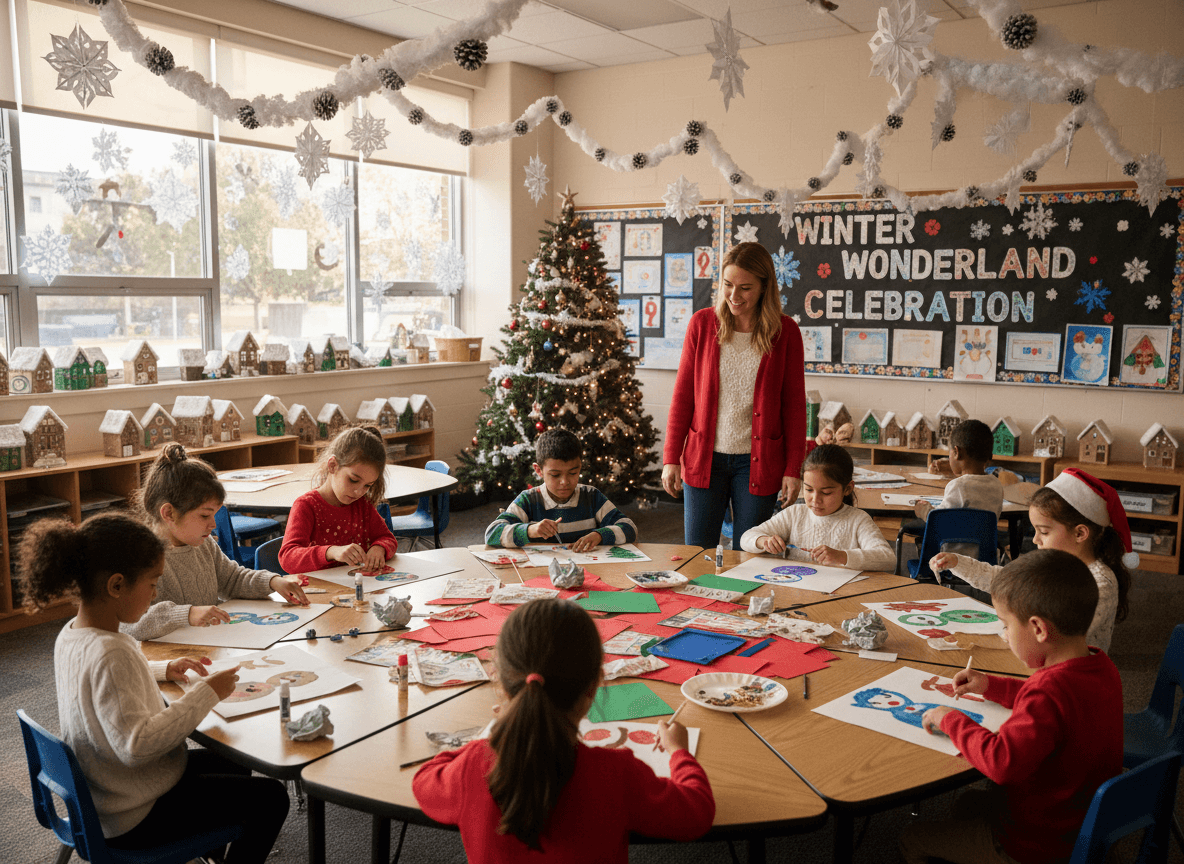
This is the section families read most carefully in December. Be direct about the school's policy on classroom celebrations. If classroom parties are happening:
- The date and time of each classroom's celebration, or a general window if it varies by teacher.
- What families can bring: food items and any allergy restrictions, non-food items, and whether store-bought only is required.
- Whether family attendance is permitted and how capacity is managed.
- How students from different religious backgrounds are included or accommodated.
On gift-giving: state the school's expectation clearly. If student gift exchanges are happening, note any guidelines on value or format. On teacher gifts, a direct sentence helps more than silence. Something like: a handwritten note from your child is genuinely the most meaningful gift a teacher receives, and no family should feel any obligation beyond that.

Holiday giving project
Many elementary schools run a December giving project. The newsletter should make participation easy and specific. Name the community partner, what is being collected or raised, where donations are dropped off, and the deadline. If classrooms are competing, explain how participation is measured and recognized.
For elementary-age students, the giving project is often the first time they engage directly with the idea of community generosity. A brief note for families about how to talk to their child about the project at home, why the school does it, and who it helps, gives families language for a conversation that builds character in kids at exactly the right age.
Final newsletter before winter break
If this December newsletter is your last communication before break, name that clearly. Tell families when the school office closes for the break, when it reopens in January, and what the first day back for students looks like. Include the school's main office number and emergency contact information for any urgent needs during the break.
If you plan to send a shorter January preview newsletter in the last week of break, mention that so families know to look for it. A community that knows when to expect communication does not fill the quiet with uncertainty.
Winter break resources for families
Two weeks without school creates real challenges for many elementary families. The December newsletter is the right place to share practical resources. Include:
- Free or low-cost winter break programs in the district or community: day camps, recreation center programs, library events, and community organization activities.
- Free meal resources for families who rely on school meals, since the break interrupts the school food program. Name specific locations and hours if you have them.
- Indoor activity ideas for families who want to keep elementary-age students engaged without structured programming.
Frame the resources section as useful for any family, not just those experiencing hardship. This framing makes it more likely to reach the families who need it most without stigma.
Key dates for January
Close the December newsletter with a brief January preview. Include the first day back, any professional development days in the first two weeks of January, upcoming assessment windows, and any special events families should put on the calendar early. Families who leave for winter break knowing what January looks like return in a better frame of mind than those who disconnect entirely and come back to surprises.
Get one newsletter idea every week.
Free. For teachers. No spam.
Frequently asked questions
How should an elementary principal communicate the classroom holiday celebration policy in December?
Elementary classroom celebration policies in December generate more family confusion than almost any other topic because families assume they know what the school does based on what it did last year or what another family told them. State the policy explicitly: whether classroom parties are happening, when they are scheduled, what families can bring and what they cannot, whether family attendance is permitted, and how students from different religious or cultural backgrounds are included in the day. For schools with a diverse student body, a brief explanation of how the celebration is framed, as a winter or seasonal event rather than a specific religious holiday, helps families understand the approach without feeling like the school is erasing their tradition.
What should an elementary principal say about gift-giving in December?
December gift-giving guidance in the elementary newsletter prevents the uncomfortable dynamic where some students bring elaborate teacher gifts and others bring nothing. State the school's expectation directly: whether student gift exchanges are discouraged, encouraged, or organized by classroom teachers, what price limits or guidelines apply if exchanges do happen, and the school's stance on teacher gifts from families. Many principals choose to tell families that a handwritten card or note means more to teachers than a purchased gift, and that is true and appropriate to say. Families who receive clear guidance do not have to guess, and teachers do not have to navigate awkward disparities on their own.
How should an elementary principal communicate the winter concert in December?
Winter concert communication at the elementary level should be thorough because concert events generate the highest family attendance of the year. Include the concert date, time, and location. List which grades or classes are performing and in what order. Tell families whether tickets are required and how to obtain them. Include parking instructions and recommended arrival time for audience members. For performing students, state what they should wear and what time they need to arrive separately from the audience. If the school holds multiple performances to accommodate capacity, explain how families find out which performance their student is in and what to do if the assigned performance does not work.
What winter break resources should an elementary principal share with families?
Winter break care resources in the December newsletter are practical and often deeply needed. Include information about free or low-cost winter break programs in the district or community: day camps, recreation center programs, library winter break events, and community organization activities. For families experiencing food insecurity, the winter break interrupts school meal programs. Include information about where free meals are available in the community during the break. Frame this information as useful for all families looking for activities, not just families in need, which makes it more likely to reach the families who need it most.
How does Daystage help elementary principals close the year with strong communication?
December is the month elementary principals most often skip or rush the newsletter because the end of semester is chaotic. Daystage makes it easier to send a complete, well-organized December newsletter because the template carries the structure and the scheduling feature lets you queue it in advance. Elementary principals using Daystage report that their December newsletter is often the one families save and refer back to because it has everything they need for the holiday season and the winter break in one place. Starting the year well and ending the first semester well are the two moments that shape families' perception of the principal most.

Adi Ackerman
Author
Adi Ackerman is a former classroom teacher and curriculum writer with 8 years in K-8 schools. She writes about school communication, parent engagement, and what actually works in real classrooms.
More for Principals
Ready to send your first newsletter?
3 newsletters free. No credit card. First one ready in under 5 minutes.
Get started free