
December Principal Newsletter Template: What to Send Your School Community This Month
December is the most logistically dense month of the school year for principals. Final exams, winter concerts, classroom celebrations, holiday giving projects, and semester reporting all converge in a four-week window that also happens to be the most emotionally charged time of year for families. Your December principal newsletter is the tool that gets all of it communicated clearly before families need to act on any of it.
Send the December newsletter early in the month, before the exam and concert crunch begins. Families who receive it in the first week of December are better prepared for everything that follows.
Principal's note: closing the first half of the year
The December principal's note carries more emotional weight than most. The semester is ending. Students are about to leave for two weeks. Families are reflecting on how the year is going. Write the December note as a genuine close to the first chapter of the year.
Acknowledge what the school has done in four months. Name specific accomplishments, not just effort. Express what you are carrying into January: a goal you are still working on, something you are proud of that is still in progress, something you are looking forward to in the second semester. A December principal's note that closes the first semester with honesty and specificity sets the community up to return in January with the right expectations.
Final exam schedule and logistics
The final exam section is the most practically important part of the December newsletter for middle and high school families. Include everything families need to navigate exam week without calling the office:
- Exam schedule by day: Which subjects test on which days, and whether there are multiple sessions per day.
- Schedule changes: Altered start or dismissal times during exam week, and any days that are shorter or longer than normal.
- Exemption policies: If students can exempt final exams based on attendance or grade, state the criteria clearly.
- How exams factor into grades: The percentage weight of the final exam in the semester grade.
- Study and preparation support: Any available tutoring, review sessions, or teacher office hours before exams begin.
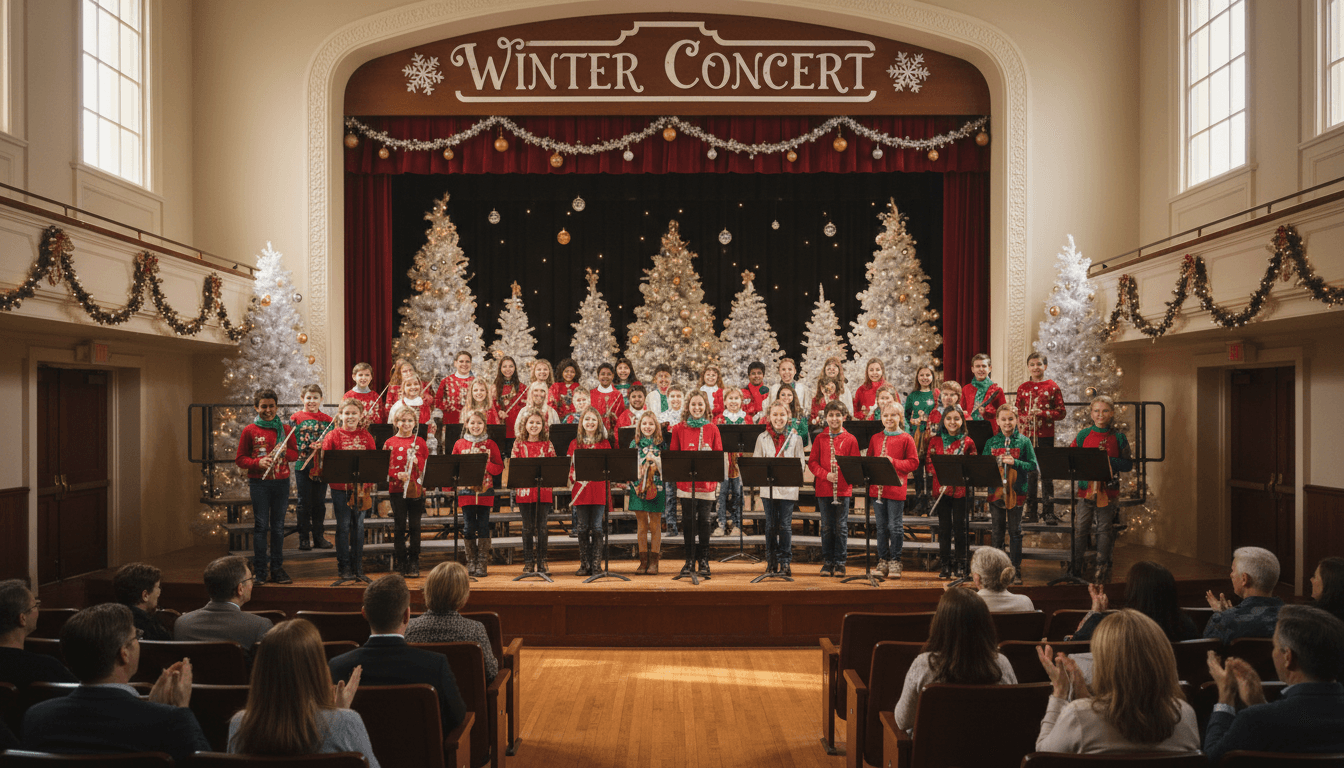
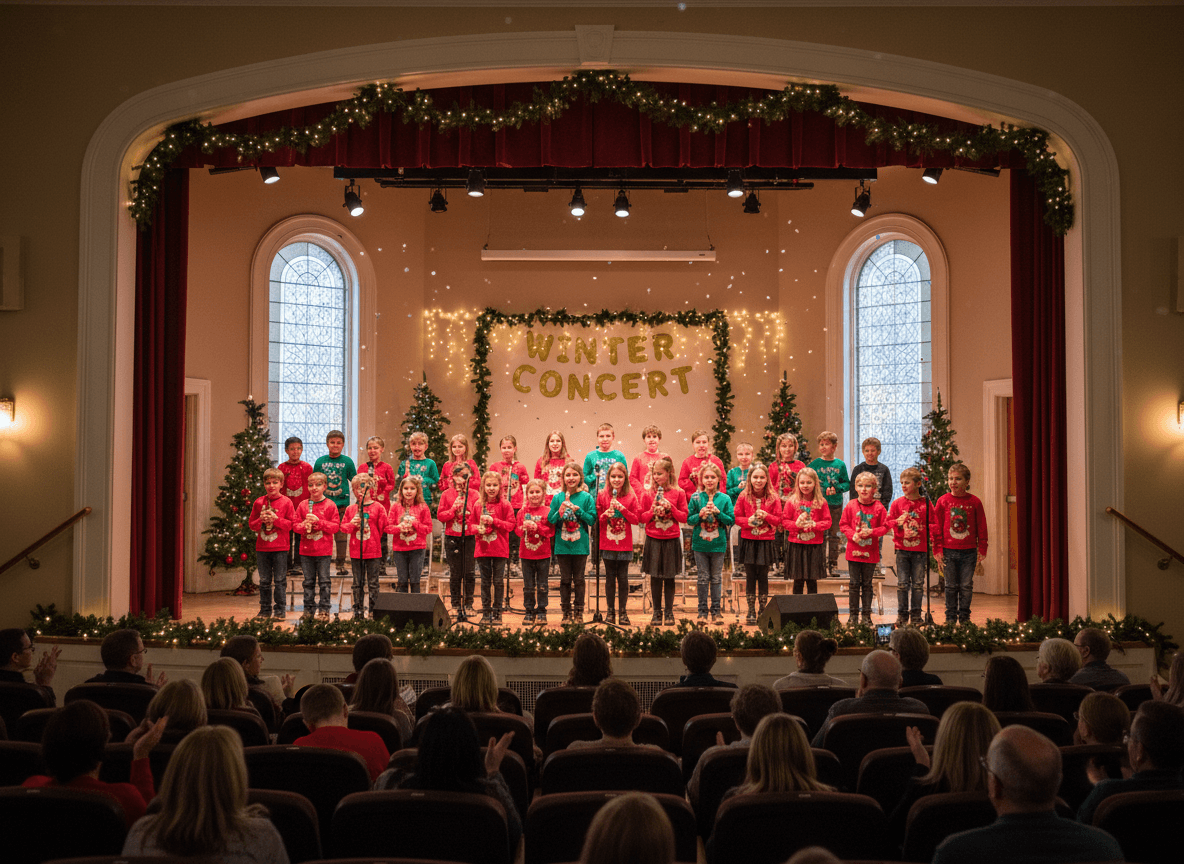
Winter concert: performance details and logistics
The winter concert section generates more family action than almost any other part of the December newsletter. Performing students tell their families about the concert. Families plan around it. Make this section complete:
- Concert date, time, and location.
- Which grades, ensembles, or classes are performing and in what order.
- Ticket information and how families obtain tickets if required.
- Parking instructions and any nearby road closures or considerations.
- What performing students should wear and what they need to bring or return.
- Arrival time for performing students versus audience arrival time.
If the school holds two performances for capacity reasons, explain the assignment process clearly so no family discovers too late that they cannot attend the date they planned for.

Holiday classroom celebrations and gift-giving policy
December classroom celebration communication prevents two common problems: families showing up with elaborate party supplies for an event that was not sanctioned, and families who observe different holidays feeling excluded without warning. Address both directly.
State whether classroom holiday celebrations are happening, when they are scheduled, what families can bring, and whether family attendance is permitted. If your school has a winter celebration event that is framed as seasonal rather than holiday-specific, explain how it is structured. Include the school's policy on student gift exchanges or teacher gifts, including any guidelines on value or appropriateness. Clear gift-giving guidance in the newsletter saves the school office from fielding those questions individually every December.
Holiday giving project and community service
Many schools run a December giving project tied to holiday generosity. The newsletter should introduce the project with specifics: what is being collected or raised, for which community partner, what the deadline is, and how families and students can participate. If student leadership is coordinating the project, name those students and acknowledge their work.
A brief, specific statement about why the school runs a December giving project, not just what it is, helps families understand the school's values and builds community identity around service.
Winter break dates and returning information
State the winter break dates clearly: last day of school before break, return date in January, and the start time on the first day back. Families plan childcare, travel, and work schedules around these dates and appreciate having them confirmed in the newsletter rather than hunting through the district website.
Include a brief note about the first day back in January: is there anything specific families should prepare for, any new routines taking effect, or any important dates in the first two weeks of January that families should know about before they leave for break?
Semester recap and second semester preview
Close the December newsletter with a brief semester recap followed by a preview of the second semester. The recap should highlight two to four specific accomplishments from the first four months. The preview should name two to four things families can look forward to in the second semester: a program launching, a testing window, a spring event, or an academic initiative reaching a milestone.
Families who close the December newsletter with a clear sense of where the year stands and where it is going return from winter break more engaged than families who went dark in December. The January newsletter will reach a more connected community if December ended well.
Get one newsletter idea every week.
Free. For teachers. No spam.
Frequently asked questions
What should a principal include about final exams in the December newsletter?
Final exam communication in December should be complete and logistical. Include the exam schedule by grade and subject, any schedule changes during exam week such as altered start or dismissal times, the school's policies on exam exemptions or test corrections, and what students need to do to prepare for exams that are cumulative. For high schools, include how final exams factor into semester grades and whether the grading weight has changed from last year. Families who receive clear exam logistics in the newsletter are less likely to reach out with the same questions by phone or email during the most demanding week of the semester.
How should a principal communicate the winter concert in December?
The winter concert section of the December newsletter is one of the highest-read parts of any December communication because it involves students performing for families. Include the concert date, time, and location, which grades or ensembles are performing and in what order, ticket information if applicable, parking instructions, and what performing students need to wear or bring. If your school holds multiple performances for capacity reasons, explain the ticketing and assignment process clearly so families do not discover they cannot attend the performance they planned for.
What holiday classroom celebration policies should a principal communicate in December?
December classroom celebration policies need to be stated directly in the principal newsletter because families make purchases and plans based on what they expect the school to allow. State clearly whether classroom holiday parties are happening, when they are scheduled, whether families can attend, what food or materials can be brought in, and how the school handles the diversity of December holidays observed by different families. For schools that do winter celebration events that are intentionally non-religious, explain the framing so families who observe specific holidays understand how the school is approaching it.
How should a principal frame the semester recap in the December newsletter?
The December semester recap is a chance to tell the community what was accomplished in four months of school. Do not just list completed events. Highlight the academic accomplishments: a grade level that met a benchmark goal, a program that launched successfully, a student project that had real-world impact. Include community milestones: a fundraiser goal reached, a service project completed, a school recognition received. The recap should make families proud of the school and the community, not just informed of what happened. End with something brief and specific about what the second semester will bring.
How does Daystage help principals send a strong December newsletter before break?
December is the month principals most often let the newsletter slide because the end of semester workload is at its peak. Daystage's template system and scheduling feature mean the December newsletter can be built and queued in advance. Principals can schedule it to go out during the first week of December, before the exam and concert chaos begins, so families have the full month's information when they need it. Several Daystage schools report that their December newsletter has become one of the most anticipated communications of the year because it reliably arrives with everything families need to close out the semester.

Adi Ackerman
Author
Adi Ackerman is a former classroom teacher and curriculum writer with 8 years in K-8 schools. She writes about school communication, parent engagement, and what actually works in real classrooms.
More for Principals
Ready to send your first newsletter?
3 newsletters free. No credit card. First one ready in under 5 minutes.
Get started free