

Elementary Principal Newsletter: What to Send in February
February arrives in the middle of the longest instructional stretch of the school year. Winter break is behind you. Spring break is still more than a month away. The novelty of September has long faded, and the finish line of June is not yet visible. For elementary principals, February is the month to re-energize the community with content that connects families to what is happening in classrooms and gives them something to look forward to.
The February newsletter covers more ground than it might appear to at first. Valentine's Day, Black History Month, dental health, spring enrollment, and the preview of reading month all land in the same four weeks. Here is how to address each one clearly.
Principal's note: finding the energy in February
Write the February principal's note with an awareness of where families are emotionally. The year is more than halfway done. Most families have settled into a routine that is either working or not. Some students are thriving. Others are in a stretch. February is when engagement can dip if the school does not actively sustain it.
Use the February note to name something genuine about the midyear stretch: what the school has noticed, what students are working on, and what is coming that families can look forward to. A brief mention of reading month in March, spring events on the calendar, and the second semester momentum is enough to remind the community that the year has a good second half ahead.
Valentine's Day classroom celebration policy
State the policy clearly and completely. This is one of the events where family assumptions vary most widely, and the newsletter is the only place where those assumptions can be aligned before the day arrives. Include:
- Whether classroom Valentine exchanges are happening and on what date.
- Whether cards must be brought for every student in the class or only for selected students.
- Whether treats or candy can be included and what allergy restrictions apply, including any nut-free building policies.
- Whether store-bought or homemade treats are permitted, or neither.
- Whether family attendance at any class celebration is permitted.
For schools that have replaced traditional Valentine exchanges with a friendship or kindness activity, describe what students will do and why the school made that choice. Families are more accepting of policy changes when they understand the reasoning.
Black History Month: what students are learning
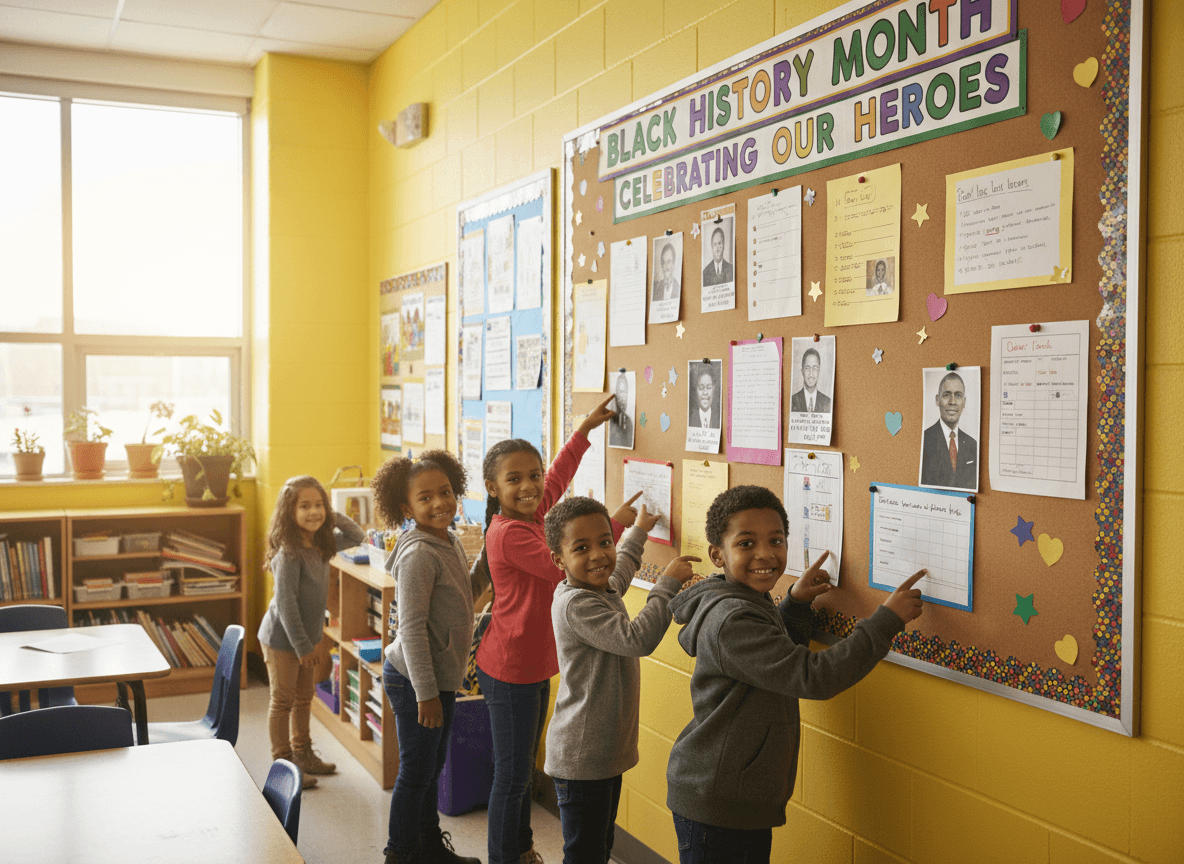
Black History Month communication in the February newsletter should describe actual classroom activity, not just acknowledge the month exists. Tell families what students in each grade level are reading, studying, or creating. Name specific units, books, projects, or guest speakers. If there is a schoolwide display, assembly, or student showcase connected to Black History Month, include the details.
Give families a way to extend the learning at home. For elementary grades, this might include:
- Age-appropriate picture books and middle-grade titles connected to the month's themes.
- A documentary or biographical film appropriate for the grade level.
- Local events, museum exhibits, or community programs happening in February.
- A conversation starter appropriate for the age: who is a Black leader from history or today that your child can name?

100th Day of School (if applicable)
For schools that celebrate the 100th Day of School in February, give families everything they need to help their student participate. Include the specific date, what students are expected to prepare or bring, and what the day's activities will look like. Many 100th Day traditions involve bringing a collection of exactly 100 small items in a bag or on a poster, dressing up as if you are 100 years old, or completing a 100-item challenge.
Be specific about what is expected versus what is optional. For kindergarten and first grade families, the 100th Day of School is a genuine milestone in early numeracy. A brief sentence about what the activity teaches, counting to 100, understanding quantity, building number sense, helps families engage with it as a learning event rather than just a costume day.
Dental Health Month
February is Dental Health Month, and many elementary schools use it for health curriculum connected to science and personal wellness standards. If your school is doing activities connected to dental health, name them in the newsletter: a visit from a dental hygienist, a classroom toothbrushing activity, a health lesson on nutrition and dental care, or a student-made public health poster project.
A brief, practical takeaway for families rounds out this section well: fluoride toothpaste twice a day, flossing, limiting sugary drinks, and a regular dental checkup are the habits that last a lifetime. For schools with community health partners who offer free or low-cost dental screenings, include that information here.
Spring enrollment preview
February is when many districts open kindergarten registration and inter-district transfer applications for the following school year. The February newsletter should include the kindergarten registration opening date and required documents, any information sessions or kindergarten orientation events planned, and who families should contact with questions.
For current families with younger siblings approaching kindergarten age, this information is directly useful. For families considering a school transfer, a brief note about what makes your school a strong choice is appropriate alongside the enrollment logistics.
Preview of March reading month
March is National Reading Month and one of the most engaging months of the year for elementary schools. The February newsletter is the right place to build anticipation. Name two or three things coming in March: a read-a-thon, an author visit, a schoolwide reading challenge, a classroom library expansion, or a Dr. Seuss themed dress day.
Encourage families to start talking with their students now about their favorite books and characters. Reading month is more engaging for students when the conversation has already started at home. A brief family challenge at the end of February, read together for 20 minutes three times this week, builds the habit that makes March reading month land differently for families who are already in it.
Get one newsletter idea every week.
Free. For teachers. No spam.
Frequently asked questions
How should an elementary principal communicate Valentine's Day classroom celebration policy?
Valentine's Day is one of those elementary events where family assumptions vary widely, and the February newsletter is the only reliable way to align expectations before the day arrives. State the school's policy directly: whether classroom Valentine exchanges are happening, whether cards must be brought for every student or only for friends, whether candy or treats can be included and what allergy restrictions apply, and whether families can bring in snacks or decorations. For schools that have moved away from traditional Valentine exchanges in favor of a friendship-themed activity, explain what students will do instead. Families who receive clear policy information do not show up at 9am on February 14th with cupcakes for a party that was not sanctioned.
What should an elementary principal include about Black History Month in the February newsletter?
Black History Month communication in the February newsletter should describe what students are actually doing in their classrooms and how it connects to the curriculum, not just acknowledge that the month exists. Name specific projects, read-alouds, guest speakers, or units of study happening in each grade level. Tell families how they can extend the learning at home: books to read together, documentaries appropriate for the age, local events or museum exhibits, and conversation starters. For schools with a significant Black student population, Black History Month curriculum is an opportunity to honor students' history and culture. Communicating it genuinely in the newsletter signals that the school takes that responsibility seriously.
How should a 100th Day of School be communicated if it falls in February?
If your school celebrates the 100th Day of School in February, give families the specific date, what students are expected to do to prepare, and what the day's activities will look like. Many 100th Day activities involve students bringing a collection of 100 items, dressing as they imagine they will look at 100 years old, or completing a 100-item challenge. Tell families exactly what is expected so students arrive ready. For kindergarten and first grade families especially, the 100th Day is a genuine academic milestone and worth more than a passing mention in the newsletter.
What spring enrollment information belongs in the February elementary newsletter?
February is when many districts begin spring enrollment for the following school year, including kindergarten registration for incoming students and transfer applications. The February newsletter should include enrollment opening dates, the registration process and required documents, any information sessions or kindergarten orientation events scheduled, and who families should contact with questions. For current elementary families with younger siblings approaching kindergarten age, this is a direct and useful communication. For families considering a school transfer for the following year, a brief mention of the school's highlights alongside the enrollment information is appropriate.
How does Daystage help elementary principals build momentum in February?
February can feel like the flattest month of the school year. Winter break is over, spring break is still weeks away, and the novelty of the year has worn off. Daystage helps elementary principals use February communication to re-energize the community. The newsletter platform makes it easy to include photos from Black History Month projects, preview the March reading month, and build anticipation for spring events. Principals who maintain consistent, well-designed communication in February set up a stronger finish to the school year than those who go quiet during the mid-winter lull.

Adi Ackerman
Author
Adi Ackerman is a former classroom teacher and curriculum writer with 8 years in K-8 schools. She writes about school communication, parent engagement, and what actually works in real classrooms.
More for Principals
Ready to send your first newsletter?
3 newsletters free. No credit card. First one ready in under 5 minutes.
Get started free