
Preschool Weekly Update Newsletter: A Format That Actually Works
The weekly preschool update is the most common type of classroom newsletter and the one most likely to become a burden if teachers do not have a reliable system for it. The goal is a newsletter that takes under twenty minutes to write, arrives consistently, and gives families something genuinely useful to read.
Most preschool newsletters fail not because teachers lack information to share, but because starting from scratch each week adds unnecessary time to an already full day.
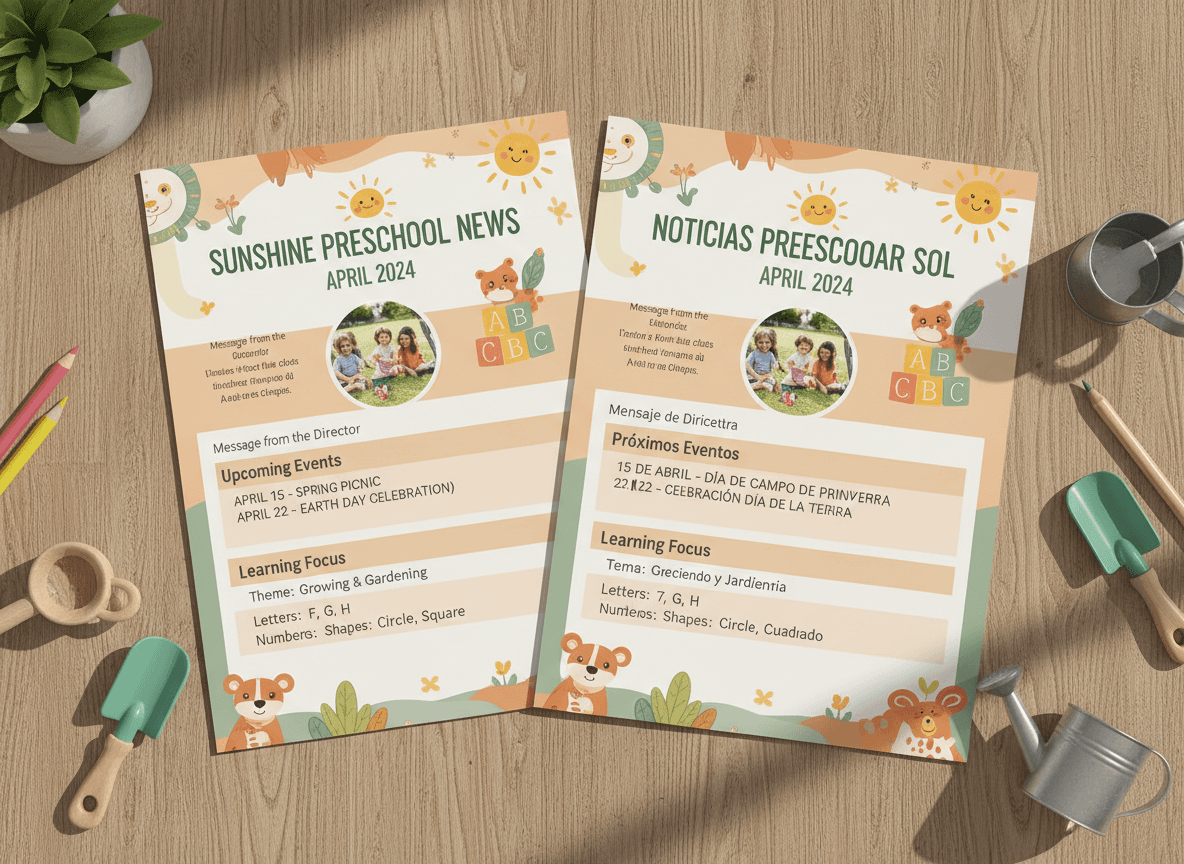
A Format That Works Every Week
The most sustainable weekly newsletter format has four fixed sections. Once families recognize the structure, they know where to find the information they need most:
- What We Did: One to three sentences about something specific that happened in class. Not a curriculum overview. A real moment. "On Wednesday, we tried to make a bridge across the water table with loose planks. It took four tries before it held the weight of a small block."
- Coming Up: Dates, events, schedule changes, and anything families need to prepare or bring. Bulleted for scannability.
- Try This at Home: One concrete thing parents can do or ask to extend something from the week. "Ask your child to sort their toys into groups and tell you why they sorted them that way."
- Teacher Note: Optional, two to three sentences. An observation, a moment you noticed, something you are looking forward to. This is where the newsletter sounds like a person rather than a document.
The Classroom Section: Where Newsletters Live or Die
The most important section of a weekly update is the classroom content, and it is the one most likely to be vague. The difference between a newsletter that gets read and one that gets skimmed is whether the classroom section contains something specific enough to be interesting.
The easiest way to make this section specific is to keep notes during the week. Three or four sentences in a running document while things are happening, or a voice memo on the way out, gives you material on Thursday instead of a blank screen. You are not writing literature. You are documenting what children did, with enough specificity that a parent can picture it.
Reminders: A List, Not a Paragraph
The coming-up section should always be a list, never a paragraph. Families scan for action items and dates. When reminders are buried in prose, they get missed. Keep each bullet to one line. Include the date, what it is, and what families need to do (if anything).
Photos: One or Two, Well Chosen
A single photo that shows children engaged in work is worth including if you have photo consent in place. It does not need to be professional. A candid shot of children focused on something specific is often more compelling than a posed group photo. If consent for identifiable photos is not established for all families, use activity photos without faces or skip photos that week.
Building the Habit
The newsletters that get sent consistently are the ones with a fixed time slot. Pick a day and a window. Twenty minutes every Thursday afternoon, before you leave for the day. The format is already there. You bring the content. Daystage removes the formatting step entirely, so Thursday's twenty minutes is all the writing and none of the layout.
Get one newsletter idea every week.
Free. For teachers. No spam.
Frequently asked questions
What is the best format for a preschool weekly update newsletter?
A consistent four-section format works best: what we did this week, upcoming events or reminders, something for families to try at home, and a closing note or observation from the classroom. That structure keeps every newsletter predictable enough that parents know what to look for, and specific enough that each one feels distinct.
How long should a preschool weekly newsletter be?
Under 300 words of prose, not counting a reminders list. Most families read preschool newsletters on their phone in under two minutes. When newsletters run longer than that, families stop reading the full content and start scanning for reminders only, which defeats the purpose of the narrative sections.
What day of the week is best to send a preschool newsletter?
Thursday or Friday works best for most programs. Families can read over the weekend, reflect on the week, and arrive Monday with a mental picture of what their child will be building on. Monday newsletters often get buried in the start-of-week rush.
How do teachers keep weekly newsletters from becoming repetitive?
The classroom section solves this problem if it is specific enough. When teachers write about what actually happened in class that week, each newsletter is automatically different. Generic statements like 'We practiced sharing' become repetitive. 'We had a disagreement over the blocks on Tuesday and the whole class helped figure out a solution' is specific and interesting.
What tool do preschool teachers use to send weekly newsletters?
Daystage is built for this exact use case: a structured weekly newsletter format that early childhood teachers can fill in quickly and send directly to their family mailing list without reformatting or conversion.

Adi Ackerman
Author
Adi Ackerman is a former classroom teacher and curriculum writer with 8 years in K-8 schools. She writes about school communication, parent engagement, and what actually works in real classrooms.
More for Pre-K
Ready to send your first newsletter?
3 newsletters free. No credit card. First one ready in under 5 minutes.
Get started free