
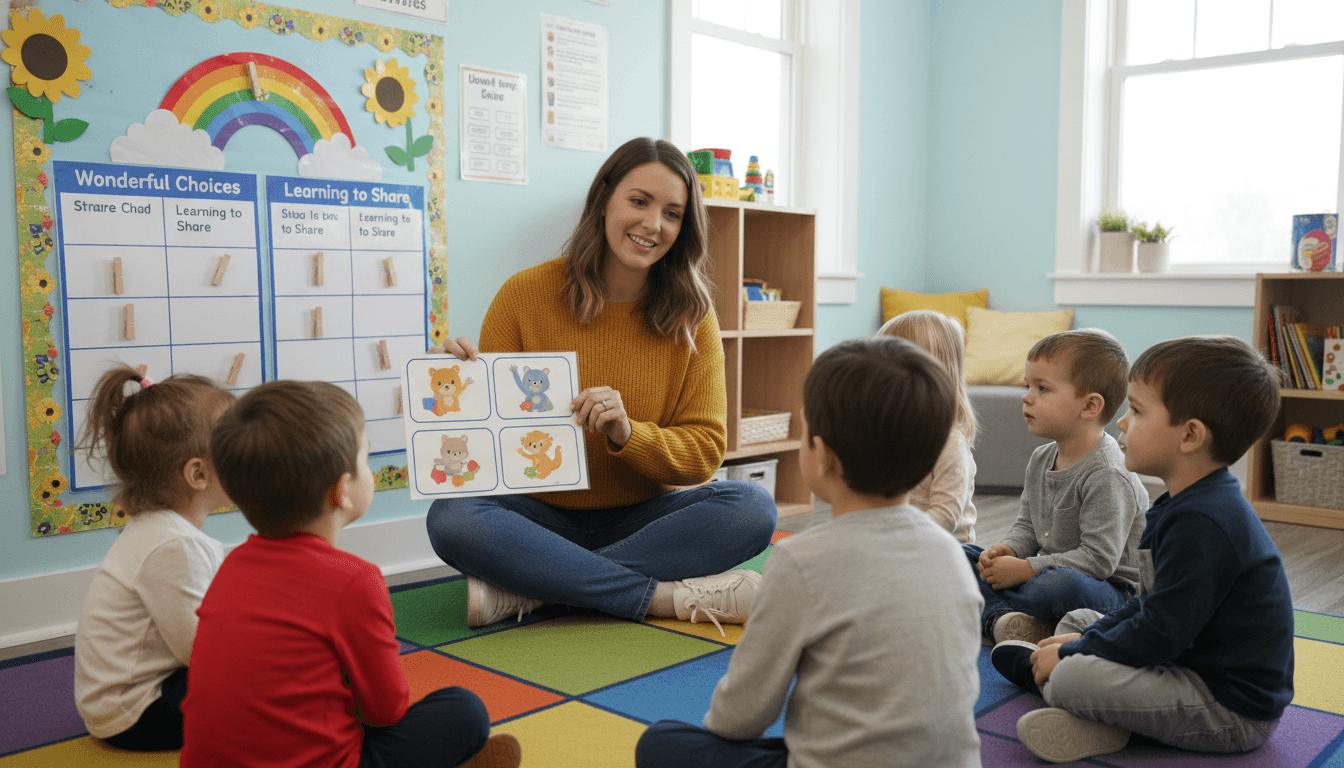
Preschool Behavior Communication: What to Include in Your Newsletter (And What Not To)
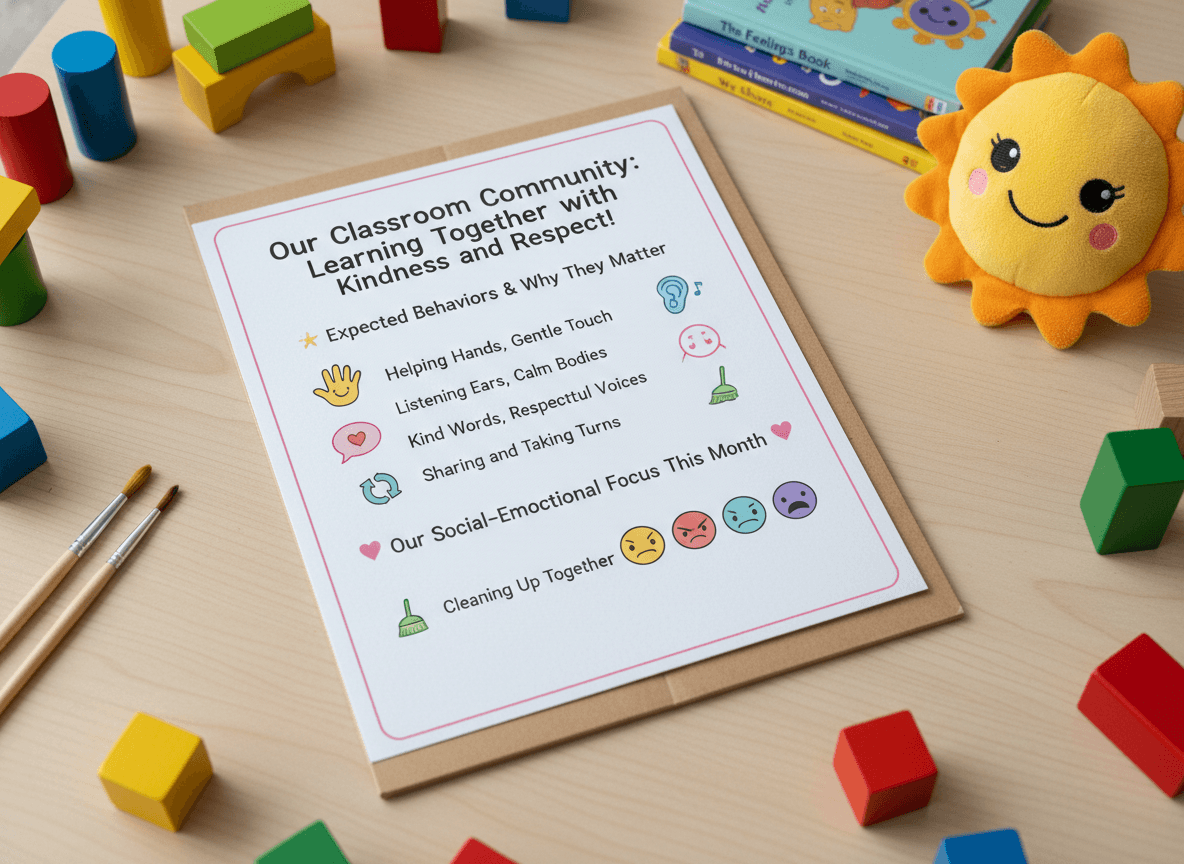
Behavior is one of the most common questions preschool families have about their child's day, and one of the most difficult topics to handle in a newsletter. Done well, behavior communication builds the shared understanding between home and school that actually helps children. Done poorly, it creates anxiety, invites comparisons, and occasionally puts you in a legal and ethical position you do not want to be in.
The line between what belongs in a newsletter and what belongs in a private conversation is clear once you understand it. This guide draws that line.
The Core Rule: Class-Wide vs. Individual
The newsletter communicates class-wide behavior information. Individual behavior issues, specific incidents, and any concern about a particular child's behavior pattern belong in a direct conversation with that child's family. Full stop.
This rule protects families' right to privacy. It also protects you: writing about a specific child's behavior in a newsletter that goes to all families is a FERPA concern, a professional ethics concern, and a practical problem because parents talk. Even when names are not used, descriptions of behavior are often identifiable in a class of 15 or 18 children.
What to Include: Class Norms and Expectations
The newsletter is a good place to explain the behavioral expectations and routines of your classroom, especially at the start of the year or when you introduce something new. Families who understand your approach are more likely to support it at home and less likely to be confused or alarmed when their child describes something.
"In our classroom, we use a signal called 'quiet coyote' to ask for everyone's attention. When you see your child making a coyote hand shape at home, they are probably trying out something they practiced at school." This tells families about your classroom culture in a way that invites curiosity rather than concern.
What to Include: Social-Emotional Curriculum
If your program uses a social-emotional learning curriculum like Second Step, Pyramid Model, or RULER, the newsletter is where you tell families what you are teaching and why. Name the concept. Give a brief, jargon-free explanation. Connect it to something families might notice at home.
"This month we are starting a unit on identifying feelings. We are practicing naming what we feel in our bodies and connecting those feelings to words. If your child suddenly starts saying 'I feel frustrated' instead of melting down, that is not a coincidence." This kind of communication builds buy-in for the curriculum and gives families a way to participate.
What to Include: PBIS and Recognition
If your school or program uses a Positive Behavioral Interventions and Supports framework, the newsletter can celebrate class-level recognition without singling out individual children. "Our class earned 50 points on our kindness tracker this month. We celebrated with an extra outdoor play session on Friday" shares a win without putting any child on display.
Class-level recognition also communicates something important to families: that your behavior approach is primarily about building a positive community, not about punishing individual children. That message is worth sending.
Language That Avoids Judgment
The words you use in class-wide behavior communication matter. Some phrases signal that behavior problems are the child's fault or the family's responsibility. Others signal a shared, developmental, and solvable challenge.
Avoid: "children need to learn to control themselves," "some children are struggling with listening," "we are working on behavior issues." These phrases invite anxiety and defensiveness. Use instead: "at this age, regulating strong emotions is genuinely hard," "we are practicing what to do when we feel overwhelmed," "learning to wait is a skill we build slowly, and we see real growth." The second set frames behavior as developmental, which is accurate, and treats families as partners, which is strategic.
When a Child Tells Their Parent Something Happened
Preschool children narrate their days in fragments and with limited accuracy. A child who tells a parent "Jaylen hit someone today" may be describing something that happened, something they witnessed, something they imagined, or something they heard about secondhand. Parents who receive that information without context sometimes arrive the next morning with questions or concerns.
One way to reduce this: occasionally include a brief note in your newsletter about what children's reporting of school events typically looks like at this age. "Four-year-olds are working hard to narrate their experiences, but their reports are not always accurate or complete. If you hear something that concerns you, reach out to me directly before drawing conclusions. I would rather have that conversation than have you worried about something I can clarify quickly." This sets expectations and keeps the door open.
What Goes in a Private Conversation
Any concern about a specific child's behavior goes in a direct conversation with that family. This includes patterns you are worried about (a child who is consistently aggressive with peers, a child who shuts down completely during transitions), single incidents that required significant intervention, and anything that might require a referral or support plan.
These conversations are harder than sending a newsletter. They require time, care, and often some planning. But they are the only appropriate channel for this information. A newsletter that hints at individual behavior concerns without naming names is still a newsletter that all families will read wondering if it is about their child. The discomfort of that situation is entirely avoidable.
The Newsletter as Trust-Builder
When families trust that you use the newsletter for genuine, class-level information and handle individual concerns with a direct conversation, the newsletter becomes a tool that actually works. Families who trust the channel read it. Families who trust you as a communicator come to pickup conversations ready to talk rather than ready to defend.
Behavior is hard territory in early childhood. The newsletter is not where you navigate that territory. It is where you build the relationship that makes navigation possible.
Get one newsletter idea every week.
Free. For teachers. No spam.
Frequently asked questions
When should preschool teachers communicate about classroom behavior in newsletters?
Address social-emotional learning and classroom behavior as a group topic in monthly newsletters when introducing a new focus area, such as conflict resolution or emotion vocabulary. Individual behavior concerns always belong in a private conversation, never in a group newsletter. Mixing them trains families to read every behavior update as potentially about their child.
What should a preschool behavior communication newsletter include?
Include what social-emotional skills the class is working on this month, a brief explanation of a strategy the class uses such as a calming corner or a feelings check-in, and one thing families can try at home to reinforce the same skill. Frame everything as developmentally normal for three and four year olds rather than as a problem to be solved.
How should preschool teachers communicate about behavior challenges without alarming parents?
Write about behavior at the class level using inclusive language: 'We are all practicing...' or 'Three and four year olds are naturally learning...' rather than language that implies a problem exists. When a specific child needs a conversation, that conversation happens privately at pickup or by phone, not in writing.
What are common mistakes in preschool behavior communication to parents?
The biggest mistake is addressing a behavior concern in writing rather than in person. Written communication about behavior is harder to calibrate in tone and creates a permanent record that parents may read differently than intended. A second mistake is using clinical language like 'dysregulation' or 'behavioral concerns' without translating it into plain language that helps families understand what their child actually needs.
Is there a tool that helps preschool teachers communicate about social-emotional learning to parents?
Daystage is built for early childhood teachers and makes it easier to share classroom community updates, including behavior and social-emotional content, in ways that inform without alarming.

Adi Ackerman
Author
Adi Ackerman is a former classroom teacher and curriculum writer with 8 years in K-8 schools. She writes about school communication, parent engagement, and what actually works in real classrooms.
More for Pre-K
Ready to send your first newsletter?
3 newsletters free. No credit card. First one ready in under 5 minutes.
Get started free