

Head Start Newsletter Guide: Communicating With Families Across Barriers
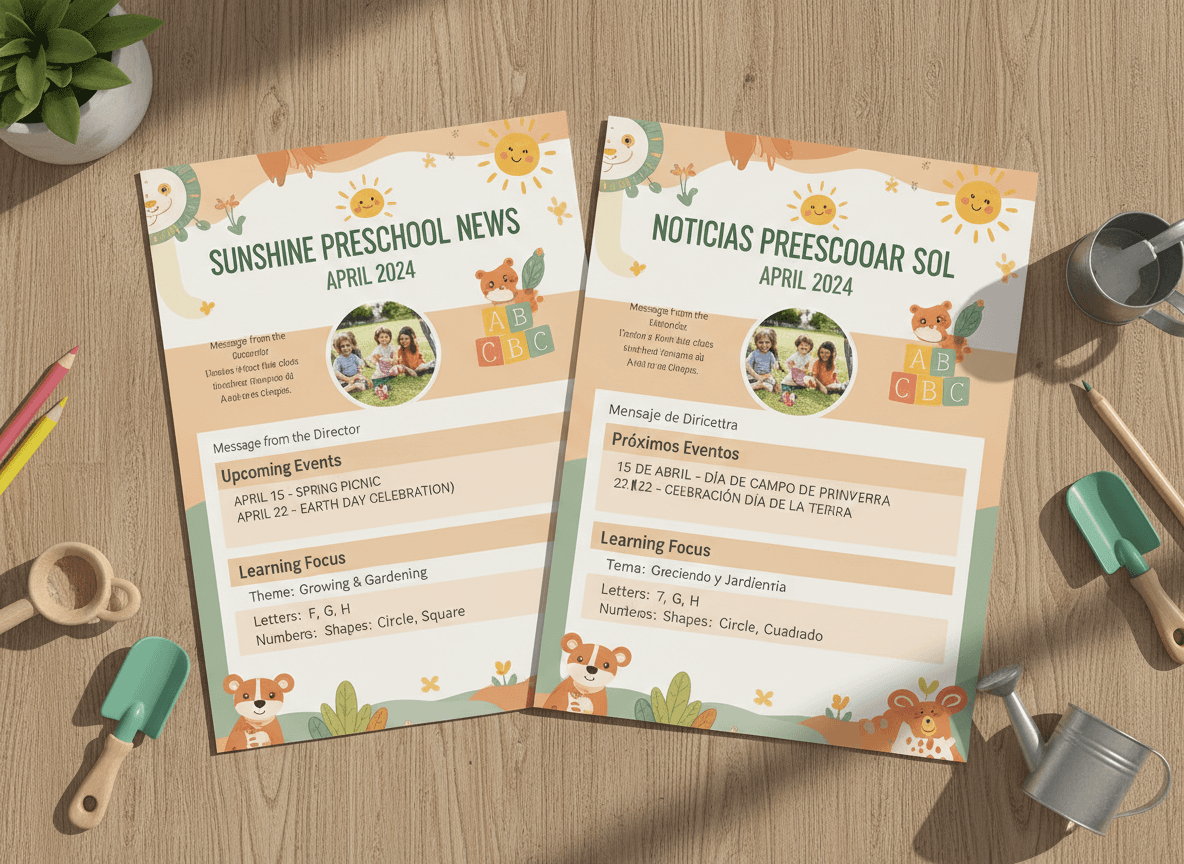
Head Start exists specifically to serve children and families facing the most significant barriers to educational access. The communication strategy for a Head Start program needs to reflect that reality. A newsletter that works well for a suburban private preschool may not work at all for a Head Start program where half the families speak a language other than English, several lack reliable internet, and most are managing stressors that compete with their capacity to read and act on school communication.
This guide addresses the specific communication needs of Head Start programs and how to build a newsletter routine that actually reaches the families who need it.
Plain Language First
Head Start newsletters should be written at the lowest practical reading level that still communicates the information clearly. This is not condescending. It is the standard communication practice recommended for any public-facing document. Short sentences. Common words. Active voice. One idea per paragraph.
Avoid professional jargon, acronyms without explanation, and references to processes or resources that assume familiarity with school systems. A family who is navigating their first experience with any preschool program does not know what an "IEP meeting" is, what "developmental screening" involves, or why a "home visit" is being offered.
Translation and Language Access
Head Start programs are legally required to communicate with families in their home language for significant communications. Newsletters fall within that scope. At a minimum:
- Identify the languages spoken in your current enrollment and prioritize translation for the most common languages
- Include a note in each major language indicating that the full newsletter is available in that language
- Do not rely on children to translate for their families
- Maintain a list of community interpreters and bilingual staff who can support families who need help understanding written materials
Multi-Channel Distribution
Email alone does not reach all Head Start families. A distribution strategy for a Head Start newsletter should include:
- Email for families who have and use it
- Printed copies in children's bags and at pickup, for families without reliable internet
- Text message with a link or PDF for families who primarily use smartphones
- A physical copy posted on the family bulletin board at the program entrance
- Reading the key points aloud at a monthly family meeting when possible
Including the Full Range of Head Start Services
Head Start is more than early childhood education. Most programs include comprehensive health services, family support, nutrition, mental health resources, and connections to community services. Your newsletter should reflect the full scope of what is available, not just classroom news. Families who do not know that a family advocate can help them with housing or that health screenings are available do not access those services. The newsletter is one of the most reliable ways to communicate what exists.
Building Trust Through Consistency
Families who have had difficult experiences with institutions, schools, or government programs may approach Head Start communication with initial skepticism. Consistency is the most powerful trust-building tool: a newsletter that arrives reliably, is honest about what is happening, and includes information that is genuinely useful builds relationship over time. Daystage supports the consistency piece by making newsletter creation fast enough that teachers and family advocates can maintain a weekly schedule without it becoming a burden.
Get one newsletter idea every week.
Free. For teachers. No spam.
Frequently asked questions
What makes a Head Start newsletter different from a standard preschool newsletter?
Head Start families often face additional barriers to accessing information: language differences, lower literacy levels, limited internet or phone access, and competing demands from unstable housing, work schedules, and other stressors. Head Start newsletters are most effective when they are plain-language, visually supported, available in home languages, and accessible across delivery channels.
How should Head Start programs handle translation for newsletters?
Identify the top two or three languages spoken in your program and either translate newsletters through a qualified translator or use a reliable translation service. Machine translation is a reasonable starting point if human translation is not available, but it should always be reviewed by a speaker of the language before being sent. State clearly at the top of the newsletter that translation is available in other languages on request.
What should Head Start newsletters cover beyond typical preschool content?
Head Start newsletters often include information about program services beyond classroom instruction: health screenings, nutrition programs, family support resources, housing and employment assistance referrals, and mental health support. Including this information reminds families that Head Start is a comprehensive program, not just a preschool.
How do Head Start programs distribute newsletters to families without reliable email?
A multi-channel approach is most reliable: email for families who have it, printed copies at pickup and drop-off, text message links for families who primarily use smartphones, and physical copies sent home in children's bags. No single channel reaches all Head Start families.
Can Daystage support Head Start newsletter communication?
Daystage works for Head Start classrooms that communicate primarily by email and can be part of a multi-channel distribution strategy alongside printed and text-based delivery.

Adi Ackerman
Author
Adi Ackerman is a former classroom teacher and curriculum writer with 8 years in K-8 schools. She writes about school communication, parent engagement, and what actually works in real classrooms.
More for Pre-K
Ready to send your first newsletter?
3 newsletters free. No credit card. First one ready in under 5 minutes.
Get started free