
Preschool Bilingual Family Newsletter: Supporting Language Development at Home and School
Bilingual families in preschool settings often receive one of the most common and damaging pieces of misguided advice in early childhood education: speak English at home so your child learns faster. This recommendation is not only wrong. It is potentially harmful. A newsletter that provides accurate information about dual language development builds trust with bilingual families and helps them make choices that actually support their child's language development.
What Research Says About Bilingual Development
The research on bilingual language acquisition is consistent and clear. Children who maintain a strong home language develop English more successfully than children who are encouraged to abandon their first language for English. This is because underlying language skills, including vocabulary depth, narrative ability, and conceptual knowledge, transfer across languages. A child who learns the concept of "family" in Spanish can learn the English word for it far more quickly than a child who has neither a Spanish nor an English foundation for the concept.
Your newsletter should make this clear and direct: the best thing bilingual families can do for their child's language development is to use and develop the home language as richly as possible. Read books in the home language. Tell stories. Have complex conversations. Build vocabulary. The English will come, and it will come more successfully because of the strong foundation in the home language.
Normal Patterns in Dual Language Acquisition
Bilingual children go through predictable patterns that may look concerning to families who are not familiar with them. Language mixing, using words from both languages in the same sentence, is normal and does not indicate confusion. A silent period in English, during which the child is observing and building a passive vocabulary before speaking, is normal and can last weeks or months. Preferring one language in one context and another in a different context is typical bilingual behavior.
Your newsletter should describe these patterns so families recognize them and are not alarmed. A family that understands their child's silence in English is a normal developmental phase will respond with patience. A family that interprets the same silence as a language delay may make decisions that actually impede development.
How the School Supports Dual Language Learners
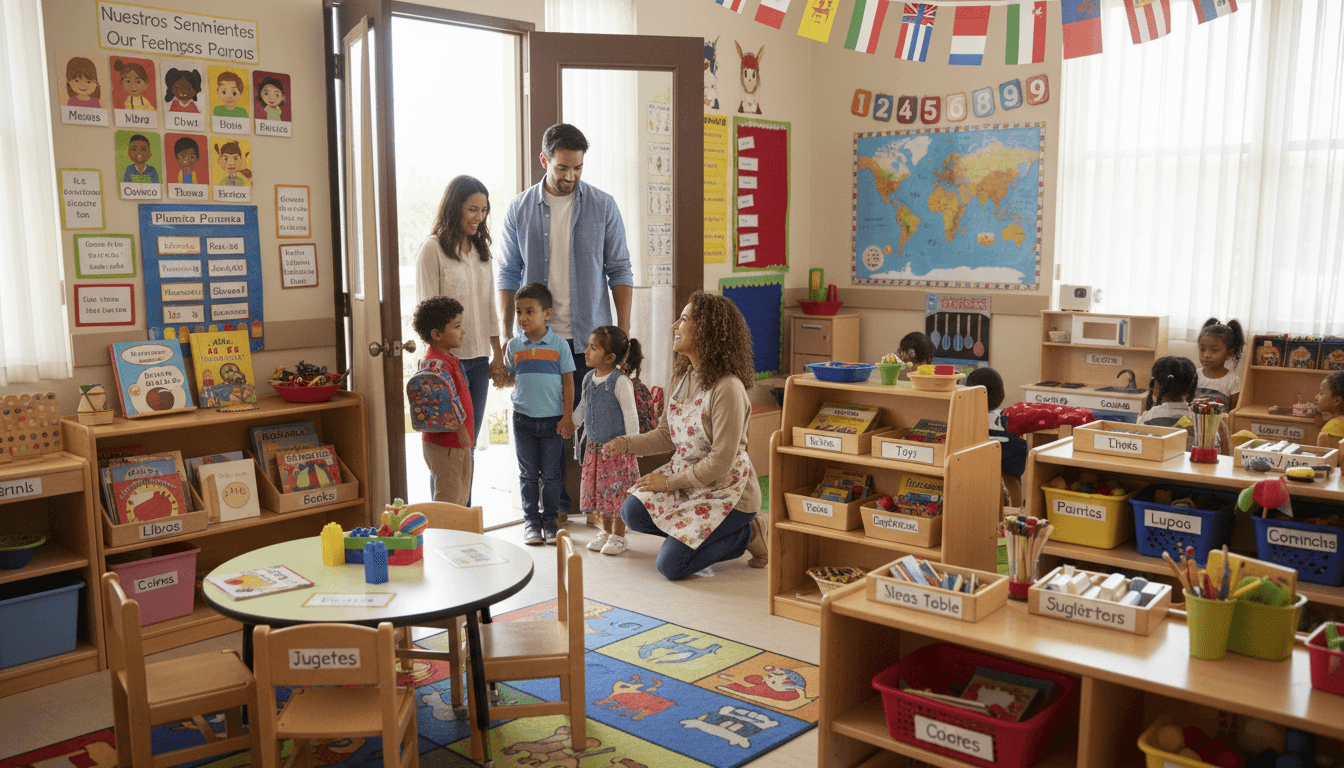
Describe what your program does to support children who are learning English while maintaining a home language. This might include: multilingual labels in the classroom, books and materials in multiple languages, a translator available for family communication, teachers who speak some or all of the child's home language, and classroom practices that honor and include home languages.
If your program has a specific dual language or English language learner support approach, describe it. Families who know that the school has a plan for supporting their child's bilingual development are more confident and more engaged than families who feel the school is only interested in the English side of their child's language identity.
What Bilingual Families Can Do at Home
Give bilingual families specific guidance for home language development. Read picture books in the home language and discuss the stories. Tell family stories and folktales from the family's cultural tradition. Sing songs and learn rhymes in the home language. If grandparents or extended family members speak the home language, prioritize those relationships as language-building opportunities. Cook together and name ingredients. All of this builds the rich home language foundation that makes English acquisition faster.
Also recommend that families not correct a child who code-switches between languages. This is a sophisticated, normal behavior in bilingual people of all ages, not an error. Responding naturally in either language reinforces the child's developing bilingual identity.
Celebrating the Bilingual Identity
A newsletter that acknowledges and celebrates the linguistic diversity of the school community communicates something essential to bilingual families: your language is valued here. Your child's full identity, not just the English-speaking part, is welcome in this classroom. That message matters for the child's sense of belonging and for the family's relationship with the school.
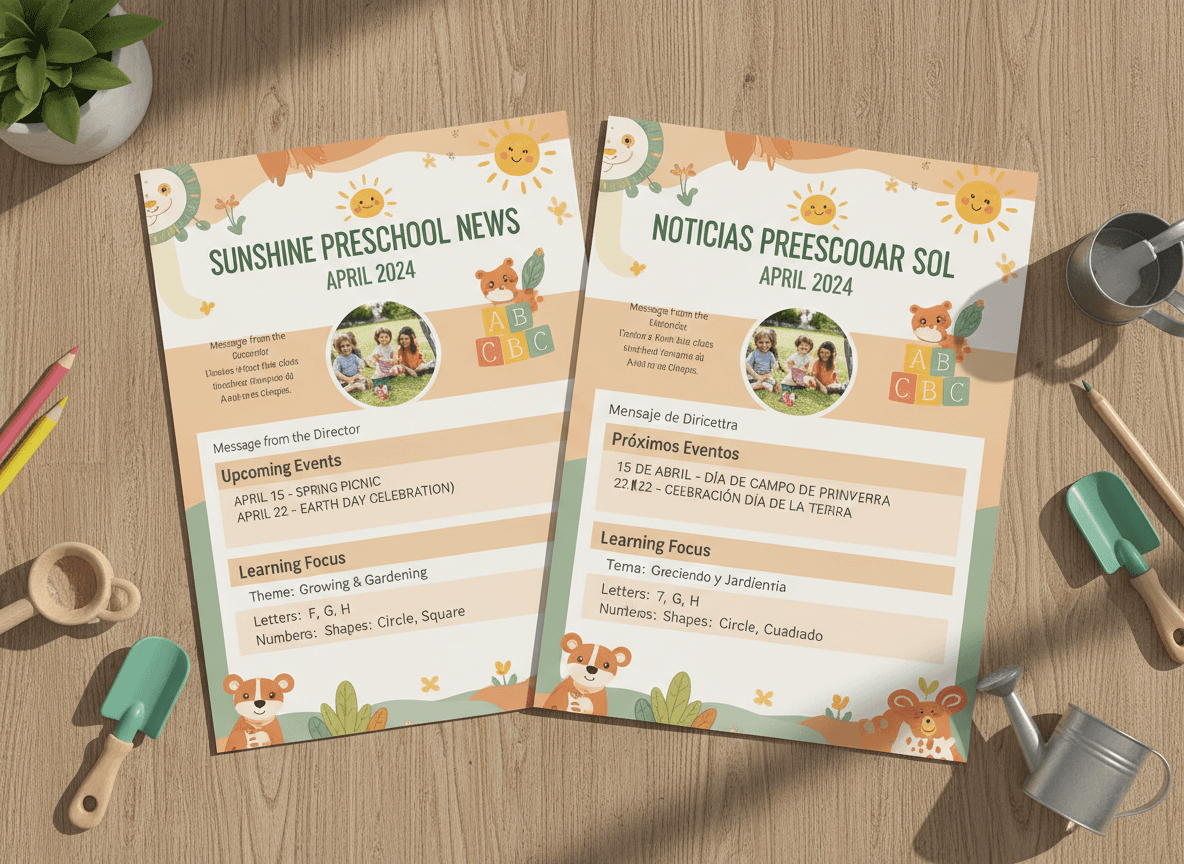
Daystage makes it easy to send bilingual family newsletters that include home language activity suggestions, translated content when possible, and affirmations of the value of the home language as an asset in the child's development. Families who feel seen by the school are the most engaged partners in supporting learning at home.
Get one newsletter idea every week.
Free. For teachers. No spam.
Frequently asked questions
Should bilingual families speak English at home to help their child learn faster at school?
No. Research consistently shows that maintaining a strong home language actually accelerates English acquisition, not the reverse. Language skills transfer across languages. A child who has rich vocabulary and narrative skills in Spanish will learn English vocabulary and narrative skills faster than a child who has been discouraged from developing their home language. Encourage families to use their strongest language at home.
How does a preschool newsletter support bilingual families?
By affirming the value of the home language, explaining what the school does to support dual language learners, sharing home language resources, and describing specific ways families can build language skills in their home language that will transfer to English. A newsletter that never acknowledges the home language sends an implicit message that it does not matter.
What should bilingual families know about the language acquisition timeline for preschoolers?
Dual language learners go through a normal period of language mixing and sometimes a silent period in the new language while they build a foundation. These are not delays. They are typical patterns in bilingual language acquisition. Families who understand this are less anxious about their child's language development and less likely to abandon the home language.
How can preschool teachers include bilingual families in classroom communication?
Translate newsletters into the primary home languages represented in the class. Use cognates and visuals in classroom displays. Label classroom objects in multiple languages. Invite families to share home language books, songs, or words with the class. These practices signal that the school values the full linguistic identity of every child.
Can Daystage help send bilingual family newsletters for preschool programs?
Daystage lets teachers send newsletters to bilingual families with translated content, home language activity suggestions, and resources that support dual language development at home.

Adi Ackerman
Author
Adi Ackerman is a former classroom teacher and curriculum writer with 8 years in K-8 schools. She writes about school communication, parent engagement, and what actually works in real classrooms.
More for Pre-K
Ready to send your first newsletter?
3 newsletters free. No credit card. First one ready in under 5 minutes.
Get started free