
Bilingual Preschool Newsletter in Spanish: Reaching Spanish-Speaking Families
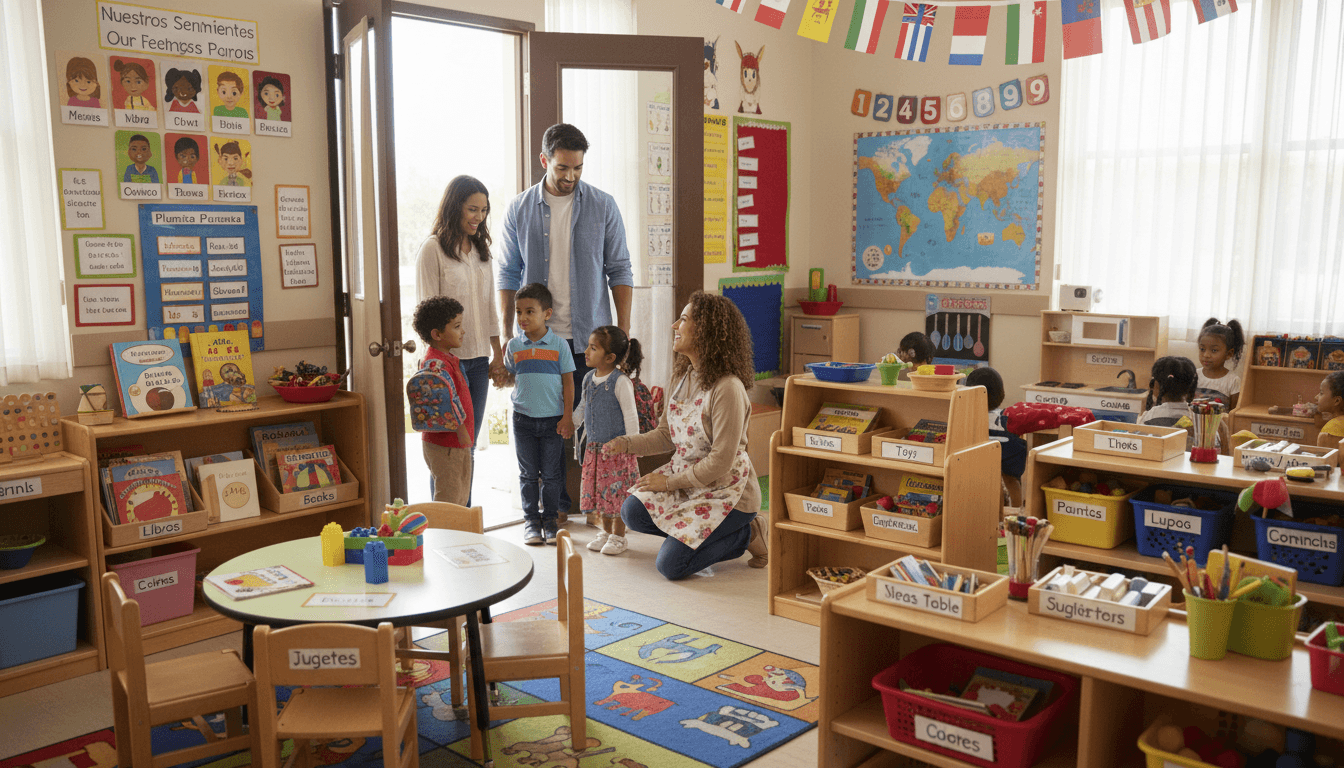
Spanish is the most common non-English language spoken in American homes, and in many preschool classrooms across the country, the majority of families speak Spanish at home. The gap between what these families receive and what they can actually use is one of the most significant equity issues in early childhood education.
Running a newsletter through Google Translate and sending the output is better than nothing. It is also not enough. Reaching Spanish-speaking preschool families well requires understanding what translation misses and what to do about it.
Why Translation Alone Falls Short
Machine translation of educational content produces technically accurate text that often reads as cold, stilted, or formally distant in ways that English speakers never notice because they are reading the original. The warmth of "We had such a wonderful week exploring our school garden" can land very differently when machine-translated into Spanish, depending on the dialect assumed, the formality register used, and whether any idioms survive the translation.
The bigger issue is usted vs. tu. Machine translators make arbitrary choices about formality register. In Latin American Spanish, educational communication typically uses usted when addressing parents, signaling respect. A machine translation that defaults to tu can read as inappropriately casual or even disrespectful, depending on the family's background and expectations.
None of this means translation is worthless. It means translation is the floor, not the ceiling.
Cultural Communication Differences That Matter for Preschool Families
Many Latin American families come from educational cultures with sharply different norms around parent-teacher relationships. In some contexts, the teacher is the expert and parents are expected to defer, not to participate in curriculum decisions or ask detailed questions about learning approaches. A newsletter that invites parents to "share your ideas about the classroom garden project" may land well with families familiar with American-style collaborative education and confuse or even alarm families who expect the teacher to make these decisions without parent input.
This does not mean you should not invite participation. It means you should frame invitations in ways that make the role clear. Instead of "we'd love your ideas," try "we'd love your help with" or "you are welcome to join us for." Concrete, action-oriented invitations work better than open-ended collaborative framing.
Familismo is another relevant factor: the strong orientation toward family and community that characterizes many Latin American cultures. Communication that acknowledges the extended family, that treats grandparents and other caregivers as legitimate members of the school community, tends to resonate more strongly with these families than communication addressed solely to parents.
What Spanish-Speaking Preschool Parents Most Want to Know
Research on Latino parent engagement in early childhood education points to consistent priorities: Is my child safe? Is my child happy? Is my child learning? Is my child treated with respect? These are not different from what any preschool family wants to know. What differs is the degree of urgency attached to the safety and respect questions, particularly for families who are new to American educational institutions and are navigating unfamiliar systems.
A newsletter that consistently and concretely answers these questions builds trust faster than one that leads with curriculum theory or pedagogical approach. Photos of children visibly engaged, happy, and cared for communicate safety and happiness before any text does. Lead with images in a bilingual newsletter.
What to Say vs. What to Just Translate
Some content translates well. Dates, times, logistics, supply lists, and reminders are factual and survive machine translation with minimal distortion. This content should be translated and the translation should be verified by a fluent speaker at least once per year to catch systematic errors.
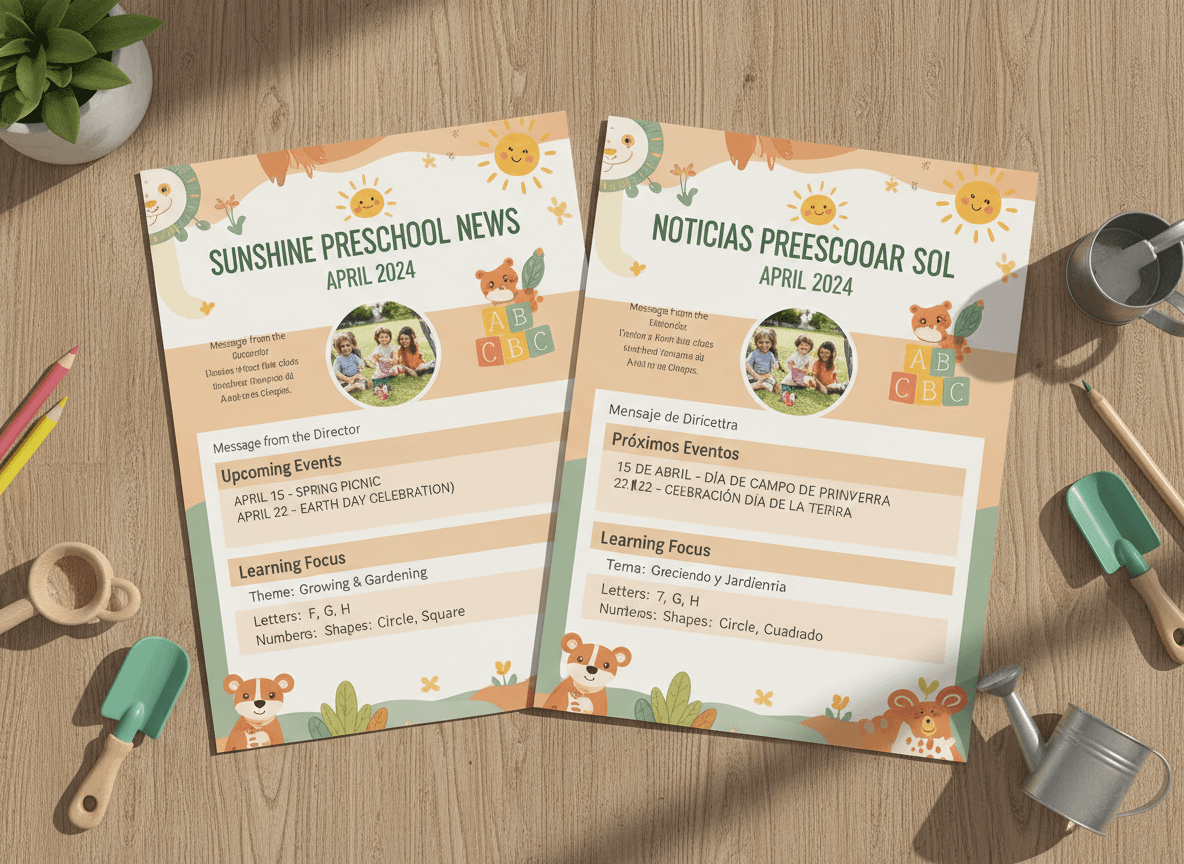
Other content should be written directly in Spanish rather than translated from English. The warm greeting at the top of the newsletter. The note from the teacher. The section that describes what you love about what happened this week. If you have a fluent Spanish-speaking colleague, this is where their input matters most. If you do not, it is worth investing in a human review of these sections even once a month.
The practical test: read the Spanish version aloud to a fluent speaker and watch their face. If they smile and nod, you are close. If they hesitate or wince at anything, you have something to fix.
Tools and Practical Approaches
Google Translate and DeepL both handle Spanish better than most other languages because of the volume of training data. DeepL tends to produce more natural-sounding output for Spanish and is worth the slightly more involved workflow. For preschool newsletters, which are typically under 400 words, the time difference between the two tools is negligible.
If your school or district has a language access coordinator or bilingual staff member, build a review step into your newsletter process: draft in English, translate with a tool, send the Spanish version to a fluent reviewer, make corrections, publish. This adds 20 to 30 minutes to your workflow and meaningfully improves the quality of what Spanish-speaking families receive.
Daystage supports sending a single newsletter to all families without needing separate email lists or duplicate sends. If you maintain a Spanish and English version of the newsletter each month, you can send the appropriate version to each family based on their language preference without managing two separate distribution systems.
Building Trust Through Consistency
The most powerful thing you can do for Spanish-speaking families is to send a consistent, readable, warm newsletter every month without fail. The families who feel most disconnected from their child's preschool are often those who receive less communication, not worse communication. Consistent outreach in their language signals that their family belongs in this classroom community.
One perfectly written bilingual newsletter does less than 10 months of newsletters that are "good enough." Set a standard you can sustain, get a fluent reviewer for the warm sections, run the logistics through a reliable translation tool, and send it on time every month. Consistency builds the relationship that no single piece of communication can build on its own.
A Note on Dialect and Regional Variation
Spanish varies significantly across Latin American countries and regions, and the Spanish spoken by Puerto Rican families in New York differs from the Spanish spoken by Mexican families in California or Salvadoran families in Texas. Vocabulary, idiom, and even tone differ.
You do not need to master regional variation. You do need to know which Spanish- speaking communities your families come from and to have your warm sections reviewed by someone from those communities when possible. A newsletter reviewed by a colleague from the same region as your families will be noticeably better than one reviewed by a fluent speaker from a different Spanish-speaking background. Use the community you have.
Get one newsletter idea every week.
Free. For teachers. No spam.
Frequently asked questions
When should preschool teachers send bilingual newsletters to Spanish-speaking families?
Send bilingual newsletters on the same day and through the same channel you use for all families. Spanish-speaking parents should not receive communication later than English-speaking families, as delays signal lower priority. A consistent weekly or monthly rhythm works best for building reading habits.
What should a bilingual preschool newsletter in Spanish include?
Include everything the English version covers: classroom activities, upcoming dates, a learning tip for home, and any important reminders. Add one culturally relevant touch where natural, such as naming a familiar household activity that supports the current classroom theme.
How should preschool teachers handle the formality register in Spanish newsletters?
Use usted when addressing parents, not tu. Educational communication in Latin American Spanish contexts defaults to usted to signal respect, and a newsletter that uses tu can read as casually dismissive depending on the family's regional background. If a bilingual staff member or community liaison can review the first draft, that review is worth the time.
What are common mistakes in bilingual preschool parent communication?
The most common mistake is running English text through Google Translate and sending the output without review. Machine translation handles vocabulary but misses formality register, idiomatic warmth, and dialect variation. A second common mistake is sending only a portion of the newsletter in Spanish, which signals that the full information is reserved for English-speaking families.
Is there a tool that helps preschool teachers send bilingual newsletters without extra work?
Daystage is built for early childhood teachers and includes features that make multilingual communication easier to manage alongside everything else you are already doing.

Adi Ackerman
Author
Adi Ackerman is a former classroom teacher and curriculum writer with 8 years in K-8 schools. She writes about school communication, parent engagement, and what actually works in real classrooms.
More for Pre-K
Ready to send your first newsletter?
3 newsletters free. No credit card. First one ready in under 5 minutes.
Get started free