
Pre-K Parent Newsletter: Social Skills Support At Home
Social skill development is one of the most important outcomes of Pre-K, and it is one area where what happens at home makes an enormous difference. Your newsletter can give families concrete tools and the right framing so they become active partners in building the skills you are cultivating in the classroom.
What Social Development Actually Looks Like at Ages 3 and 4
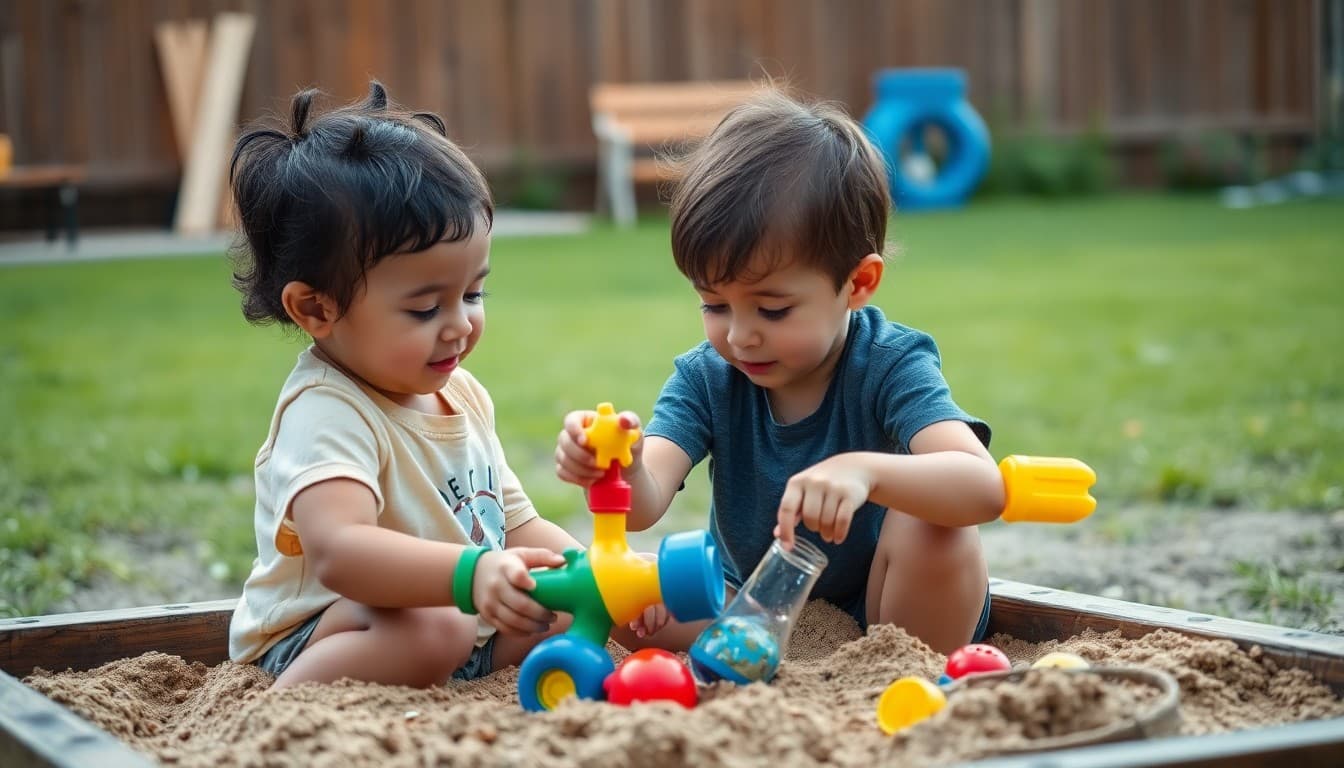
Help parents calibrate their expectations in your newsletter. A 3-year-old playing alongside another child but not with them is doing exactly what is developmentally expected. Parallel play is a healthy stage, not a sign of social difficulty. By 4, most children begin to engage in more interactive play, negotiate roles, and start to take turns. But even at 4, these skills are fragile and break down under stress. The work is to build vocabulary and strategies, not to demand mature social behavior before the brain is ready for it.
Narrating Emotions as a Teaching Tool
Parents who narrate what they observe are giving their children the most powerful social learning tool available: accurate emotional language. When a parent says, “Your friend looks sad. What do you think happened?” they are building theory of mind, the ability to understand that others have feelings and perspectives that differ from your own. This is not a skill that develops on its own. It builds through repeated guided noticing. Your newsletter can give parents two or three scripted prompts they can use during everyday situations.
Setting Up Successful Playdates
Playdates are some of the best social skill practice available to Pre-K children, and most families do not think about how to structure them. In your newsletter, suggest that families start with one friend rather than a group, keep the playdate to about 60 to 90 minutes, and have a structured activity ready as a backup if conflict arises. The first ten minutes and the last ten minutes of any playdate are the most socially demanding. Knowing this helps parents stay close during transitions without hovering the whole time.
A Sample Newsletter Excerpt to Copy
“This week we practiced using ‘I statements’ during play: ‘I don't like that. Stop please.’ This is a big skill at Pre-K age. You can reinforce it at home when conflicts come up. Instead of stepping in and solving it, try coaching from the sideline: ‘What can you say to your sister? Try telling her how you feel.’ It takes longer than just fixing it, but the practice is what builds the skill.”
Books as Social Skills Teachers
Picture books are one of the most effective tools for social skill development at this age. Reading a story about a character who feels left out, who has to share something important, or who hurts a friend's feelings and makes it right gives children a model and vocabulary for situations before they encounter them. Recommend two or three titles in your newsletter that connect to the social-emotional themes you are working on in class. Families who read these at home extend your classroom lessons without any additional preparation.
When a Child Is Struggling Socially
Some Pre-K children find social situations consistently harder than their peers. Your newsletter can acknowledge this reality without singling anyone out. Suggest that families who are concerned about their child's social development reach out for a private conversation rather than waiting for the scheduled conference. Early conversation leads to earlier support, and early support in Pre-K has a much larger impact than the same intervention attempted in first or second grade.
Conflict Is Part of the Curriculum
One of the most useful things you can communicate to Pre-K families is that conflict between children is not a failure. It is practice. Children who never argue, never have to share, and never experience peer friction arrive in kindergarten without the social negotiation skills they need. Your newsletter can frame conflict as the learning opportunity it is and give parents a coaching script: stop, name the feeling, give the words, support the solution. That four-step response works at school and at home.
Connecting Home and School With Daystage
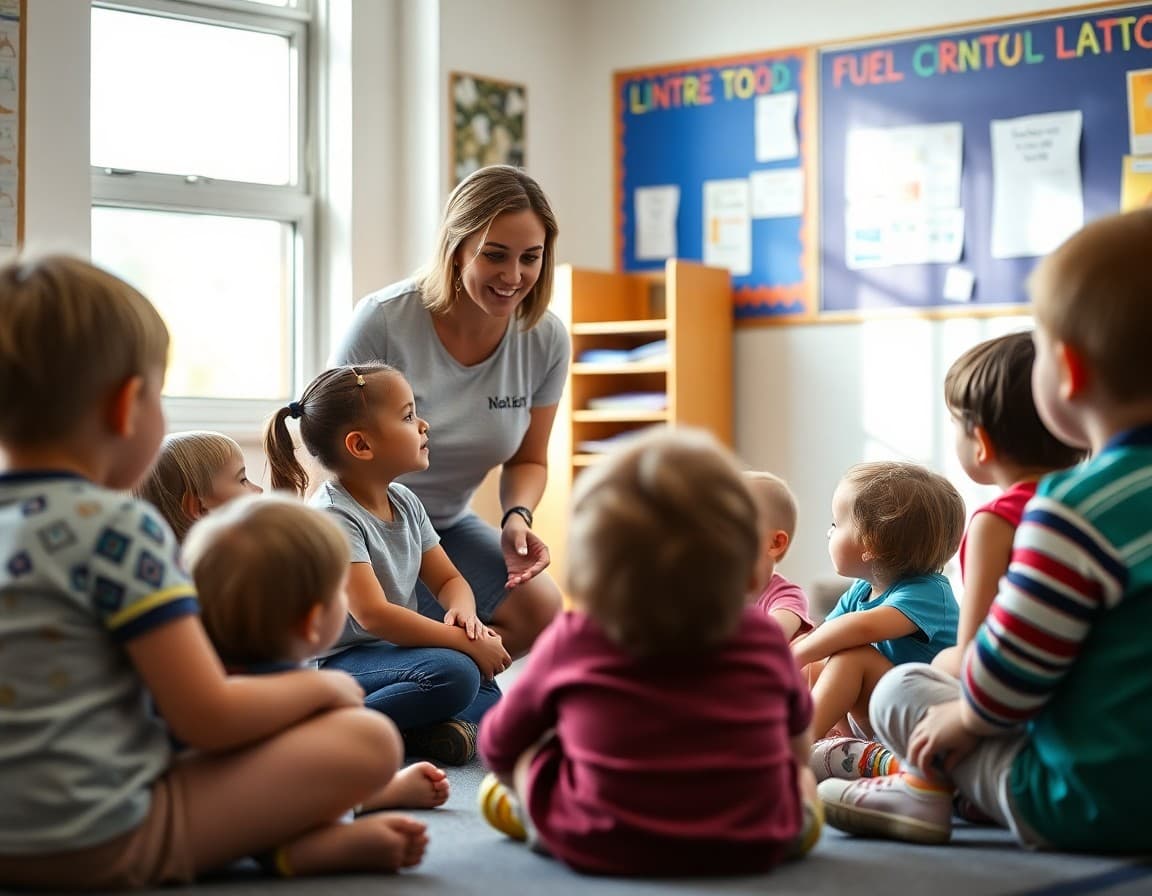
Daystage makes it easy to share the specific social skills you practiced this week alongside a photo of the class in action. When parents see what the class worked on and get a one-paragraph home extension activity, they can reinforce the exact same skill that evening. That bridge between classroom practice and home reinforcement is what makes social-emotional development move faster than classroom instruction alone can manage.
Get one newsletter idea every week.
Free. For teachers. No spam.
Frequently asked questions
What social skills should Pre-K children be developing?
At ages 3 and 4, the key social skills include taking turns, sharing materials, using words to express feelings and needs, noticing and responding to others' emotions, entering group play, and resolving simple conflicts with adult support. Children this age are naturally egocentric, which is developmentally expected, not a character flaw. The work is gradual exposure to social situations with adult coaching, not forced compliance.
How can parents support social skill development at home?
Narrating emotions, coaching children through conflicts in the moment, arranging regular play opportunities with one or two peers, and reading books with social-emotional themes are all effective home strategies. Parents who describe what they see, ‘You look frustrated. You wanted that toy,’ and then coach the next step give children the vocabulary and the model they need to handle social situations more independently over time.
My Pre-K child struggles to share. Should I be worried?
Sharing is genuinely hard for 3- and 4-year-olds because the concept of temporary ownership is still abstract. Most children this age will protest when asked to give something up, and that is normal. What helps is practicing turn-taking rather than sharing, framing it as ‘your turn, then my turn’ rather than ‘give it to them.’ Setting timers so each child knows when their turn ends is another concrete strategy that reduces conflict.
What should I do when my Pre-K child hits or bites other children?
This is common and worth addressing in your newsletter without alarm. Children who hit or bite are usually overwhelmed and lack the words to communicate what they need. The response is to calmly stop the behavior, name the feeling, and immediately offer the words: ‘You were so angry. Say, 'I'm angry.'’ Repeated response to incidents with calm, consistent language and a brief separation tends to reduce the behavior over time. Punishment without language coaching rarely solves it.
How can teachers share social skills guidance with families through their newsletter?
Daystage lets you pair a social-emotional skills update with your regular class news. When you share what the class practiced this week, like using a talking stick during circle time, and include a one-paragraph note for parents with a home version of the activity, families can reinforce the skill at home in the same week. That alignment between school and home is what moves social development forward fastest.

Adi Ackerman
Author
Adi Ackerman is a former classroom teacher and curriculum writer with 8 years in K-8 schools. She writes about school communication, parent engagement, and what actually works in real classrooms.
More for Pre-K
Ready to send your first newsletter?
3 newsletters free. No credit card. First one ready in under 5 minutes.
Get started free