
Pre-K Separation Anxiety Newsletter: Tips for Families
Separation anxiety at the start of pre-K is one of the most emotionally charged experiences for families and one of the most practically important topics for teachers to address clearly. A parent watching their four-year-old cry at the classroom door needs to know two things: this is normal and developmentally healthy, and their child will almost certainly be playing happily within minutes of their departure. A newsletter that communicates both of those things, along with specific guidance for the goodbye routine, equips families to handle drop-off in a way that helps their child settle faster.
Why Separation Anxiety Is Developmentally Healthy
Separation anxiety in young children reflects healthy attachment to their primary caregiver. The child's brain, which is not yet fully mature, cannot hold onto the certainty that the parent will return when they are out of sight. This is especially true for children who have not yet had substantial experience with regular separations. A child who shows distress at separation from a parent they are securely attached to is demonstrating that the parent is important to them, which is the foundation of healthy development. The newsletter should lead with this reframe, because parents who believe their child's distress signals something wrong with them or with the school start drop-off with the wrong emotional set.
What Happens After the Parent Leaves
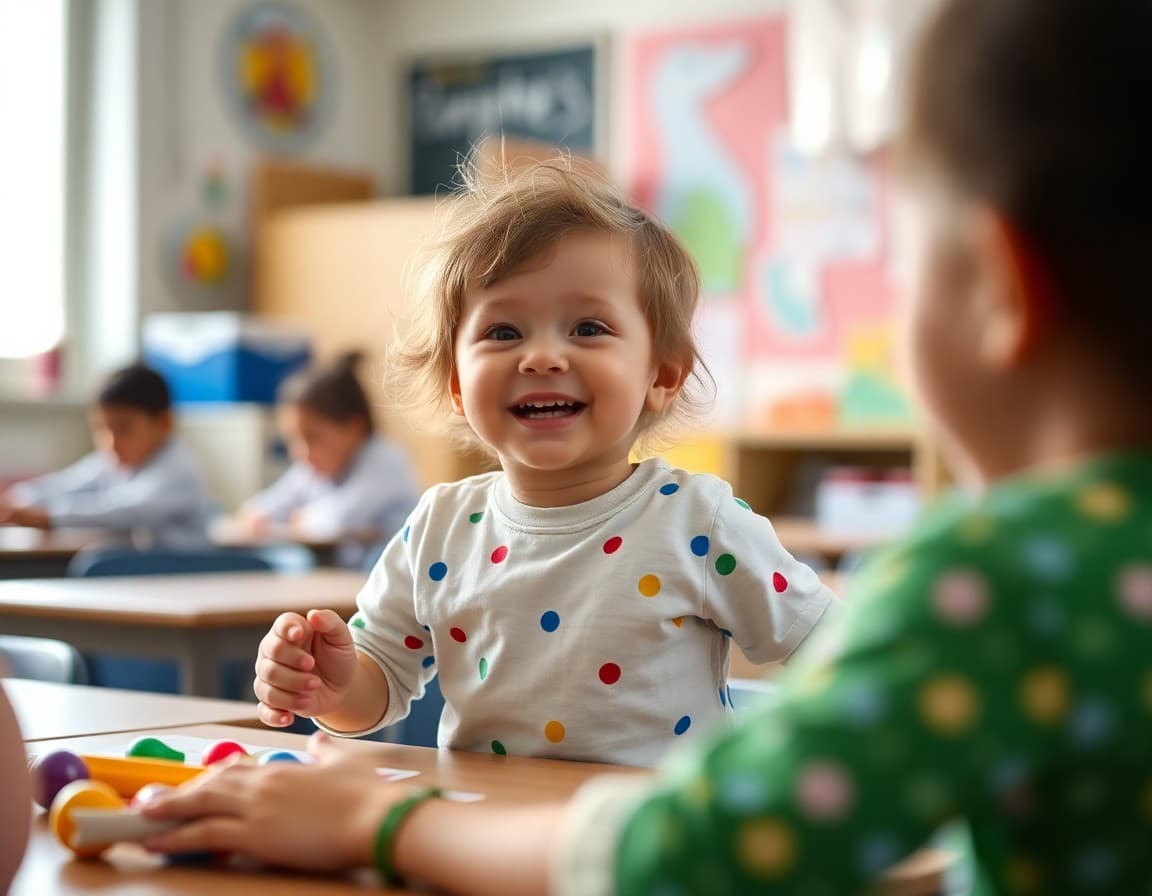
This is the most reassuring piece of information a teacher can share. Research on preschool transitions, and the daily observation of every experienced pre-K teacher, shows that children who are upset at drop-off typically settle within five to ten minutes of the parent leaving. The child's distress is real but it peaks at the moment of separation and decreases quickly once the parent is gone and the child is redirected into an activity with the teacher and peers. Families who know this can hold onto it as they walk to their car. A teacher who offers to send a brief text message or photo in the first five minutes after drop-off for the first few days of school provides enormous reassurance to families who are genuinely worried.
The Goodbye Routine: What Works
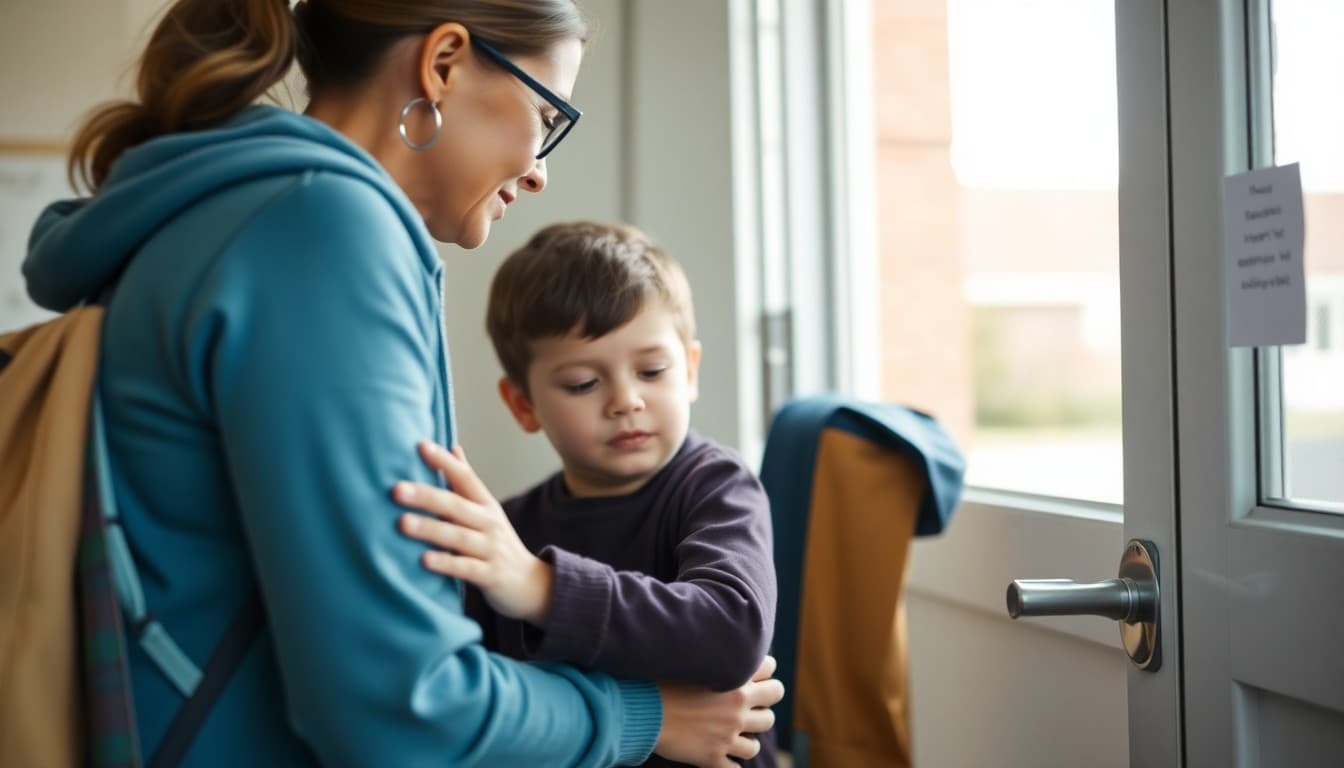
The goodbye routine is the single most important tool families have for managing separation anxiety. An effective goodbye routine is predictable, brief, warm, and matter-of-fact. Predictable means the same sequence every day: greet the teacher, put the backpack in the cubby, give a hug, say the goodbye phrase, and leave. Brief means five minutes from arrival to departure, not 20 minutes of negotiating, lingering, or returning for extra hugs. Warm means the parent communicates love and confidence, not apology or guilt. Matter-of-fact means the parent's body language, tone, and pacing communicate that this is a normal and safe situation, which is the most powerful signal the child receives.
A specific closing phrase such as "I love you. I will be here at pickup time. Have a great day" used consistently every morning becomes a cue that the goodbye routine is ending. Children who hear the same phrase every day often begin to anticipate it and start their own goodbye process before the parent initiates it.
What Not to Do at Drop-Off
The two most common mistakes that make separation anxiety worse are sneaking away and lingering. Sneaking away feels kind to the parent and is intended to prevent the distress moment, but it teaches the child that the parent can disappear without warning, which increases vigilance and anxiety rather than reducing it. A child who learns to watch for their parent to sneak away becomes hyperalert at school rather than relaxed. Lingering is the other common pattern: staying for 30 minutes, returning for additional hugs, or promising to check back in. This communicates to the child that the parent also believes the situation is not safe enough to leave, which amplifies the child's distress. Leave promptly, confidently, and completely.
Template Excerpt: Separation Anxiety Newsletter
Here is an excerpt for the newsletter sent before the first week of school:
"It is completely normal for children to cry or cling at drop-off during the first weeks of pre-K. Please know that our teachers are experienced in helping children transition, and most children settle into happy play within five to ten minutes of a parent leaving. The most helpful thing you can do is say a warm, confident goodbye using a consistent phrase and leave promptly. Sneaking away or lingering longer to avoid tears typically makes the transition harder over time. If you would like us to send you a quick text after drop-off to confirm your child has settled, please let your teacher know. We are happy to do that for the first few weeks."
When Separation Anxiety Persists Beyond the Typical Window
Most separation anxiety resolves within two to four weeks of starting pre-K. A small number of children take longer, and a small number continue to experience significant distress at drop-off throughout the year. The newsletter should tell families when to mention this to the teacher: if intense distress at drop-off continues beyond week four, if the child refuses to eat or sleep due to worry about school, or if the child's anxiety about school begins to affect family routines outside of school hours. The teacher is the first resource; if the teacher's strategies are not sufficient, the school counselor or the child's pediatrician can be consulted. Early conversations produce better outcomes than waiting to see if things improve on their own.
Get one newsletter idea every week.
Free. For teachers. No spam.
Frequently asked questions
What causes separation anxiety in pre-K children?
Separation anxiety at this age is developmentally normal and reflects healthy attachment between the child and their primary caregiver. The child's brain is not yet fully able to hold onto the certainty that the parent will return when they cannot see them. New environments, new routines, or any stressor in the home (a new sibling, a family move, a parent's stress) can intensify separation anxiety even in children who previously separated easily.
How long does separation anxiety typically last at the start of pre-K?
Most children who experience separation distress in the first weeks of pre-K adjust within two to three weeks. The pattern typically follows a curve: very intense distress in the first few days, some reduction by the end of the first week, and fairly smooth separation by weeks three to four for most children. A small percentage of children take four to six weeks or more to adjust, particularly if other stressors are present at home.
What should a parent do during drop-off when a child is distressed?
The most effective approach involves a predictable, brief goodbye routine. Greet the teacher, say a warm but matter-of-fact goodbye, give a hug or kiss, use a consistent phrase such as 'I will be here at pickup time,' and leave promptly. Do not sneak away (which creates distrust) and do not linger (which communicates that the situation is as scary as the child fears). The parent's confidence in the goodbye is one of the most powerful signals the child receives.
How does the teacher help once the parent leaves?
Most pre-K teachers redirect distressed children into an engaging activity immediately after the parent leaves. Research consistently shows that children who are still crying at drop-off are typically playing happily within five to ten minutes of the parent's departure. Teachers use comforting language, physical closeness, and activity engagement to help children transition. Families who are uncertain about this can ask the teacher to send a brief text or photo to confirm the child has settled, which is a common and helpful practice for the first few weeks.
Can Daystage help pre-K teachers communicate about separation anxiety to families?
Pre-K teachers use Daystage to send separation anxiety newsletters before school begins so families can prepare, and follow-up newsletters in the first week of school confirming that most children transition well after the parent leaves. Sharing this reassurance in writing is often more effective than a verbal exchange at pickup, when the parent may still be processing their own emotions about the morning.

Adi Ackerman
Author
Adi Ackerman is a former classroom teacher and curriculum writer with 8 years in K-8 schools. She writes about school communication, parent engagement, and what actually works in real classrooms.
More for Pre-K
Ready to send your first newsletter?
3 newsletters free. No credit card. First one ready in under 5 minutes.
Get started free