
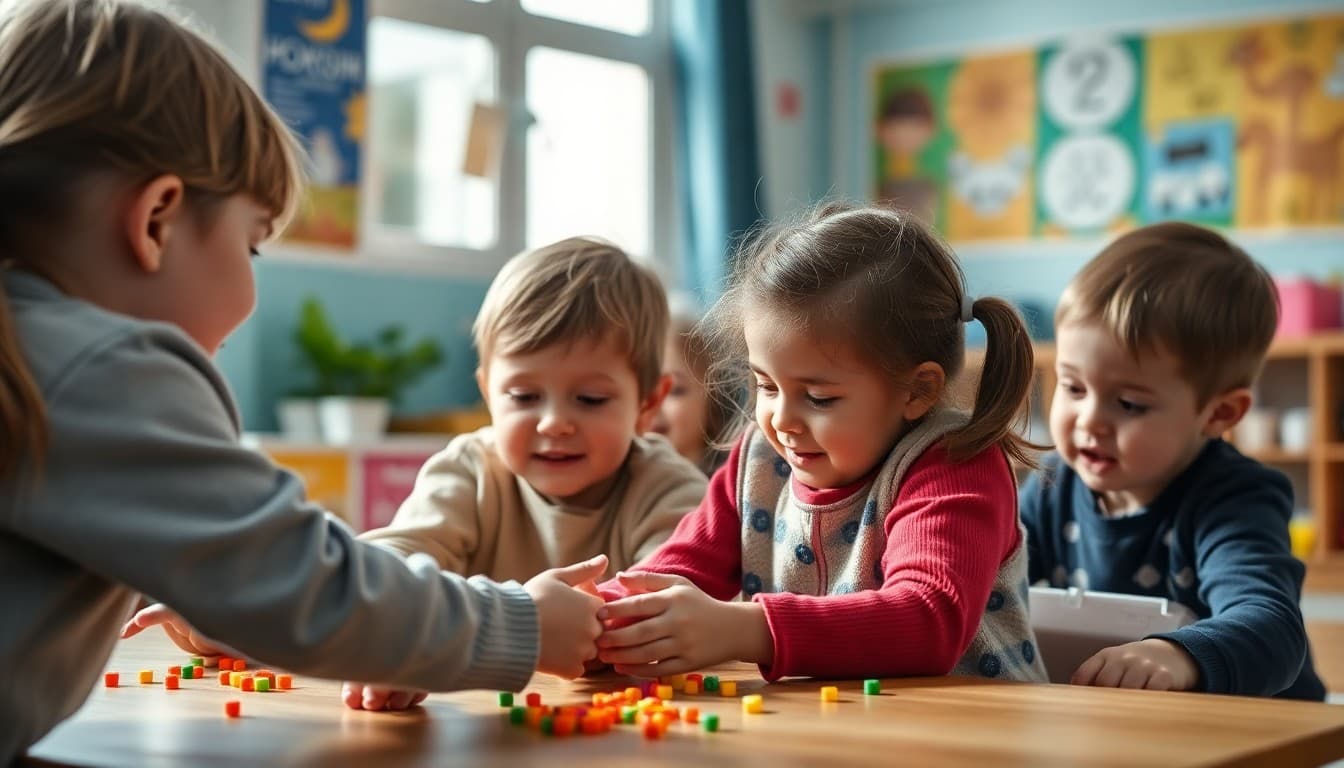
Pre-K Social Skills Newsletter: Making Friends and Sharing
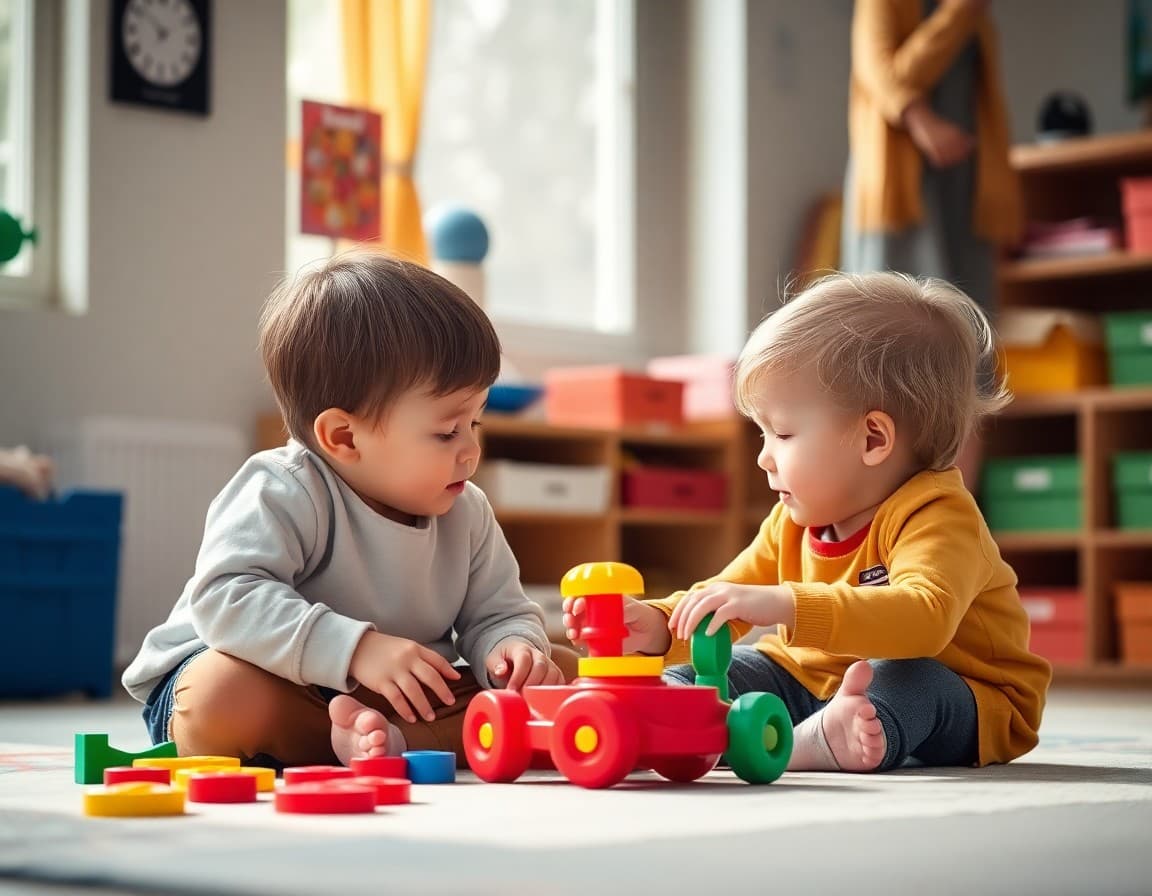
Social development in pre-K is as academically important as literacy or math, and significantly less understood by most families. The ability to make a friend, share a toy, wait for a turn, express a feeling in words rather than hitting, and negotiate a solution to a conflict are skills that research connects to long-term academic and life outcomes. A pre-K social skills newsletter that explains what typical peer development looks like at this age, what the teacher is actively doing to support it, and what families can practice at home gives parents a richer and more accurate picture of what their child is working on every day.
What Peer Play Looks Like at Ages 3, 4, and 5
Three-year-olds typically engage in parallel play: they play near peers, observe what their peers are doing, and sometimes imitate them, but they are not yet reliably able to sustain cooperative play with shared goals and shared rules. This is normal. By age 4, children begin cooperative play in earnest: building a structure together, creating a shared pretend scenario, taking turns in a game. This cooperation is fragile and collapses frequently, requiring adult scaffolding to repair. By age 5, cooperative play is more sustained and complex, with children able to negotiate roles, follow agreed-upon rules, and manage minor conflicts without adult intervention most of the time.
The newsletter should describe which stage the class is currently working on and what that looks like in the classroom during a typical week. This gives families a realistic picture of what social interaction at this age looks like so they are not alarmed when their child reports conflicts or friend-related drama at pickup.
Conflict Is Part of the Learning
This is the most important and most counterintuitive point the newsletter can make. Many families believe that social skills in pre-K should mean fewer conflicts. In reality, the most developmentally rich pre-K classrooms have many conflicts, because conflicts are the primary context in which children learn to regulate emotions, articulate needs, consider another person's perspective, and negotiate solutions. A classroom where children never argue, grab, or upset each other is not a classroom where social learning is happening. The teacher's role is to use each conflict as an instructional opportunity, which is slow and repetitive work that happens dozens of times per day.
How Teachers Teach Social Skills Explicitly
Pre-K teachers do not just manage behavior; they teach social skills. The newsletter should describe two or three specific teaching strategies so families understand what happens when their child is in conflict with a peer. The teacher approaches both children at eye level, making sure both feel seen. The teacher names the emotions visible in each child without assigning blame. "I can see you both really wanted the truck." The teacher guides each child to express what they want using words. "What can you say to your friend?" The teacher helps the children generate solutions and choose one to try. "You could take turns, or you could both add to the building together. Which one do you want to try first?" This process takes three to five minutes per conflict and is the entire lesson.
Scripts That Work for Young Children
Children at this age benefit from having specific language modeled rather than just being told to "use your words." The newsletter should give families two or three social scripts they can practice at home. For entering play: "Can I play too?" is a complete, functional phrase that many three-year-olds do not know. For requesting a turn: "Can I have a turn when you're done?" For expressing a feeling: "I feel sad when you don't play with me." Practice these phrases during low-stakes play at home so the child has them available when they need them at school.
Template Excerpt: Monthly Social Skills Newsletter
Here is a sample section from a monthly classroom social skills newsletter:
"What We Are Working on This Month: Asking to Join Play. One of the most important social skills for a preschooler is the ability to enter a group that is already playing. We are practicing the phrase 'Can I play too?' and helping children notice when a peer is receptive versus when a peer needs a moment before they are ready to include someone new. At home, you can practice by having your child ask to join you in an activity you are doing: 'Mom, can I help too?' This builds the same skill in a warm, supported environment."
When Social Development Concerns Are Worth Mentioning to the Teacher
Most social-emotional ups and downs in pre-K are within the range of normal development and resolve with time and consistent adult support. Families should mention concerns to the teacher if: a child has not formed any peer connections after two months of school, a child is frequently aggressive (hitting, biting, kicking) in ways that do not respond to teacher redirection, a child consistently withdraws from all social contact and does not respond to gentle peer approaches, or a child shows extreme emotional reactions (prolonged tantrums, shutdowns) that are significantly more intense than peers. These are starting points for a conversation, not diagnoses, and early conversations with the teacher allow for earlier, more effective support.
Get one newsletter idea every week.
Free. For teachers. No spam.
Frequently asked questions
What social skills are developmentally expected in 3 to 5 year olds?
By age 3, most children can play alongside peers (parallel play) and are beginning to engage in simple cooperative play. By age 4, cooperative play becomes more sustained, children can take turns with guidance, and many begin to form specific friendships. By age 5, most children can negotiate, share materials without being reminded every time, sustain cooperative play for 15 to 20 minutes, and show some awareness of other children's feelings. Conflict is still frequent and normal throughout this range.
Is it normal for 3 and 4 year olds to struggle with sharing?
Completely normal. The brain regions responsible for impulse control and empathy are among the last to mature, and they are not fully developed until the mid-twenties. Pre-K children who struggle to share, take turns, or manage impulses when a peer takes their toy are not misbehaving; they are operating within the neurological limits of their developmental stage. The teacher's role is to provide scaffolding for these skills, not to expect children to perform them reliably without support.
What does the teacher do when children have social conflicts?
Pre-K teachers use conflict as a teaching opportunity rather than a discipline event. When two children have a conflict over a toy, the teacher comes alongside both children, names what each child is feeling, helps each child articulate what they want, and guides them through generating and testing a solution. This process is slow and repetitive, and that is exactly what makes it effective. Children who experience dozens of guided conflict resolutions across a school year develop real skills that automatic interventions do not produce.
How can families support friendship development outside of school?
Arrange regular playdates with one or two peers from the class in low-stakes settings like a home or playground, where your child can practice the social skills they are building at school. Stay nearby to coach when needed, but give the children space to attempt their own problem-solving before stepping in. Narrate social situations as you observe them together: 'That child looks sad because they dropped their ice cream. What do you think they need right now?'
Can Daystage help pre-K teachers share social skill development information with families?
Pre-K teachers use Daystage to send monthly social-emotional newsletters that describe what skills the class is working on, what specific scenarios arose this week, and what families can practice at home. Sharing real classroom scenarios (without naming specific children) helps families understand what social development looks like in practice rather than only in theory.

Adi Ackerman
Author
Adi Ackerman is a former classroom teacher and curriculum writer with 8 years in K-8 schools. She writes about school communication, parent engagement, and what actually works in real classrooms.
More for Pre-K
Early Childhood Parent Communication: A Practical Guide for Preschool Teachers
Pre-K · 7 min read
Preschool Back to School Newsletter: Setting Expectations Before Day One
Pre-K · 7 min read
Early Childhood Special Education Newsletter: Communicating with Families of Young Children with Disabilities
Pre-K · 8 min read
Ready to send your first newsletter?
3 newsletters free. No credit card. First one ready in under 5 minutes.
Get started free