

Pre-K Assessment and Progress Newsletter: Explaining Evaluations to Families
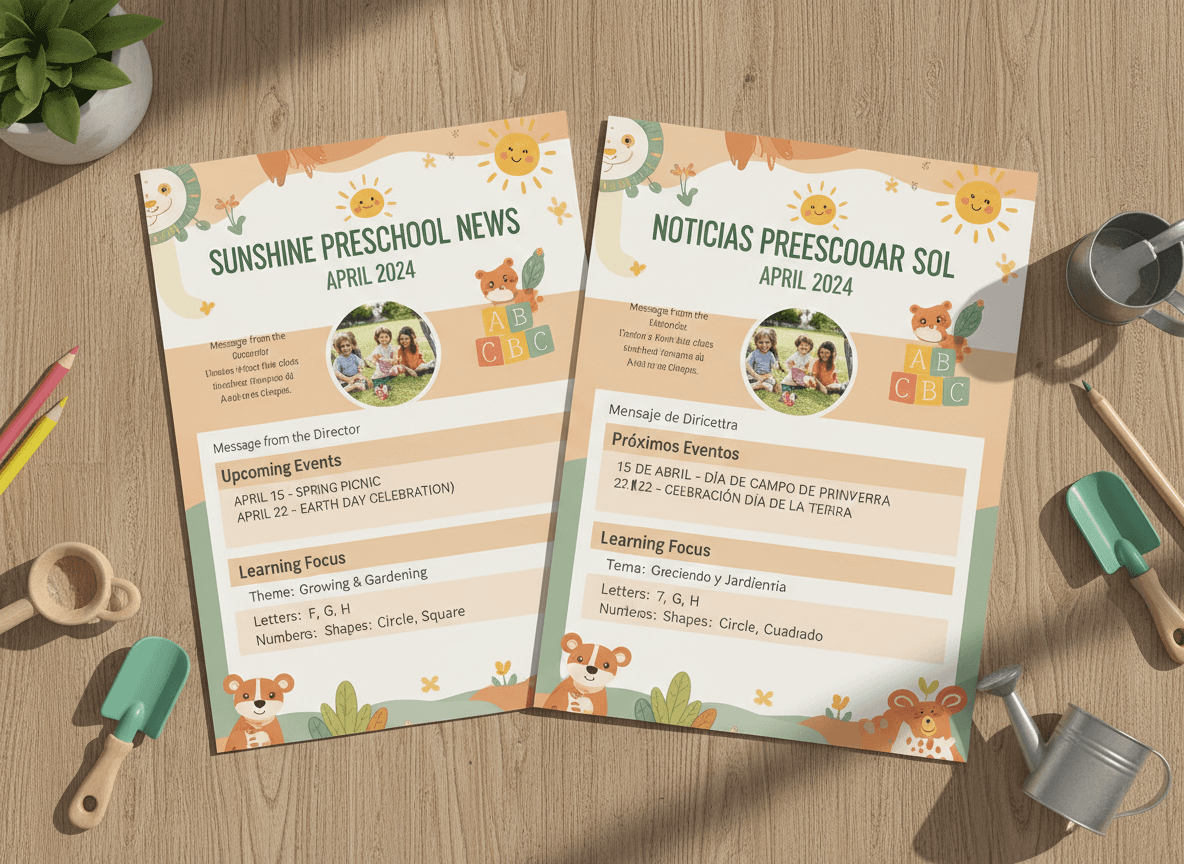
Pre-K assessment is not about grading. It is about understanding where each child is in their development and what they need next. The challenge in communicating that to families is that the tools teachers use are often designed for professional use and require translation before they make sense to a parent reading them on a phone at 9 p.m.
A well-written progress newsletter bridges that gap. It tells families what you looked at, what you found, and what it means for their child right now.
What Pre-K Assessment Actually Measures
Before families can understand a progress update, they need a basic picture of what pre-K programs are assessing. Most systems look at development across several domains:
- Social and emotional: How children manage feelings, build relationships, and handle transitions
- Language and literacy: Vocabulary, listening comprehension, phonological awareness, and early print concepts
- Math and cognitive: Counting, patterns, shapes, problem-solving, and logical thinking
- Fine and gross motor: Hand control, scissor use, balance, and physical coordination
- Approaches to learning: Persistence, curiosity, ability to focus, and flexibility
When you send a progress newsletter, a brief overview of these domains helps families understand why you are assessing multiple areas rather than just academic readiness.
How to Describe Progress Without Alarming Parents
Developmental progress is a range, not a destination. Every newsletter that discusses assessment should communicate this clearly. A child who is not yet counting to twenty at age three is not behind. A child who is not yet counting to twenty at age five is a different situation.
Use language that situates a child within a range: "Most children at this age are working on X. Your child is currently doing Y, which is typical for this point in the year." That framing is more honest and less alarming than presenting a checklist of what a child cannot yet do.
When to Use a Newsletter Versus a Private Conversation
Progress newsletters are appropriate for communicating typical developmental updates to the whole class. They are not the right format for sharing concerns about a specific child.
If a child has a developmental pattern that needs attention, that conversation happens privately, before the formal progress report, not in or through the class newsletter. Families deserve individual conversations about individual concerns, not to receive alarming information for the first time in a document addressed to the whole class.
What to Include in a Progress Newsletter
A progress newsletter sent to all families should cover what your class worked on during the assessment period, what the class as a whole is developing toward, what families should expect to see at home, and what skills you will be building next. It can mention the assessment tool you use by name and briefly explain what it captures without requiring parents to become experts in it.
The tone should be factual and warm without being falsely positive. Avoid phrases that paper over honest information: every child cannot be "doing great across the board." Parents who receive genuinely informative updates trust the communication system more than parents who receive consistent good-news-only reports and then learn at a spring conference that their child had been struggling all year.
Setting Up the Pattern for the Year
The first progress newsletter you send sets expectations for the whole year. If it is honest, specific, and jargon-free, families will read subsequent ones carefully. Daystage makes it easy to send formatted progress newsletters with distinct sections for each developmental domain, so families can find the information that matters most to them without having to read a long narrative document from beginning to end.
Get one newsletter idea every week.
Free. For teachers. No spam.
Frequently asked questions
How often should pre-K teachers communicate about assessment results?
A structured progress update twice per year, typically mid-year and end of year, is the minimum. Many programs also send brief milestone check-ins quarterly. The goal is for families to never receive a progress report or conference summary that contains information they are hearing for the first time.
What assessment tools do pre-K teachers commonly use?
Common tools include Teaching Strategies GOLD, Work Sampling System, and portfolio-based documentation. When communicating with families, name the tool briefly and then explain what it actually measures in plain language. Parents do not need to understand the instrument. They need to understand what you observed.
How do you explain developmental benchmarks to preschool parents without alarming them?
Anchor every benchmark to a range, not a single age point. Instead of saying a child should do X by age four, say that most children accomplish this skill between ages three and five, and describe where their child currently falls. Range-based communication reduces panic and is also more developmentally accurate.
What mistakes do teachers make when communicating pre-K progress?
The most common mistake is using checklist language without context: writing that a child is 'emerging' or 'not yet meeting' without explaining what that means in practice. The second mistake is waiting until the end-of-year conference to share a concern that was visible in October. Families deserve to hear about concerns earlier, through private communication, not through a newsletter.
How can teachers use Daystage to share progress updates with families?
Daystage lets teachers create structured newsletter updates that explain what was assessed and what families can expect next, sent directly to the class mailing list with photos and formatted sections.

Adi Ackerman
Author
Adi Ackerman is a former classroom teacher and curriculum writer with 8 years in K-8 schools. She writes about school communication, parent engagement, and what actually works in real classrooms.
More for Pre-K
Ready to send your first newsletter?
3 newsletters free. No credit card. First one ready in under 5 minutes.
Get started free