
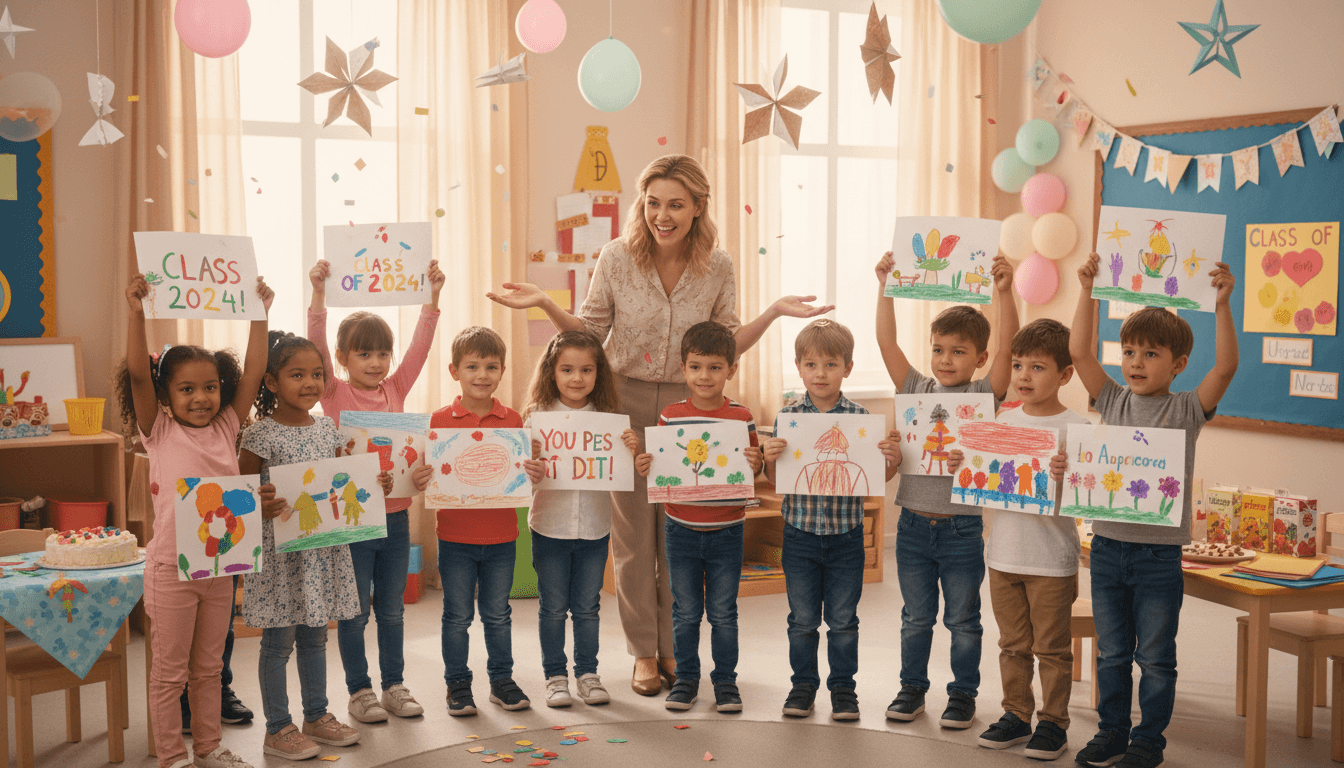
Preschool End of Year Newsletter: Celebrating Growth and Preparing for Transitions
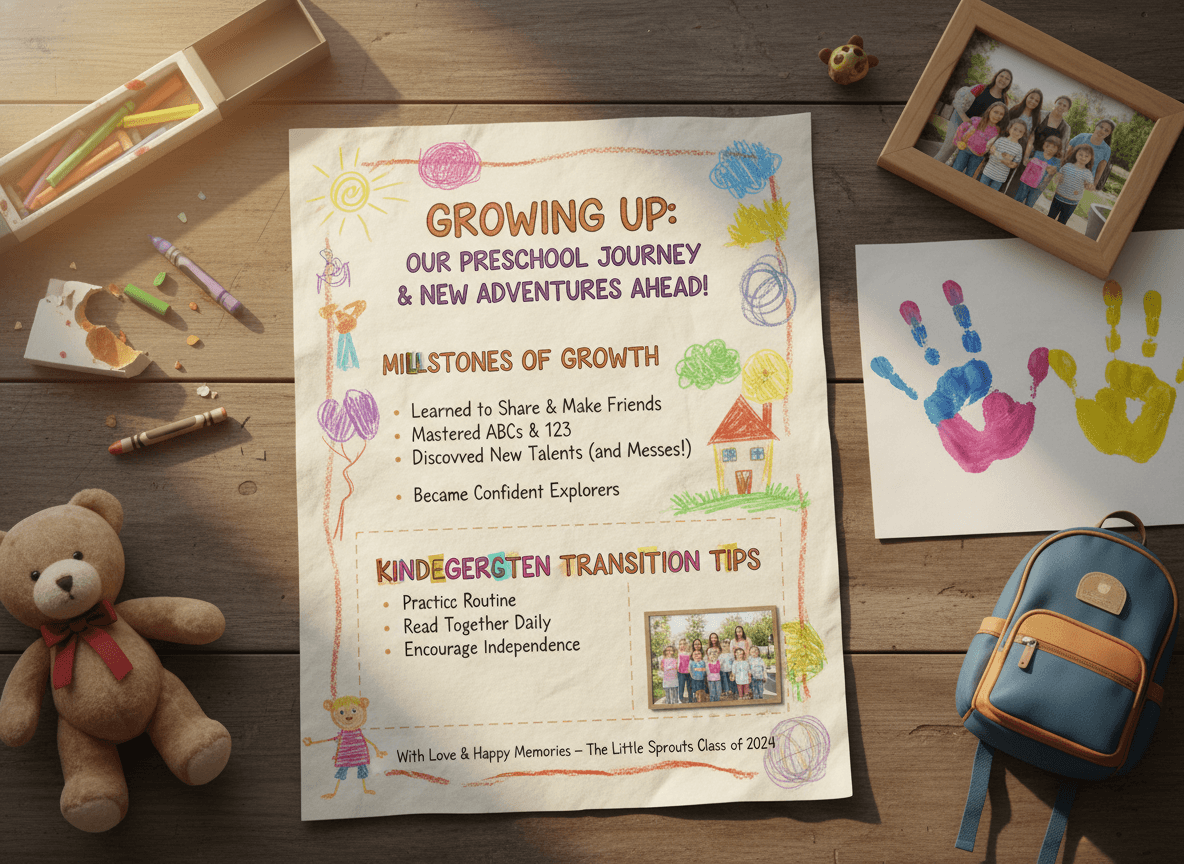
The last newsletter of the preschool year is doing several things at once. It is celebrating what the class accomplished together. It is helping families navigate the transition out of your classroom and into summer, and for many children, into kindergarten. It is closing the loop on a year of communication. And it is the final impression you leave with every family who was in your program.
Most end-of-year preschool newsletters either underdo it (a brief "What a great year!" note with a reminder about the last day) or overdo it (a long sentimental letter that reads more like a personal reflection than a parent communication). This guide covers what actually belongs, how to handle the milestone language carefully, and how to leave families with something practically useful rather than just emotionally warm.
Celebrate the Class, Not Individual Children
The end-of-year newsletter is a group communication, which means the growth and accomplishments you highlight should be collective, not individual. This is both a practical and an ethical consideration.
Practically: you cannot write something individually meaningful about every child in a group newsletter, and trying to do so produces either a very long document or a list of generic sentences that parents will see through immediately. Ethically: praising some children publicly and not others, or mentioning specific milestones that some children have not hit, creates comparisons that parents will notice even when they are not intended.
What works instead is writing about the class as a community. "This group learned how to disagree with words instead of actions, and it took most of the year, but watching it click in the spring was one of the best parts of my job." That sentence celebrates real growth without comparing any child to any other.
Name What Growth Actually Looks Like in Pre-K
One of the most valuable things you can do in the end-of-year newsletter is name the growth that is invisible to parents because it is not academic. Preschool growth is largely social, emotional, and developmental, and families often do not have language for it.
Give them that language. "In September, most children in this class needed a teacher nearby to help them through transitions. By May, the majority can move from one activity to the next independently and help a classmate do the same." That sentence is meaningful and specific, and it helps parents understand what their child actually accomplished this year.
Other growth areas worth naming: the ability to wait, to share materials without adult intervention, to recover from disappointment, to try something new without refusing, to listen while another person is talking. These are the skills that make kindergarten possible, and most preschool parents do not realize they were the curriculum.
Transitioning to Kindergarten: What Families Need to Know
For children moving to kindergarten in the fall, this newsletter is an opportunity to give families useful preparation, not anxiety-inducing comparisons. Avoid framing this as "Is your child ready for kindergarten?" and instead frame it as "Here is how to make the transition easier."
Tell families what kindergarten teachers typically say makes a child well-prepared, and frame it in terms they can act on:
- Children who can manage their own basic needs (using the bathroom, opening their lunch box, putting on their coat) have an easier first month than children who still rely on adults for these things.
- Reading aloud together over the summer, even 10 minutes a day, keeps language and comprehension sharp.
- Visiting the new school before the first day, if the school offers orientation events, significantly reduces first-day anxiety for young children.
- Preserving some structure over the summer (regular wake times, a consistent bedtime) makes the September transition much easier.
Summer Learning Suggestions That Are Actually Doable
Parents often ask at the end of the year what they should do over the summer to help their child stay prepared. The best answer is a short list of activities that are genuinely accessible and do not require special materials or significant time investment.
Things that work: reading together daily, playing sorting and counting games with household objects, letting children help with simple cooking tasks, doing puzzles, visiting the library once a week, spending unstructured time outside. None of these require worksheets or apps or structured curriculum.
What to avoid suggesting: anything that sounds like "summer school," anything that requires significant parent time or purchases, or anything that implies the child needs to "catch up" before kindergarten. The goal is to give families practical ideas, not a second job.
The Emotional Tone of a Goodbye Letter
There is a real emotional weight to the end of a preschool year, for teachers, children, and families. Your newsletter can acknowledge that without turning into a personal reflection that puts your feelings at the center of the communication.
The right balance: one honest, specific sentence about what this group meant to you, followed by the rest of the newsletter focused on the families. "This was a class that made me laugh every single day, which does not always happen, and I will miss them" is specific and genuine. Two paragraphs about how meaningful it has been to watch these children grow puts the teacher's emotional experience ahead of the parent's.
Parents reading a goodbye newsletter are processing their own feelings about the transition. The communication that serves them best acknowledges the milestone without requiring them to hold space for yours.
What to Include in the Final Section
Close the newsletter with logistics and a genuine offer. Last-day procedures (pickup time, whether to come in or wait outside, what to do with remaining belongings in the cubby), whether and how families can stay in touch with you, and a direct line for questions over the summer if your program offers that.
Daystage makes it easy to send this final newsletter as a polished, well-formatted email directly to your full classroom list. You can archive it as a template and reference the structure next year, which saves time when you are in the middle of end-of-year ceremonies, last-day logistics, and the particular exhaustion of June.
The families who were in your classroom all year deserve a clear, warm, and genuinely useful final communication. A newsletter that gives them that is a good way to close out a year of building trust.
Get one newsletter idea every week.
Free. For teachers. No spam.
Frequently asked questions
When should preschool teachers send the end-of-year newsletter?
Send the end-of-year newsletter during the final week of school, not the week before, so it arrives when families are in a reflective frame of mind and the year is still happening. Sending it on the last day or the day before gives families no time to act on anything it contains before the year closes.
What should a preschool end-of-year newsletter include?
Include a reflection on what the class accomplished together, specific examples of growth without comparing individual children, logistics for the transition such as kindergarten orientation dates or summer program information, and a personal closing note from the teacher. The personal note is the part families keep.
How should preschool teachers communicate end-of-year milestones without comparing children?
Write about the class as a whole: what the group learned to do together, how the classroom community grew over the year, what everyone practiced. Avoid framing growth as a checklist children either met or did not. A statement like 'we watched every child grow more confident this year' is truer and more useful than a developmental inventory.
What are common mistakes in preschool end-of-year communication?
Focusing exclusively on the transition to kindergarten in the final newsletter excludes families whose children are not moving on and can make those families feel their child's year was treated as a lesser version of the experience. A second mistake is sending the end-of-year newsletter without any personal warmth, closing the year on an administrative note rather than a human one.
Is there a tool that helps preschool teachers write the final newsletter of the year?
Daystage is built for early childhood teachers and makes it easy to create a warm, structured end-of-year newsletter that closes the school year the way families deserve.

Adi Ackerman
Author
Adi Ackerman is a former classroom teacher and curriculum writer with 8 years in K-8 schools. She writes about school communication, parent engagement, and what actually works in real classrooms.
More for Pre-K
Ready to send your first newsletter?
3 newsletters free. No credit card. First one ready in under 5 minutes.
Get started free