

School Newsletter: Engaging Dads and Father Figures in School Life
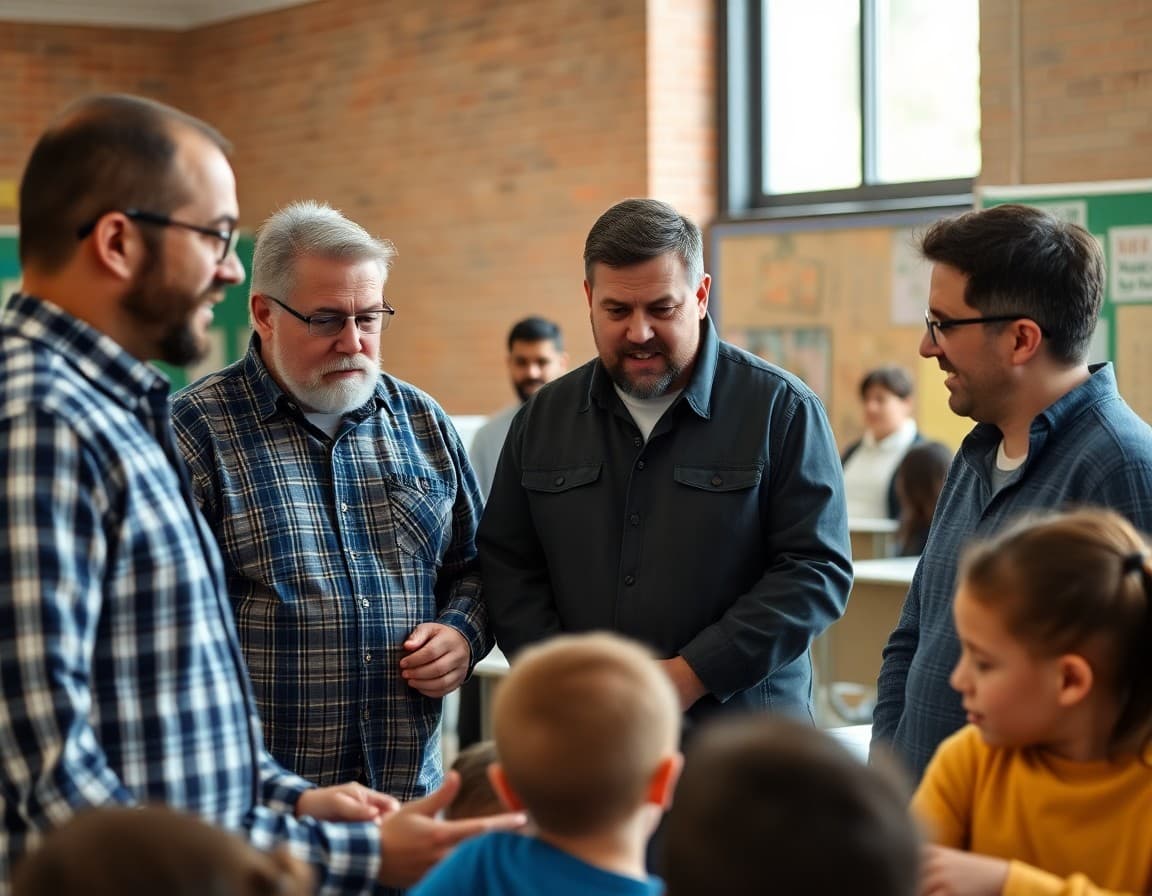
Research consistently shows that father involvement in education produces significant positive outcomes for students. Schools that actively engage fathers see measurable differences in attendance, academic performance, and student behavior. Yet most school newsletters are written in ways that implicitly address mothers, schedule events at hours employed fathers cannot attend, and do not create clear entry points for fathers who want to be involved but are not sure how. This newsletter covers what changes that.
Make sure newsletters reach fathers directly
The most basic engagement problem is distribution. Many schools send newsletters to a single household email address that belongs to the mother. Fathers who want to stay informed are receiving the newsletter secondhand, if at all. A distribution system that collects both parents' email addresses and sends directly to each one, which Daystage supports, is the foundation of any father engagement strategy.
Write content that speaks to what fathers prioritize
Research on parent engagement suggests that fathers and mothers often respond to different types of school communication. Fathers are often more engaged by outcome-focused content: academic performance data, college readiness, career pathways, and concrete ways their involvement affects measurable results. A newsletter that includes this content alongside the relationship and community content that engages mothers speaks to a broader audience.
Feature father involvement explicitly and positively
A newsletter that includes photos and stories of involved fathers communicates that father engagement is normal and valued at this school. Men take social cues from other men. A father who sees images of fathers volunteering, attending events, and coaching teams is more likely to see those activities as available to him than one who sees only images of mothers and female volunteers in school communications.

Create father-specific events and name them clearly
Many schools have dads' clubs, father-child events, and volunteer opportunities designed specifically for male engagement. A newsletter that names these events explicitly, describes what they involve, and communicates the value of participation, rather than burying them in a general events calendar, is more likely to produce attendance. Father-specific events that are well-communicated consistently outperform general family events at engaging fathers.
Address schedule flexibility honestly
A common barrier to father involvement is that school events happen during work hours. A newsletter that acknowledges this barrier and describes flexible engagement options, evening events, weekend volunteer opportunities, ways to contribute from work such as reviewing student work or mentoring remotely, communicates that the school understands the constraint and has thought about how to work around it.
Use inclusive language for all family structures
Father engagement communication should use inclusive language that refers to fathers and father figures, acknowledges that some students are being raised by same-sex couples, grandparents, or other male relatives, and never implies that a family without a father present is incomplete. The goal is to engage the male figures who are present in students' lives, not to make any family feel judged by its structure.
Get one newsletter idea every week.
Free. For teachers. No spam.
Frequently asked questions
Why do school newsletters often fail to engage dads?
Because most school newsletters are not written with fathers specifically in mind. They often use language and examples that implicitly assume a mother as the primary reader, they schedule events during hours when employed fathers cannot attend, they focus on emotional and social content without connecting to outcomes fathers often prioritize, and they do not create entry points for fathers who want to be involved but do not know how.
What specific strategies help school newsletters reach and engage fathers?
Making sure newsletter distribution reaches fathers directly rather than only through mothers, creating father-specific events and mentioning them explicitly, framing school involvement in terms of outcomes such as academic performance and college readiness rather than only in terms of community and warmth, offering flexible engagement options that fit non-traditional work schedules, and featuring stories of involved fathers as positive models.
What does the research say about father involvement in school?
Students with actively involved fathers have higher academic achievement, better social skills, greater resilience, and lower rates of behavioral problems than students whose fathers are not involved in their education. This effect is independent of family structure and socioeconomic status. Schools that actively engage fathers are investing in outcomes that matter measurably.
How should schools handle family diversity when communicating about father involvement?
By using inclusive language that refers to father figures rather than only biological fathers, acknowledging two-mother families and families where a grandfather, uncle, or other male figure plays a father's role, and never implying that a family without a father present is deficient. The goal is to engage the male figures who are present in students' lives, whoever they are.
How does Daystage help schools send newsletters that specifically engage fathers?
Daystage makes it easy to send targeted newsletters to specific family segments, which means a school can send a newsletter specifically to fathers and father figures in the community without relying on them to receive it second-hand through another household member. Direct, targeted communication is the foundation of engagement with any family group that has historically been underreached.

Adi Ackerman
Author
Adi Ackerman is a former classroom teacher and curriculum writer with 8 years in K-8 schools. She writes about school communication, parent engagement, and what actually works in real classrooms.
More for Parent Engagement
Ready to send your first newsletter?
3 newsletters free. No credit card. First one ready in under 5 minutes.
Get started free