

How School Newsletters Build Parent Trust Over Time
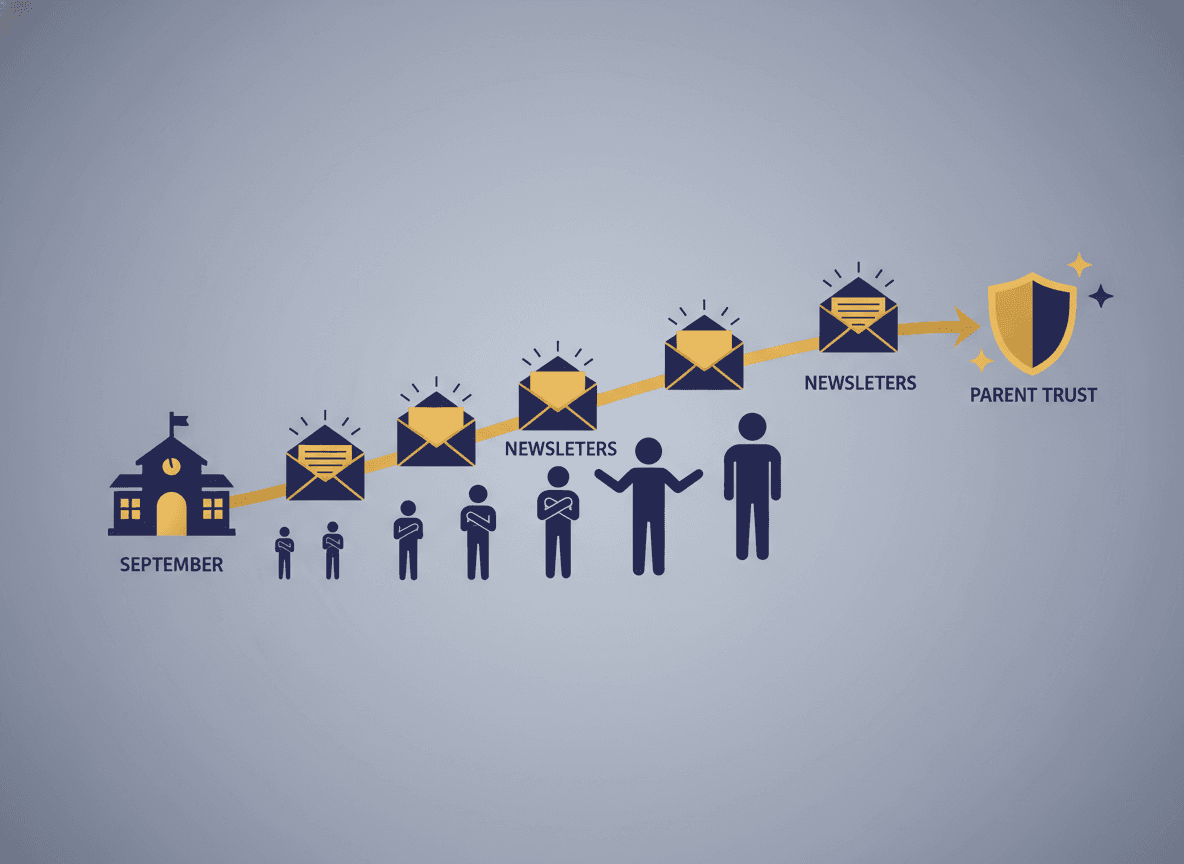
Parents who trust their child's teacher and school are more supportive, more engaged, and less likely to escalate minor concerns into major conflicts. Trust makes everything easier: conferences, difficult conversations, requests for support, and even fundraising.
That trust does not come primarily from one impressive parent night or a well-designed classroom. It comes from consistent, reliable communication over time. And the weekly newsletter is the most scalable tool teachers have for building it.
Consistency builds predictability, and predictability builds trust
Trust at its core is the expectation that someone will do what they say they will do. When you send a newsletter every Sunday evening without exception, you are demonstrating that you are reliable. Week after week, you show up. That accumulates.
Conversely, sporadic communication signals something is off, even when nothing is. A teacher who sends newsletters for six weeks, then disappears for three, then sends three in one week creates anxiety. Parents fill in the silence with their own conclusions, and those conclusions are rarely generous.
The most important thing you can do for parent trust through newsletters is be consistent. Send the same day, every week, all year. Not because any single newsletter matters enormously, but because the pattern does.
Transparency earns goodwill, especially when things go wrong
When something difficult happens in a classroom, many teachers' first instinct is to minimize it in parent communication to avoid concern or conflict. But parents who discover a difficult situation through sources other than the teacher feel blindsided, and blindsided parents are hard to recover.
A newsletter that names a challenging week, even without disclosing student details, signals honesty: "This week had some rough spots. We had a difficult conversation as a class about how we treat each other, and I am proud of how students handled it." That sentence tells parents the teacher is engaged, thoughtful, and not hiding anything. That is trust-building.
You do not need to air every problem in the newsletter. But a pattern of only reporting positive news reads as performative over time. Balance matters.
Specificity signals investment
A newsletter that says "we had a great week in math" communicates nothing about whether the teacher knows the students or cares about their individual progress. A newsletter that says "we tackled multi-step division problems this week, and I was genuinely surprised by how many students made the conceptual leap faster than I expected" signals that the teacher is paying attention.
Parents cannot see what happens in the classroom. Your newsletter is their window. The more specific and genuine that window is, the more they feel confident their child is in good hands.
Two-way communication builds more trust than one-way broadcasts
Newsletters are by nature one-directional. But you can use them to invite dialogue in ways that make parents feel heard rather than simply informed.
Small invitations go a long way: "Reply to this email if you have questions about the field trip." "I would love to hear what your child says about this project at home." "If anything in this newsletter prompts a question, reach out." Parents who feel they can respond do not build up unspoken concerns that surface at conferences.
A teacher who acknowledges a response from a parent in the next newsletter, even briefly, builds an incredible amount of trust: "Several parents asked about the new reading program this week. Here is a bit more context." That shows that communication is not just going one direction.
Reliability across hard moments is what trust really means
Trust is truly tested when things go wrong. A classroom behavior incident. An academic setback. A messy project that did not land. How you communicate through those moments matters more than any number of smooth weeks.
Parents who have received 20 weeks of consistent, honest newsletters before a difficult situation arises extend more benefit of the doubt. They have a track record to draw on. Parents who receive their first direct communication from a teacher when something has gone wrong have no such context.
This is why trust-building through newsletters is a long game. The newsletter you send in September matters in March, not because anyone remembers that specific issue, but because it is one of 25 data points the parent is using to form a judgment about whether they trust you.
The practical takeaway
Building parent trust through newsletters comes down to three things: show up every week, be honest about what is happening, and be specific enough to prove you actually know the students.
Daystage is built to make showing up every week sustainable. Set up your subscriber list, your school branding, and your template once. Then focus on the content, which is the part that actually builds trust.
Get one newsletter idea every week.
Free. For teachers. No spam.
Frequently asked questions
When should teachers start building parent trust through newsletters?
Start from week one of school. Teachers who send consistent newsletters every Sunday from September build a track record parents draw on when something difficult happens in March. The habit formed in the first 8 weeks shapes every communication that follows.
What makes a school newsletter feel trustworthy to parents?
Specificity and honesty together build trust faster than positive tone alone. A newsletter that describes what actually happened in class, including rough moments handled well, signals that the teacher is paying attention and not hiding anything. Generic updates read as performative over time.
How can teachers use newsletters to invite two-way communication?
Add a brief invitation at the end of each newsletter: reply with questions, share what your child said at home, or ask about anything that prompted a question. Parents who feel they can respond do not build up unspoken concerns that surface at conferences.
What should teachers avoid in newsletters that can hurt parent trust?
Avoid sporadic sending, generic content, and only communicating when something is wrong. A teacher who sends newsletters for six weeks then disappears for three creates parent anxiety. Parents who only hear from the teacher when there is a problem start to dread seeing that name in their inbox.
What tool helps teachers send consistent newsletters that build parent trust?
Daystage is built for this exact rhythm. It gives teachers a consistent template and send schedule so newsletters go out the same day every week, which is the foundation of trust-building through communication.

Adi Ackerman
Author
Adi Ackerman is a former classroom teacher and curriculum writer with 8 years in K-8 schools. She writes about school communication, parent engagement, and what actually works in real classrooms.
More for Parent Engagement
Ready to send your first newsletter?
3 newsletters free. No credit card. First one ready in under 5 minutes.
Get started free