

How to Communicate School Closures and Emergencies to Families
School closures and emergency situations are the highest-stakes moments in school communication. Families need accurate information fast. Rumors travel faster than official communications, and the gap between an event happening and official information reaching families is the window where anxiety and misinformation grow.
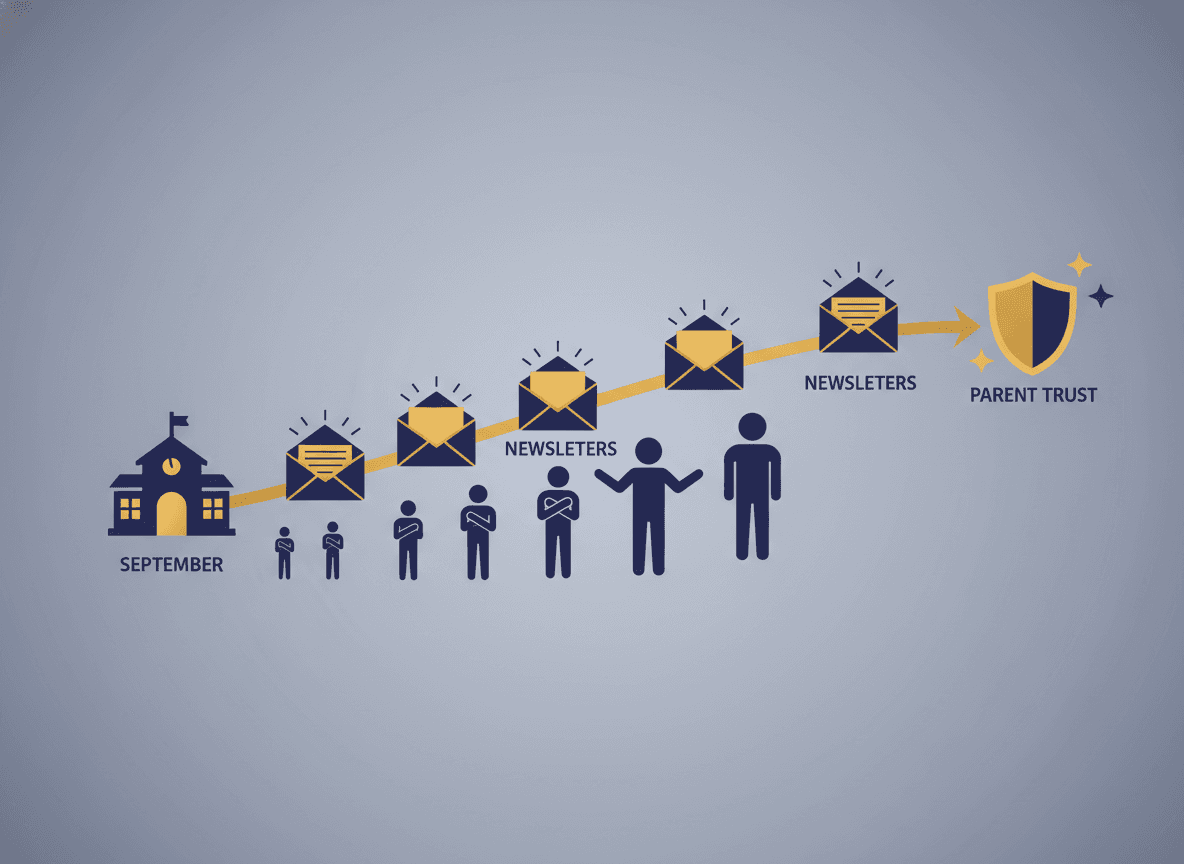
Schools that communicate well in these moments are not just managing logistics. They are demonstrating the kind of organizational competence and care for families that builds long-term trust in the school community.
Know the protocol before you need it
The worst time to figure out how your school communicates with families in an emergency is during the emergency. Every teacher should know at the start of the year: who sends emergency communications, through what channels, and what classroom teachers are and are not supposed to do when a closure or emergency is declared.
Most schools have district-level emergency communication systems, automated text and phone call services, and specific chains of authority for who sends what to whom. A teacher who sends an independent message to families during an active emergency, even with good intentions, can create conflicting information that increases rather than reduces anxiety.
Speed beats completeness in the first message
For planned closures like weather days, the protocol is relatively clear and families receive adequate notice. For unexpected emergencies, the first message needs to go out fast, which means it will not be complete. This is acceptable and expected. What is not acceptable is waiting for complete information before sending anything.
A first message sent within 15 to 20 minutes of an emergency declaration that says "We are responding to a situation at the school. All students are accounted for and safe. We will send an update by [specific time]" does three things: it establishes the school as the authoritative source, it provides the most critical information parents need, and it commits to a specific follow-up time that reduces the anxiety of uncertainty.
Structure the message for rapid comprehension
Parents receiving an emergency communication are not reading carefully. They are scanning for the specific information they need: Is my child safe? Do I need to pick them up? What do I do right now? Every word that is not answering one of those questions is making the message harder to read.
Lead with status. Then action. Then timeline. Then contact information. Avoid preamble and context. "All students are safe. Please do not come to the school. We will provide a full update by 2 pm at [contact number]" is a complete first message. Everything else can wait for the follow-up.
Use every available channel simultaneously
Emergency and closure notifications should not rely on a single channel. Families who do not check email, who have a work phone that is off during the day, or who are in a meeting when a phone call comes in may miss a single-channel notification. The most effective emergency communication systems use text, automated phone call, and email simultaneously to maximize the probability of reach.
Schools should also have a protocol for reaching families who are not accessible through any digital channel, whether through a school office phone call, a neighbor contact from the emergency card, or a note with a sibling. These manual backup channels matter most for exactly the families who are already hardest to reach.
Follow up after the situation is resolved
The communication work is not done when the closure is lifted or the emergency is resolved. Families need a clear all-clear message, a brief explanation of what happened and how it was handled, and information about what comes next, whether school resumes tomorrow or there are protocol changes following the event.
Schools that communicate transparently after an emergency, including what they learned and what they will do differently, consistently receive more positive feedback from families than schools that simply declare the situation resolved and go silent. Transparency after a difficult event is one of the most powerful trust-building moves a school can make.
Get one newsletter idea every week.
Free. For teachers. No spam.
Frequently asked questions
Who is responsible for communicating school closures to families?
In most districts, school closures are communicated at the district or school administration level, not by individual classroom teachers. Classroom teachers should know the school's communication protocol and follow it rather than sending independent messages that might conflict with official communications.
What information must a school closure message include?
The closure message needs to state what is closed, when the closure begins and ends, what families should do now (especially for families mid-drop-off), whether the closure is a full day or partial, and when families will receive the next update. Every sentence that is not one of those answers is a distraction.
What channel should schools use for emergency notifications?
Emergency notifications should go through the fastest and most reliable channel the school has for every family, which in most schools is a combination of automated text, phone call, and email simultaneously. Single-channel emergency notification risks missing families who are not reachable on that channel.
How should a school communicate when the emergency situation is still developing?
Send a first message as soon as you have confirmed the situation, even if you do not have complete information. State what is known, what is not yet known, and when families will receive the next update. A specific next-update time, even if it is just one hour away, is significantly calming compared to 'we will update you as soon as possible.'
How does having a school newsletter already set up help during closures and emergencies?
Schools and teachers who use Daystage already have a working, tested communication channel with an up-to-date subscriber list. When an emergency or closure happens, they can reach families immediately through a channel families already recognize and trust, rather than scrambling to set up a new communication tool under pressure.

Adi Ackerman
Author
Adi Ackerman is a former classroom teacher and curriculum writer with 8 years in K-8 schools. She writes about school communication, parent engagement, and what actually works in real classrooms.
More for Parent Engagement
School Newsletter vs. School App: Which Is Better for Parent Communication?
Parent Engagement · 7 min read
How to Track Parent Newsletter Engagement and Use the Data to Improve
Parent Engagement · 6 min read
Managing School Newsletter Unsubscribes: What to Do and What Not to Assume
Parent Engagement · 5 min read
Ready to send your first newsletter?
3 newsletters free. No credit card. First one ready in under 5 minutes.
Get started free