

Weekly, Monthly, or Quarterly: Which Newsletter Frequency Is Right for Your School?
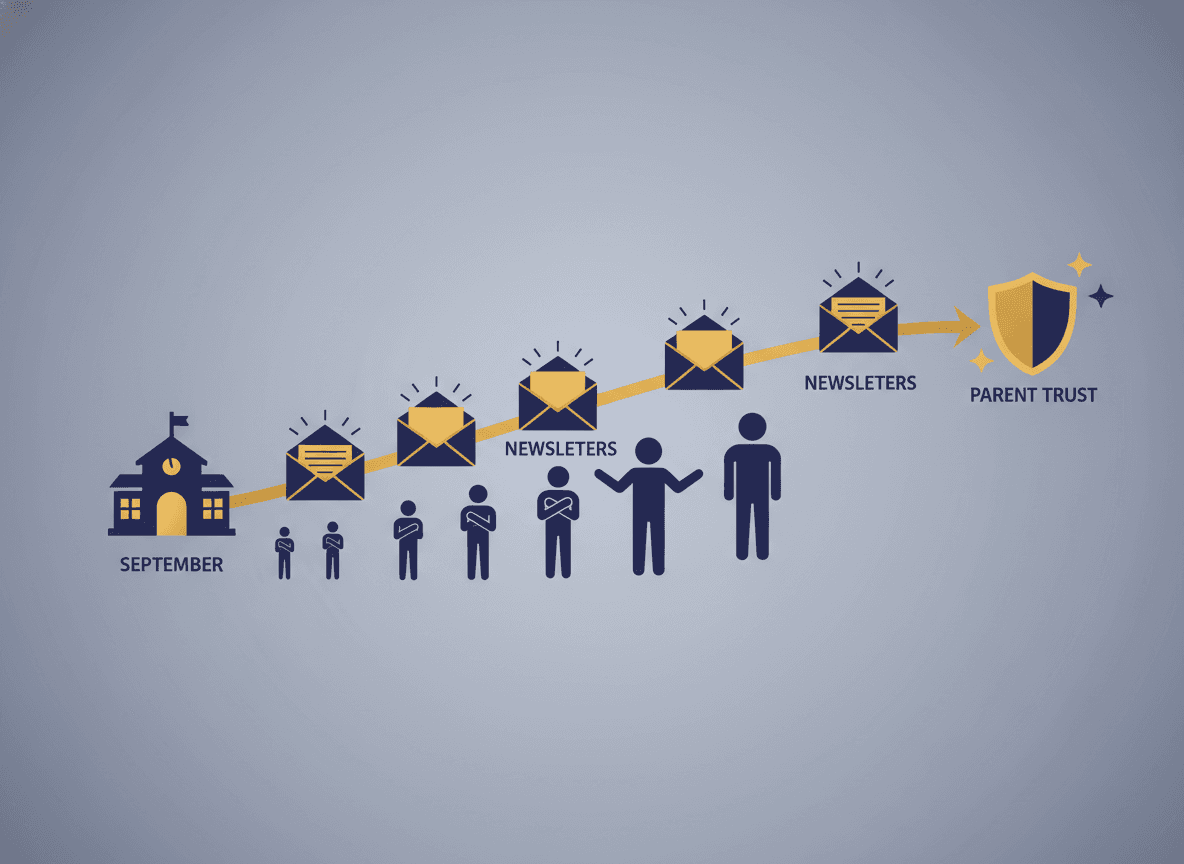
The question of how often to send a school newsletter does not have a single correct answer. It depends on the type of newsletter, the communication habits of the families in your school community, and the realistic capacity of the teacher or staff member producing it. Choosing the wrong frequency is a problem in both directions: too often creates fatigue and low-quality content, too rarely leaves families without timely information.
The case for weekly newsletters
Weekly newsletters are the gold standard for classroom-level communication because they create a predictable rhythm that families can rely on. A newsletter that arrives every Sunday evening becomes a habit. Families begin to expect it. They look for it. When it does not arrive, they notice.
Weekly newsletters are also the most effective format for timely communication. Upcoming deadlines, field trip reminders, form due dates, and schedule changes all need to reach families within a relevant time window. A newsletter that runs on a weekly cycle can carry that information without requiring separate one-off communications for every item.
The primary challenge with weekly newsletters is sustainability for the teacher producing them. A weekly newsletter that is well-written and focused requires roughly one to two hours of time each week. Teachers who find this unsustainable either reduce quality over time, skip weeks and destroy the rhythm, or find that a content bank and template system reduces the time cost significantly.
The case for monthly newsletters
Monthly newsletters allow for more thoughtful, substantial content. A teacher who publishes a monthly newsletter can take time to reflect on the past month's learning, share curriculum context at depth, and write with more care than a weekly send schedule allows.
The significant downside is timeliness. A monthly newsletter that goes out on the first of the month cannot reliably notify families about an event on the fifth. Monthly newsletters work best when paired with a faster channel for time-sensitive communication, whether that is text, a school app, or direct email for urgent items. Without that backup, families on a monthly newsletter schedule regularly receive important information too late to act on it.
The case for quarterly newsletters
Quarterly newsletters are appropriate for formal school-level communications: curriculum overviews, strategic plan updates, community progress reports, and end-of-term summaries. They are not practical as the primary channel for classroom communication because three months between updates leaves families out of the loop on virtually everything that matters day-to-day.
Schools that send quarterly newsletters typically do so in addition to more frequent classroom-level and school-level communications, not instead of them.
Choosing the right frequency for your context
The practical test is this: what is the minimum send frequency that keeps families fully informed about everything they need to know in time to act on it? For most classroom teachers, weekly is that minimum. For a school-wide newsletter covering events and policy, monthly is often sufficient if the classroom newsletters are handling week-to-week communication.
Teachers who are uncertain which frequency is right for their situation can start with weekly and reduce if they find that families are not engaging with the frequency, or they can start monthly and add frequency if they discover that families are regularly missing important information. Engagement data tells you more quickly than guessing which direction to adjust.
Get one newsletter idea every week.
Free. For teachers. No spam.
Frequently asked questions
What is the most common newsletter frequency for classroom teachers?
Weekly is the most common rhythm for classroom teachers who want to maintain consistent parent engagement. Monthly is more common for school-wide newsletters from administration. Quarterly newsletters are used primarily for formal school updates like curriculum overviews and strategic plan summaries.
Does a more frequent newsletter always produce better parent engagement?
No. Frequency above the threshold that families can absorb produces diminishing returns and eventually fatigue. A weekly newsletter that is focused and well-written produces more engagement over a year than a daily newsletter padded with low-value content. The right question is not how often, but how much value per send.
What are the main arguments for a monthly rather than weekly classroom newsletter?
A monthly newsletter allows for more considered, substantial content rather than quick weekly summaries. Teachers who find weekly newsletters unsustainable often produce better work monthly. However, monthly newsletters struggle to provide timely communication about upcoming deadlines and events, which requires a supplementary channel.
Can a school use both weekly and monthly newsletters at the same time?
Yes, if the purposes of each are clearly different. A weekly classroom newsletter handles current events, reminders, and classroom updates. A monthly school newsletter covers larger themes, events, and community news. Families who receive both should be able to see immediately why each one exists and why it is different from the other.
How does Daystage support different newsletter frequency strategies?
Daystage is built around the weekly newsletter rhythm, which is the most effective frequency for classroom-level parent engagement. Teachers can also use Daystage for special-occasion newsletters, holiday communications, or event-specific sends without disrupting their regular schedule.

Adi Ackerman
Author
Adi Ackerman is a former classroom teacher and curriculum writer with 8 years in K-8 schools. She writes about school communication, parent engagement, and what actually works in real classrooms.
More for Parent Engagement
How to Communicate School Budget Cuts to Families Honestly and Clearly
Parent Engagement · 6 min read
Newsletter Strategies for Reaching Single-Parent Households
Parent Engagement · 5 min read
Coordinating School Newsletter and After-School Program Communication for Families
Parent Engagement · 5 min read
Ready to send your first newsletter?
3 newsletters free. No credit card. First one ready in under 5 minutes.
Get started free