

Newsletter Strategies for Reaching Single-Parent Households
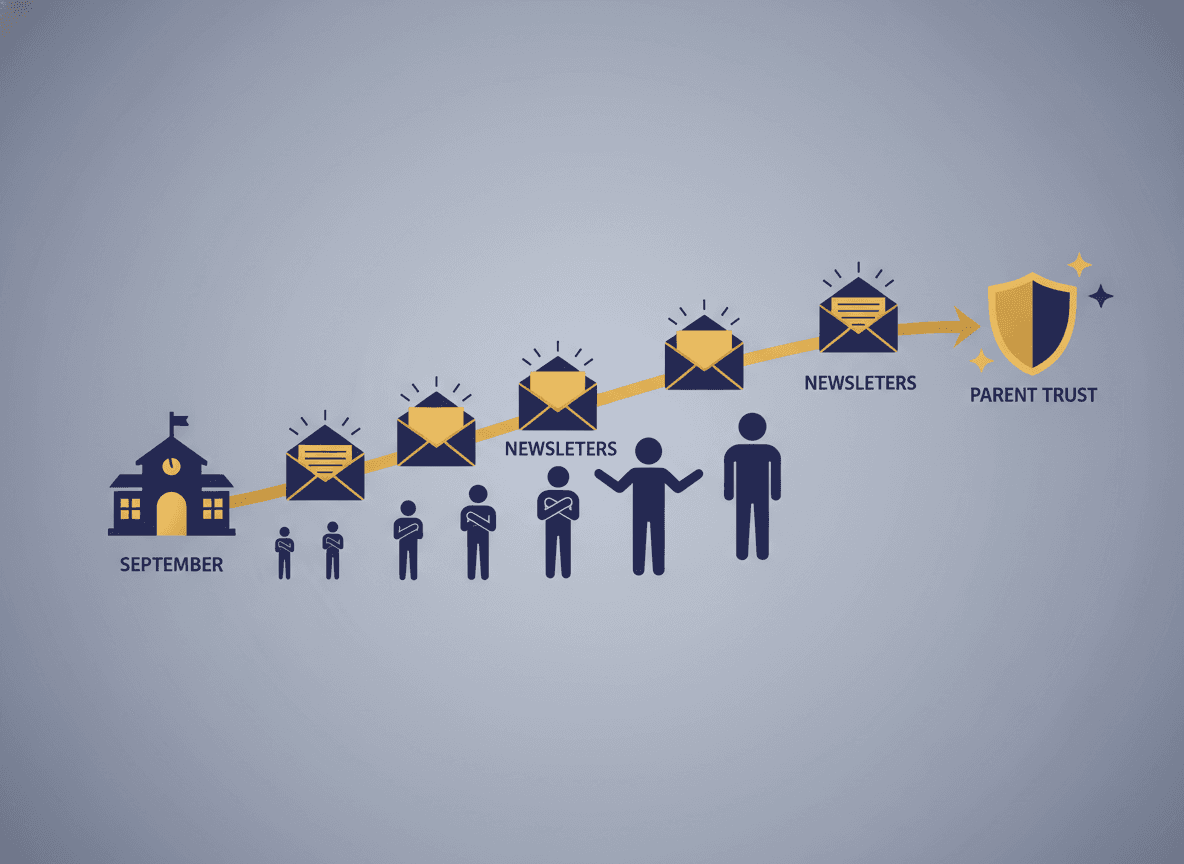
Single parents are not, as a group, less interested in their children's education. They are more time-limited, more decision-fatigued, and more likely to be navigating work, childcare, and household management without another adult to share the cognitive load. A school newsletter that assumes a parent has 15 minutes of focused reading time on a Sunday morning is written for a household that many single parents simply do not have.
Serving single parents well is not about lowering standards for communication. It is about designing for the actual conditions of their lives.
Put action items first
For a single parent opening a school newsletter during a narrow window of available time, the most valuable piece of real estate in the email is the first screen. If the first screen contains the classroom narrative update, the single parent who needs to confirm the field trip permission slip by Friday will either scan the whole email looking for it, or close the email and mean to come back to it later.
Moving a clearly labeled "Action Items This Week" section to the top of every newsletter means that any parent, regardless of time available, can locate what requires attention in under 30 seconds. The rest of the newsletter, the classroom narrative, the student observations, the curriculum context, becomes optional reading that parents with more time will engage with and time-pressed parents can return to when they have the bandwidth.
Write to be scanned, not read linearly
A newsletter that requires linear reading from top to bottom to fully understand puts a higher burden on the reader than one designed for scanning. Short paragraphs, clear headers, and bullet points for any list of information reduce the cognitive effort required to extract value from the newsletter.
The irony is that a newsletter designed for scanning often produces higher engagement overall, not lower. When families can quickly find what they need, they return to the newsletter more readily. A newsletter that feels like homework gets avoided.
Avoid language that assumes two-parent capacity
School newsletters regularly make requests that assume two adults are available: "Sign up for a conference slot that works for both parents," "Have your child practice their presentation with someone at home tonight," "We need two parents per group for the field trip chaperone." These requests are not always intentional, but they consistently signal to single parents that the teacher has not thought about them specifically.
Small language adjustments remove this friction: "Sign up for a conference time that works for your schedule," "Have your child practice their presentation tonight with whoever is available," "We need parent or guardian volunteers for the field trip." These changes take seconds and remove a consistent minor irritant.
Send on timing that works for their schedule
Sunday evening sends work well for two-parent households where one partner is handling bedtime and the other has a few minutes. For single parents handling bedtime solo, Sunday evening may actually be the most hectic moment of the week. Consider testing Monday morning or Thursday evening sends, which often reach single parents at more genuinely available moments.
Asking at the start of the year when families prefer to receive newsletters is a quick way to gather this information. The answer is not always what you expect.
Keep the newsletter short enough to complete in one session
A newsletter that takes eight minutes to read fully is not a newsletter that a parent with four minutes available can process in one sitting. For single parents, the newsletter that gets put down and not returned to is effectively not read. A newsletter that takes three focused minutes to read completely is one that most families will actually finish, regardless of their household structure.
Get one newsletter idea every week.
Free. For teachers. No spam.
Frequently asked questions
Why are single parents less likely to engage with school newsletters than two-parent households?
Time and bandwidth, not interest. Single parents are managing every logistical and emotional task of parenting without a partner to share the load. School newsletters that require extended reading time, or that bury action items in narrative content, create friction that single parents are less likely to push through.
What newsletter format changes most help single parents?
Moving action items to the top of the newsletter is the highest-impact structural change. A busy parent who knows the critical deadlines and required responses are in the first section can get what they need in under two minutes. Everything else in the newsletter becomes optional reading rather than a prerequisite for action.
Should teachers send shorter newsletters specifically for single parents?
Not a separate newsletter, but a format that works well for single parents tends to work well for all busy families. Front-loaded action items, concise sections, and scannable structure serve every time-pressed reader, which in modern school communities is most families.
What time of day or week are single parents most likely to read a school newsletter?
Evening after the children are settled, typically between 8 pm and 10 pm on weeknights, or Saturday morning are windows where single parents report having the most personal bandwidth. Sunday evening send remains strong because single parents are preparing for the week ahead on Sunday nights.
How can Daystage help teachers reach single-parent households more effectively?
Daystage helps teachers build newsletters with a clear, consistent structure and send them at the optimal time for their parent community. The focused template encourages the front-loaded, scannable format that serves single parents particularly well.

Adi Ackerman
Author
Adi Ackerman is a former classroom teacher and curriculum writer with 8 years in K-8 schools. She writes about school communication, parent engagement, and what actually works in real classrooms.
More for Parent Engagement
School Newsletter Analytics: Which Metrics Actually Tell You If Parents Are Engaged
Parent Engagement · 6 min read
How to Get Useful Feedback From Parents on Your School Newsletter
Parent Engagement · 6 min read
How to Share Student Success Stories in Newsletters While Protecting Privacy
Parent Engagement · 5 min read
Ready to send your first newsletter?
3 newsletters free. No credit card. First one ready in under 5 minutes.
Get started free