

Parent Advisory Committee Newsletter: How to Communicate PAC Work to the Whole School Community
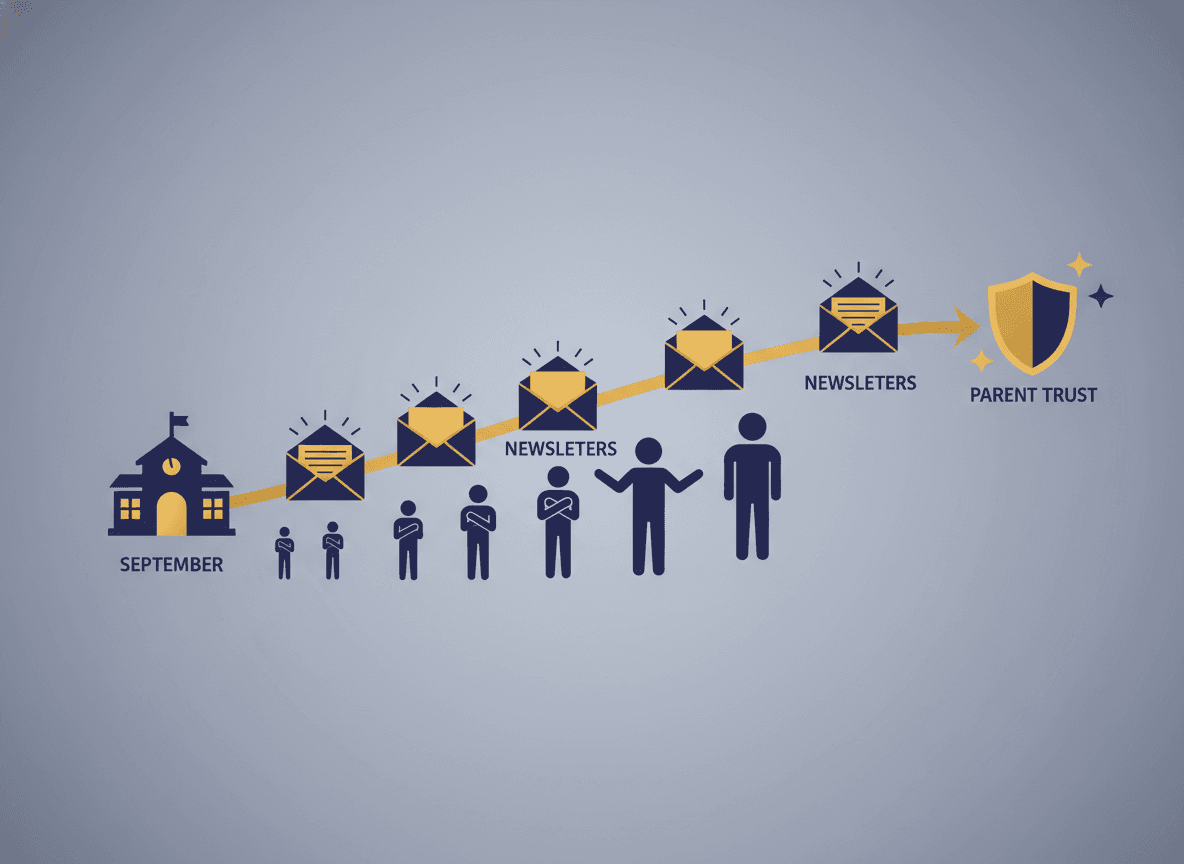
Parent advisory committees are one of the least visible structures in most schools, despite representing a formal family voice in school governance. Families who do not know the committee exists cannot participate, cannot submit input, and cannot benefit from its advocacy. The newsletter is the most direct way to change that.
Explain What the PAC Is Before Reporting on What It Does
A newsletter section that opens with "At the November PAC meeting, the committee reviewed the draft of the school improvement plan..." assumes families know what the PAC is. Most do not.
Open the PAC section in September with a brief explanation: "The parent advisory committee is a group of parents and school staff who meet monthly to provide input on school decisions. Any parent or guardian can attend or join the committee. Here is what we discussed at our first meeting of the year."
That one-time orientation, printed in early September, converts a mystery structure into something families understand.
Report in Impact Language, Not Process Language
PAC meeting summaries that describe the process, "We reviewed the budget, we discussed the new schedule, we approved the minutes from last meeting," do not motivate families to engage. Impact language does.
"Based on family feedback, we recommended extending the library's open hours to include one evening per week. The principal has agreed to pilot this in January." That sentence tells families that the committee is doing something that matters to them and that their feedback reaches decisions.
Actively Recruit Through the Newsletter
Many PACs struggle with diversity of membership: they often include the families who already feel comfortable in school spaces, which tends to exclude newer families, language minority families, and working parents. A newsletter recruitment call that explicitly welcomes all families, including those who cannot attend every meeting, reaches a broader audience than a flyer at the school office.
"We are looking for parents and guardians who want to help shape decisions at our school. No prior experience required. Meetings are the first Tuesday of each month at 6 PM. Childcare and translation support are available. Can't make every meeting? That's fine. We value any participation you can offer."
Share What the PAC Is Working On Before Decisions Are Made
Advisory committees advise. Their value depends on the quality of input they receive from the broader family community. A newsletter that announces upcoming topics before the meeting, and invites families to submit their perspectives in advance, makes the advisory function real rather than ceremonial.
"At next month's PAC meeting, we will be discussing the proposed change to the school calendar. If you have thoughts about this change, please email us at [address] or fill out the quick form at [link] before November 3."
Get one newsletter idea every week.
Free. For teachers. No spam.
Frequently asked questions
What is a parent advisory committee in a school?
A parent advisory committee (PAC), also called a parent advisory board or school site council in different contexts, is a formal group of parents and guardians who advise school leadership on decisions affecting the school community. These committees may have roles in reviewing budgets, providing input on curriculum changes, advising on school improvement plans, and representing the family perspective in school governance. Their authority varies by district and school type.
Why should a PAC use the school newsletter for communication?
Most school families do not know their school has a parent advisory committee. Of those who know it exists, most have never attended a meeting and have no idea what the committee does. A newsletter presence builds awareness, recruits members, demonstrates transparency, and connects the committee's work to the families whose interests it represents. A PAC that only communicates within its own membership is not serving its community function.
What should a PAC newsletter section include?
A brief summary of what was discussed or decided at the most recent meeting, the date and location of the next meeting, how families can submit input or questions before the meeting, any active consultations or decisions that need community input, and how to join or get more information. Keep it to five to eight sentences. The goal is awareness and accessibility, not a full meeting transcript.
How do you write about PAC work without it sounding like institutional self-promotion?
Connect the PAC's work to its impact on students and families. Not 'The PAC reviewed the school improvement plan' but 'The PAC reviewed the plan for the new science lab and recommended adding more hands-on equipment based on what families told us they wanted.' The first sentence describes a meeting activity. The second sentence shows why the committee's work matters.
How does Daystage support PAC communication through school newsletters?
Daystage allows the school to include a recurring PAC section in the regular school newsletter, ensuring that committee updates reach all families consistently rather than only being accessible through separate PAC emails that families may not be subscribed to.

Adi Ackerman
Author
Adi Ackerman is a former classroom teacher and curriculum writer with 8 years in K-8 schools. She writes about school communication, parent engagement, and what actually works in real classrooms.
More for Parent Engagement
Ready to send your first newsletter?
3 newsletters free. No credit card. First one ready in under 5 minutes.
Get started free