
How Often Should Teachers Send School Newsletters? A Frequency Guide
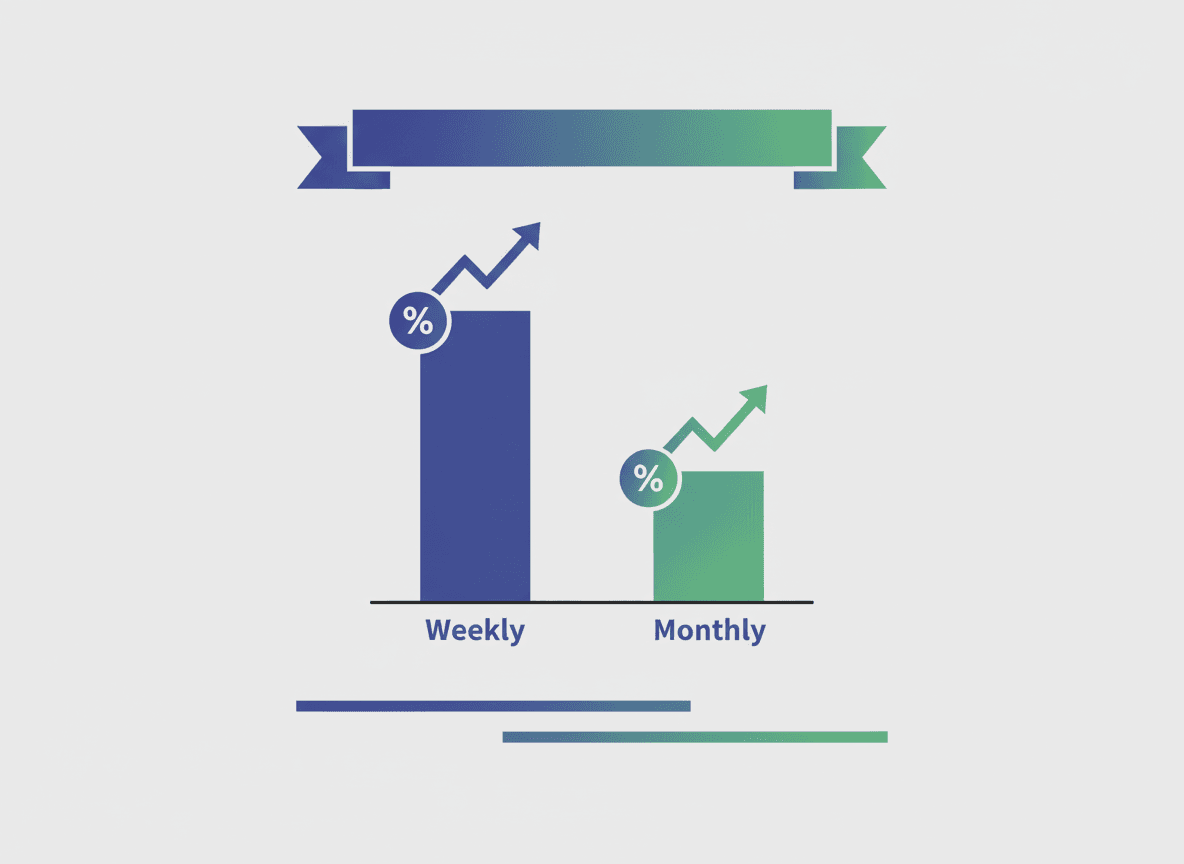
How often you send your school newsletter matters as much as what you put in it. Send too rarely, and parents feel disconnected from what is happening in the classroom. Send too often, and you erode the attention and goodwill you need them to show up for the important messages.
Here is a practical framework for choosing newsletter frequency, with guidance for different roles and contexts.
Weekly newsletters: the standard for classroom teachers
Weekly newsletters are the default recommendation for classroom teachers, and for good reason. A school week has enough to report on: what you covered, what is coming up, upcoming deadlines, and anything parents need to do or know. Weekly newsletters also build a reliable habit for parents. They know to look for your update on a specific day.
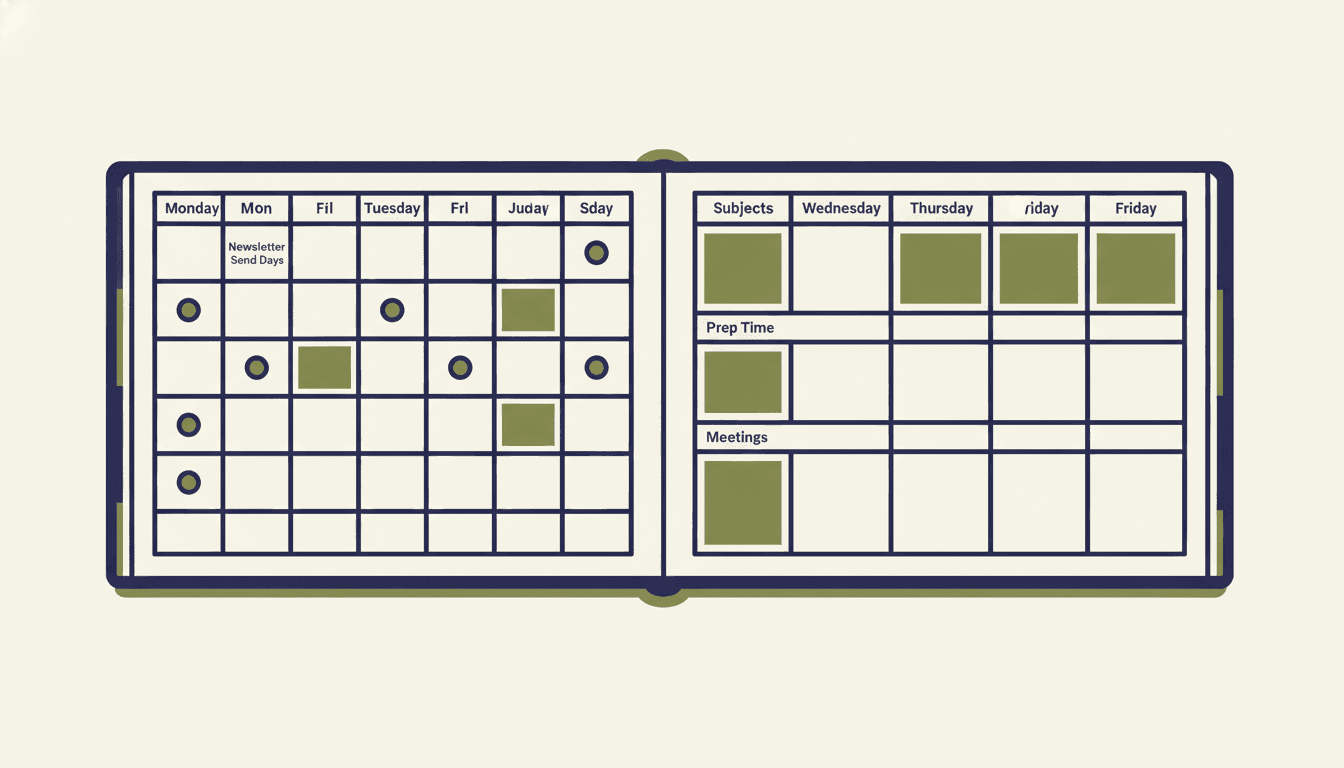
The most successful weekly newsletters follow a consistent schedule. Sunday evening and Thursday afternoon are two of the most effective send times. Sunday gives parents a heads-up before the week starts. Thursday gives parents a chance to act on anything due Friday.
Weekly newsletters should run short: 300 to 500 words is usually enough. When teachers know they are sending weekly, they stop trying to pack everything into one issue.
Biweekly newsletters: a reasonable middle ground
Biweekly (every two weeks) works for teachers who find weekly cadence unsustainable, or for subjects with less weekly variation. The tradeoff is that each newsletter needs to cover more ground, which can push length up.
If you go biweekly, compensate by using a different channel (a class app, a quick text update, or a brief email) for time-sensitive items that cannot wait two weeks. Do not let a permission slip due date get buried in a two-week cycle.
Monthly newsletters: where they work and where they do not
Monthly newsletters work for principals or district offices communicating about broader school events, policy updates, and longer-range planning. They work less well for classroom teachers, because a month in a classroom generates more than one newsletter can reasonably hold.
The biggest risk with monthly newsletters: they become information dumps. Teachers feel pressure to include everything from the last four weeks, the newsletter balloons to 1,000 words, parents skim the first section and stop, and the important items at the bottom never get read.
If monthly is the frequency you can sustain, prioritize ruthlessly. Choose the five most important things parents need to know and leave everything else for a class app or quick text reminder.
Event-driven newsletters: a supplement, not a replacement
Some schools send newsletters only when there is something to report: before conferences, before a field trip, before a major school event. This approach fails because parents never develop the habit of looking for your communication. Each newsletter feels like an intrusion rather than a continuation of an ongoing conversation.
Event-driven newsletters work well as supplements to a regular schedule. Send your weekly newsletter, and also send a dedicated newsletter two weeks before conference week. Do not use events as your only trigger to communicate.
The right frequency for different roles
Different school roles have different natural rhythms:
- Classroom teachers: Weekly is the standard. Biweekly if weekly is not sustainable.
- Specialist teachers (art, PE, music, library): Biweekly or monthly often makes more sense. Your schedule may repeat monthly, and weekly updates would run thin.
- Principals: Monthly school-wide newsletters plus event-specific communications. Let classroom teachers own the weekly layer.
- District communications: Monthly or quarterly. District-level news moves more slowly than classroom news.
The consistency rule overrides the frequency rule
A teacher who sends biweekly newsletters on a predictable schedule outperforms one who sends weekly newsletters sporadically. Consistency is more important than frequency. Parents build expectations around what you do reliably, not what you do occasionally.
Before choosing a frequency, ask: what can I sustain for 36 weeks? Not what can I do in September when energy is high, but what can I do in February during report card season. Start with what you can sustain and build from there.
How Daystage makes weekly newsletters sustainable
One of the most common reasons teachers drop from weekly to monthly newsletters is that newsletters take too long to write and format. Daystage's block-based editor and AI draft feature are built specifically to cut that time. Start from a draft, fill in your classroom updates, and send. Many teachers report getting to weekly newsletters they are proud of in under 20 minutes.
The infrastructure should not be the reason you communicate less. Pick the frequency that works for your parents and your schedule, then find tools that make it sustainable.
Get one newsletter idea every week.
Free. For teachers. No spam.
Frequently asked questions
When is weekly newsletter frequency the right choice for teachers?
Weekly is the standard for classroom teachers because a school week generates enough to report on. Weekly newsletters also build a predictable habit for parents. They know to look for your update on a specific day, which is half the battle for getting it opened and read.
What newsletter frequency works for school principals versus classroom teachers?
Classroom teachers work best on a weekly cadence. Principals should send monthly school-wide newsletters and let classroom teachers own the weekly layer. Specialist teachers in art, PE, or music often work well on a biweekly or monthly schedule since their content repeats on a different cycle.
How should teachers handle time-sensitive updates when sending biweekly newsletters?
Use a second channel for anything that cannot wait two weeks. A quick class app message, text alert, or brief email for time-sensitive items prevents permission slip deadlines from getting buried in a two-week cycle. Biweekly newsletters work when urgent items have a separate fast path.
What frequency mistakes most reduce school newsletter effectiveness?
Sending only when there is something to report is the most damaging pattern. Parents never develop the habit of looking for your communication, and each newsletter feels like an intrusion rather than part of an ongoing conversation. Event-driven newsletters as the only communication model consistently produces low engagement.
What tool helps teachers maintain a consistent school newsletter send schedule?
Daystage handles the scheduling layer so newsletters go out at the same time every week without the teacher having to remember. The consistency rule is the most important frequency principle, and automating the send schedule removes the biggest obstacle to keeping it.

Adi Ackerman
Author
Adi Ackerman is a former classroom teacher and curriculum writer with 8 years in K-8 schools. She writes about school communication, parent engagement, and what actually works in real classrooms.
More for Parent Engagement
Charter School Parent Communication: Newsletter Strategies for Mission-Driven Schools
Parent Engagement · 6 min read
School Newsletter Archive Strategy: Why It Matters and How to Build One
Parent Engagement · 5 min read
Video in School Newsletters: How to Use It Without Creating More Work
Parent Engagement · 5 min read
Ready to send your first newsletter?
3 newsletters free. No credit card. First one ready in under 5 minutes.
Get started free