

How to Follow FERPA Guidelines When Writing School Newsletters
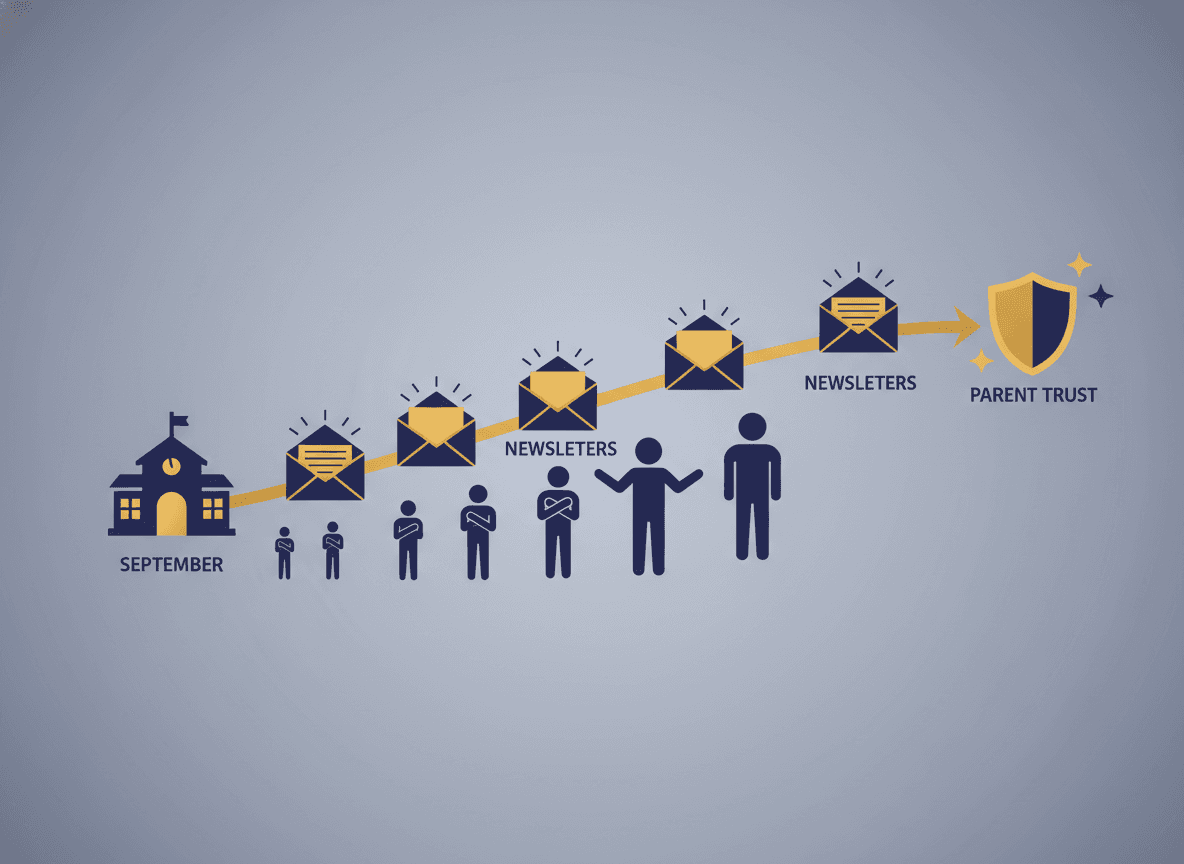
The Family Educational Rights and Privacy Act (FERPA) is a federal law that protects the privacy of student education records. Most teachers know it exists. Fewer have thought carefully about how it applies to the weekly classroom newsletter, which can quietly cross privacy lines without anyone intending it to.
This is not a warning meant to make teachers afraid to communicate. It is a guide to communicating freely within the clear boundaries that already exist, so you can write confidently instead of second-guessing every sentence.
What FERPA actually protects
FERPA covers education records, defined as records that are directly related to a student and maintained by an educational agency or institution. This includes grades, test scores, disciplinary records, special education evaluations, and any information in a student's official file.
FERPA does not prohibit teachers from talking about their classroom in general terms. A newsletter that describes what the class worked on, what skills students are building, and what is coming up next week is not touching FERPA territory. The problem arises when a newsletter connects a specific student's identity to education record information, or when it discloses information about a student to people who do not have a right to that information.
The key rule: do not pair identity with sensitive information
The practical FERPA rule for newsletters is this: any time you name a specific student or describe a specific student in an identifiable way, ask what you are pairing that identification with. First names in a general context ("the class was led by student volunteers this week") are typically low risk. Naming a student in connection with academic performance, behavior, family circumstances, or health information is not.
"Maya won the reading challenge this month" sits in a gray area depending on your district's directory information policy. "Jamie struggled with the chapter test this week but showed real improvement" is almost certainly a FERPA concern if Jamie's family has not specifically consented to this type of disclosure.
Photos require explicit consent
Including student photos in newsletters that go beyond the school building, and email newsletters go well beyond the school building, requires that you have valid photo release authorization for every student who appears. Many schools collect blanket consent forms at the start of the year, but many do not, and opt-outs are not always tracked carefully.
Before including any photos in a newsletter, confirm whether your school has a current, signed release for every child shown. If you are unsure, use photos where students are not clearly identifiable, such as wide shots of classroom activities from behind or shots of student work without the student present.
Achievement recognition is more complicated than it looks
Recognizing student achievements in newsletters feels like a clear positive, but it is more legally nuanced than it appears. Honor roll lists, award recipients, and academic achievement shoutouts all share information about individual students' academic performance. Whether this is permissible under FERPA depends on whether your school has designated such information as "directory information" and whether families have been given the opportunity to opt out.
The safest approach is to check your school district's directory information policy before publishing achievement lists in any newsletter. Many districts handle this clearly, but many do not, and teachers are often the last to know the details.
What you can always say freely
There is a lot you can communicate without touching FERPA at all. Classroom activities, curriculum topics, upcoming events, school culture themes, volunteer opportunities, general observations about the class as a whole ("the class has been doing remarkable work on their reading fluency"), and anything logistical are all free territory.
Newsletters that focus on what the class is learning and doing together, rather than spotlighting individual students' performance or personal circumstances, give families a rich window into the classroom while staying clearly within safe communication ground.
When in doubt, ask your school's privacy officer
FERPA has nuance, and school districts have their own policies that sit on top of federal law. If you are ever unsure whether a specific piece of content is appropriate for a newsletter, the right move is to ask your school's privacy officer or administrator before publishing. A quick two-minute conversation can prevent a complaint or a legal issue that takes far more time to resolve.
Get one newsletter idea every week.
Free. For teachers. No spam.
Frequently asked questions
Does FERPA apply to the newsletters teachers send to parents?
FERPA applies to education records, which includes any information maintained by the school that is directly related to a student. A newsletter that identifies a student by name alongside academic performance, disciplinary information, or personal circumstances could constitute a FERPA violation if disclosed to people not entitled to that information. When in doubt, omit identifying information.
Can teachers include student names in classroom newsletters?
Using student first names in a general classroom context, such as 'the class worked on a science project,' is typically considered directory information and is lower risk. Pairing a student name with academic standing, test scores, behavioral incidents, or personal information crosses into education records territory and should not appear in newsletters distributed broadly.
What about photos? Can teachers post photos of students in a newsletter?
Schools typically require parental consent for photographs of students to be shared outside the immediate classroom. Before including photos in any newsletter that goes beyond the school building, confirm whether you have on-file photo release forms for every student pictured. Many schools have blanket opt-in forms, but many do not.
Is it a FERPA violation to mention that a student received an award in a newsletter?
Awards, honor roll, and achievement recognition are often treated as directory information, which schools can disclose unless a parent has opted out of directory information sharing. However, check your school district's specific policy before publishing achievement information in newsletters that go outside the classroom.
How does Daystage help teachers stay within safe newsletter communication practices?
Daystage is built for school newsletter communication and encourages content patterns that focus on classroom activities and collective learning rather than identifying individual students by name with sensitive information. The tool gives teachers a structured format that naturally steers toward compliant communication.

Adi Ackerman
Author
Adi Ackerman is a former classroom teacher and curriculum writer with 8 years in K-8 schools. She writes about school communication, parent engagement, and what actually works in real classrooms.
More for Parent Engagement
How to Share Student Success Stories in Newsletters While Protecting Privacy
Parent Engagement · 5 min read
How to Increase Parent Newsletter Open Rates: 8 Strategies That Work
Parent Engagement · 7 min read
Parent Engagement After a School Crisis: How Newsletters Rebuild Community Trust
Parent Engagement · 6 min read
Ready to send your first newsletter?
3 newsletters free. No credit card. First one ready in under 5 minutes.
Get started free